Thank you for the music (and other things)
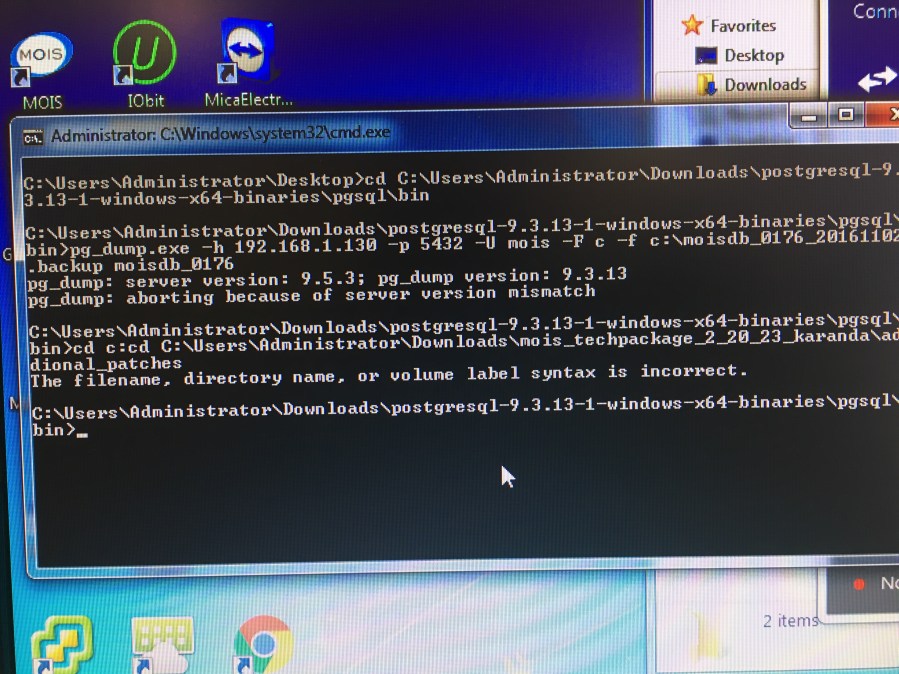
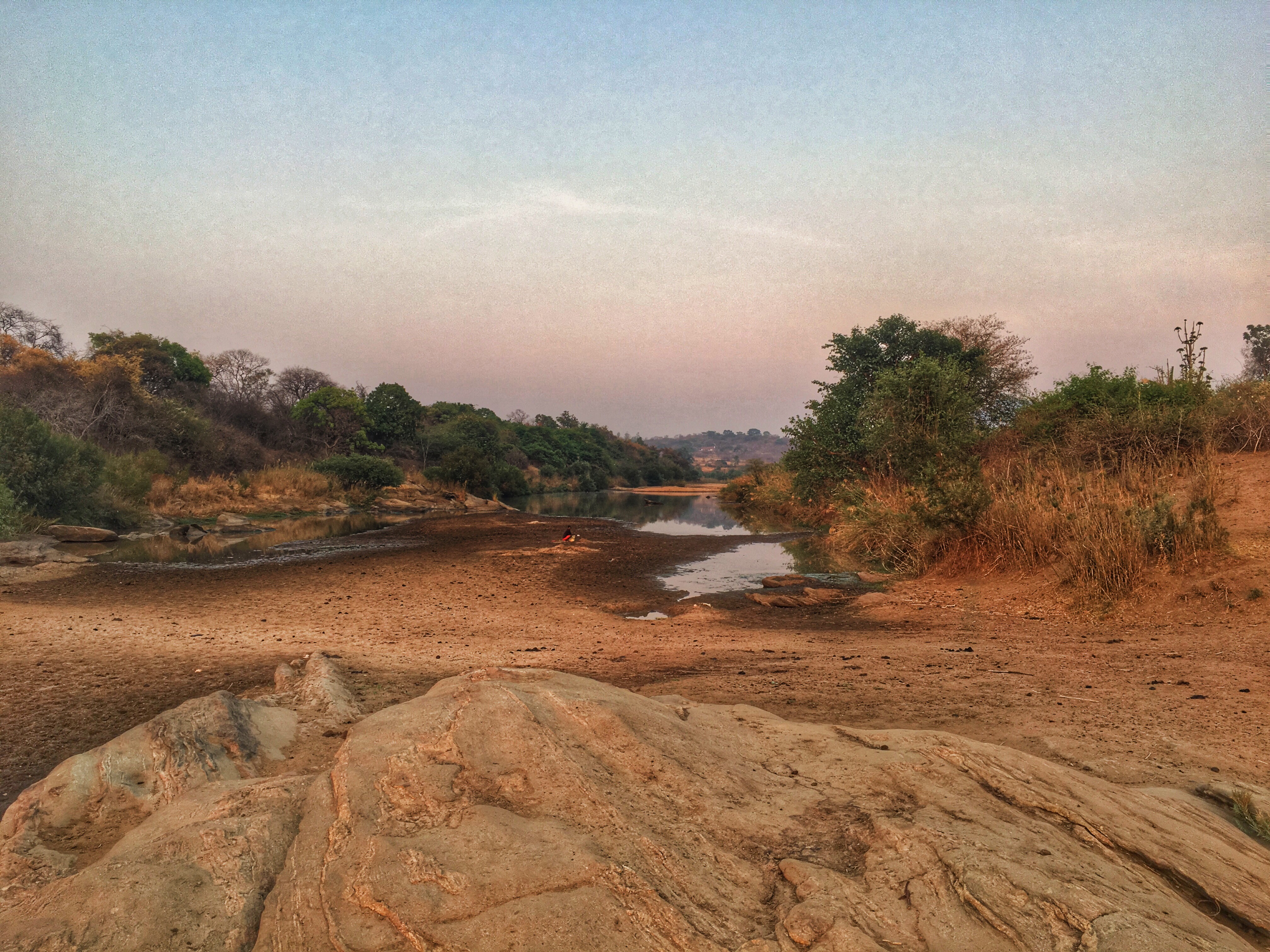
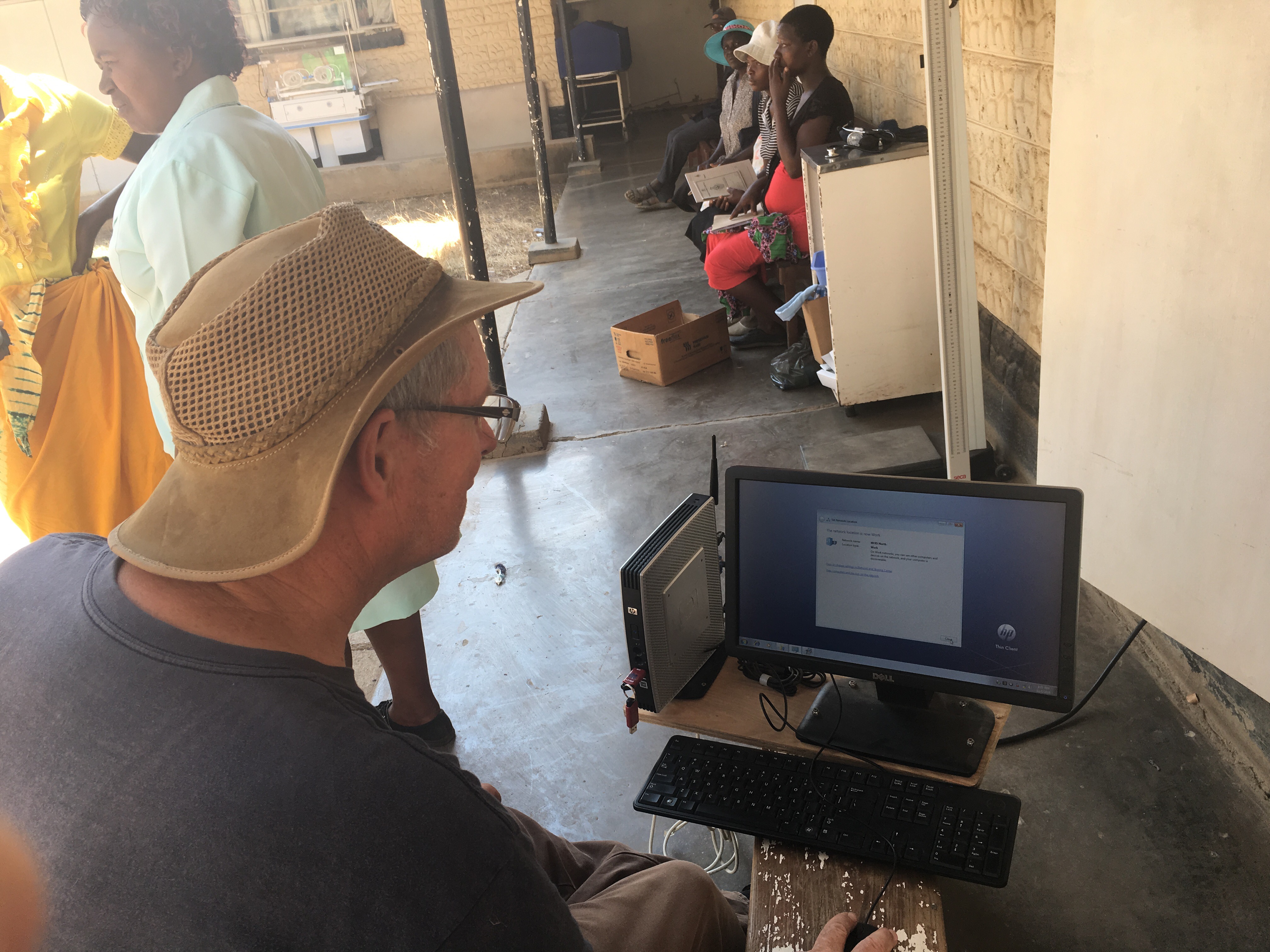
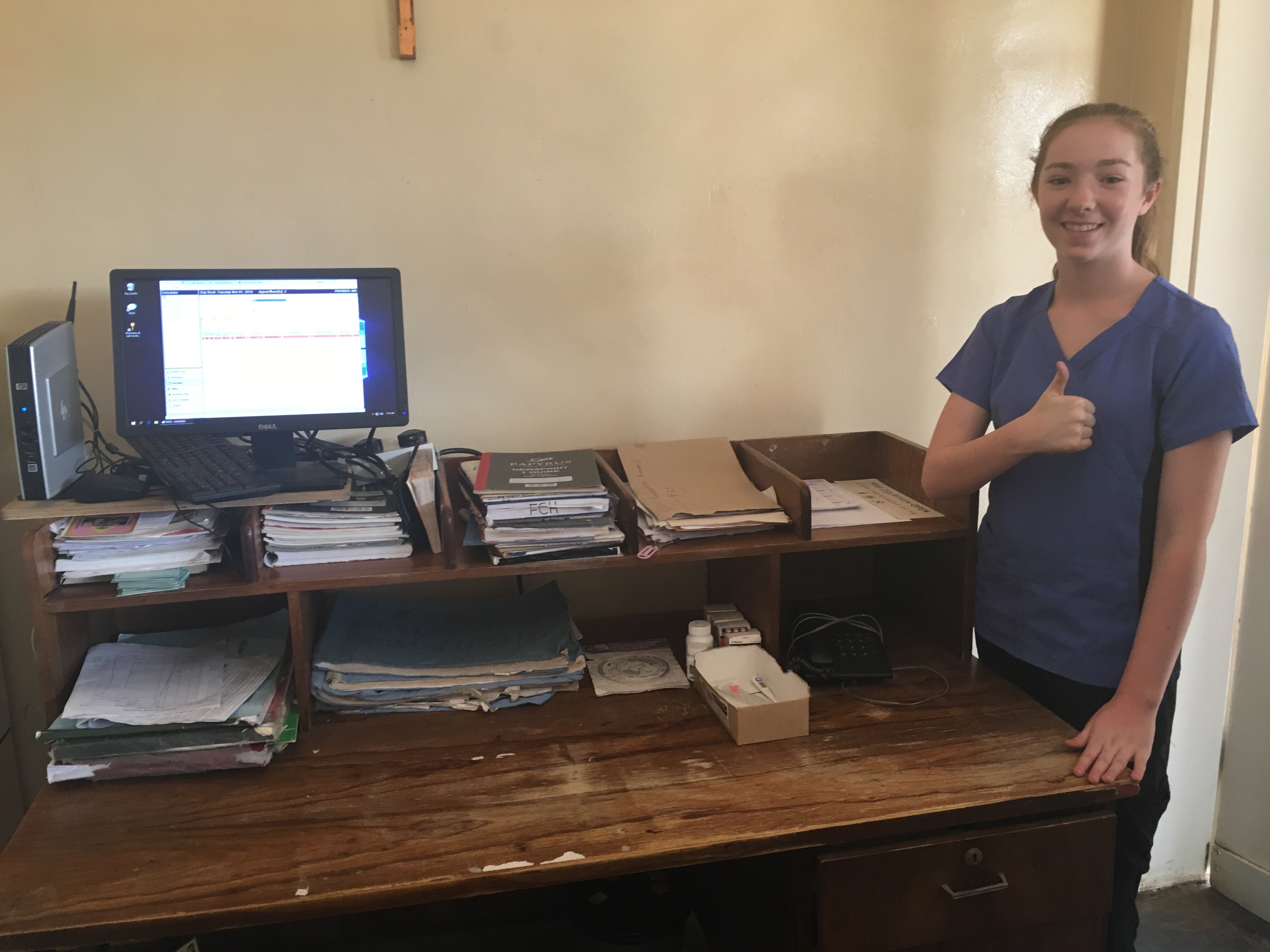
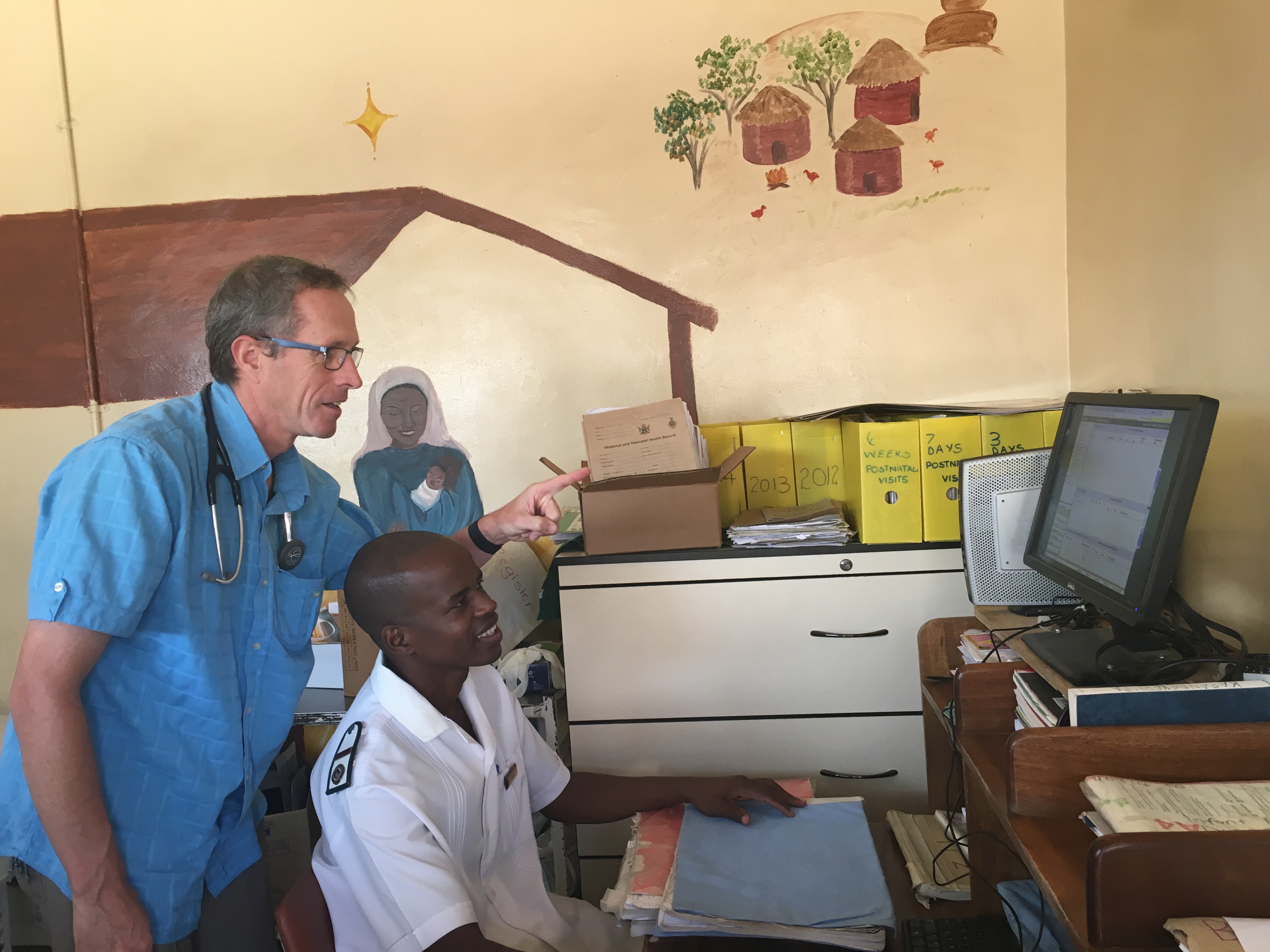
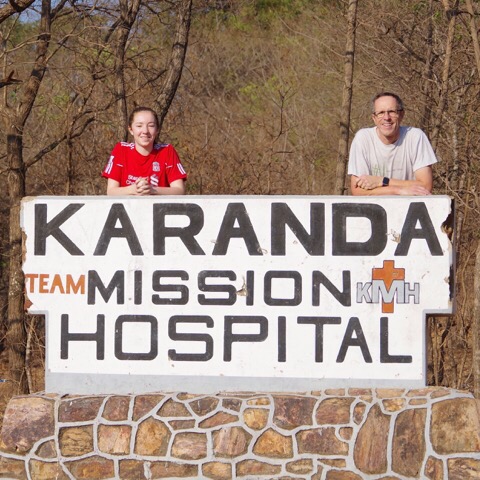
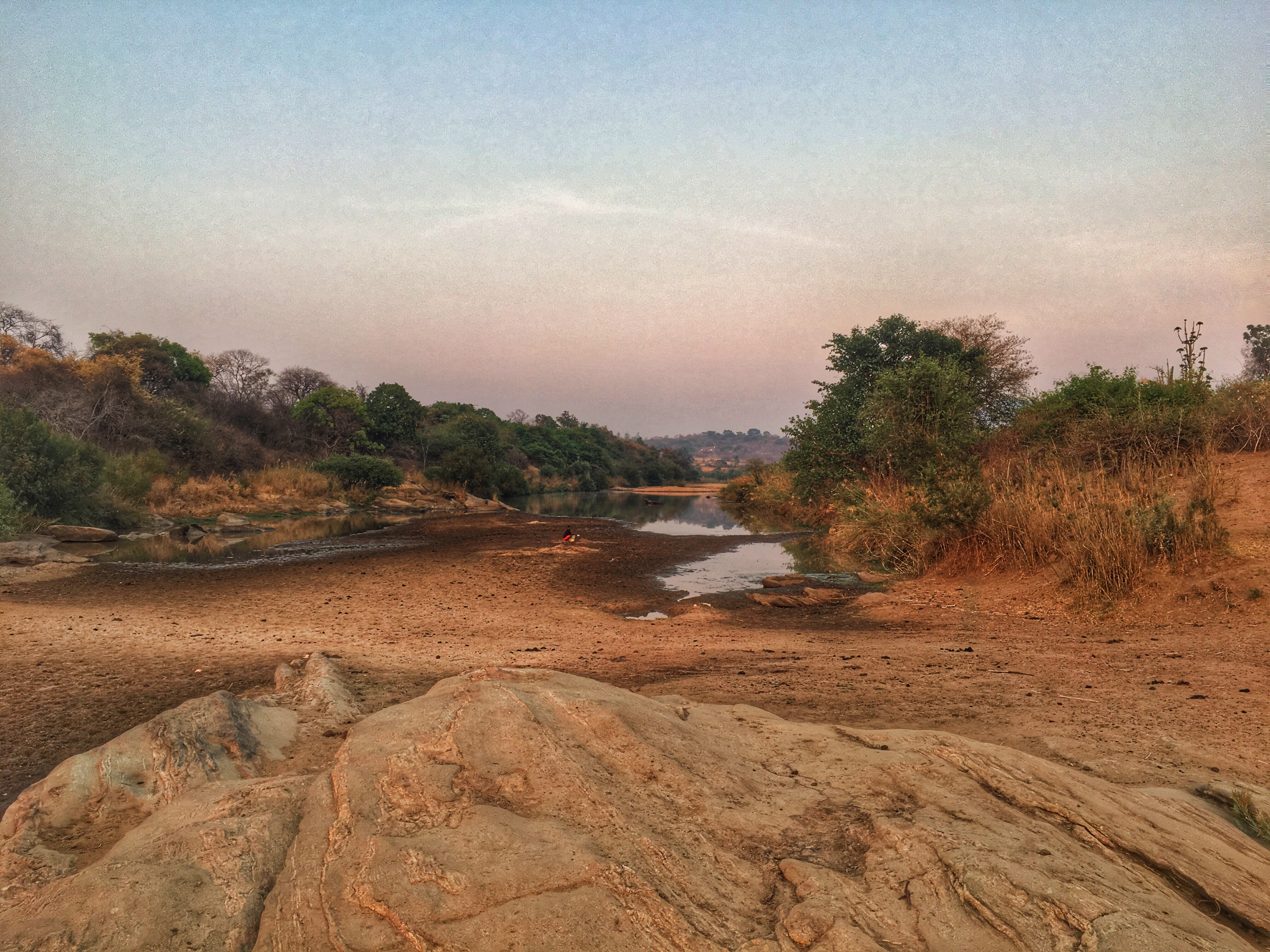
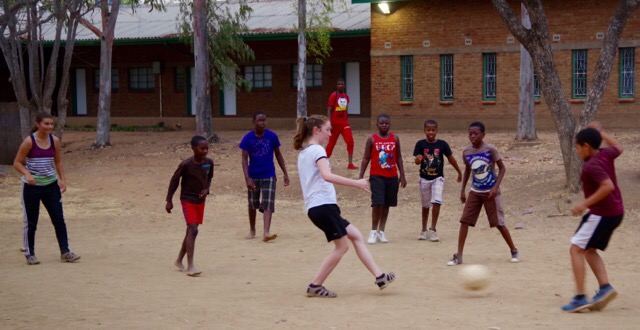
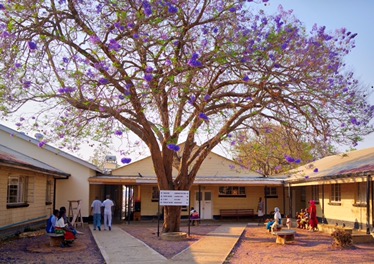
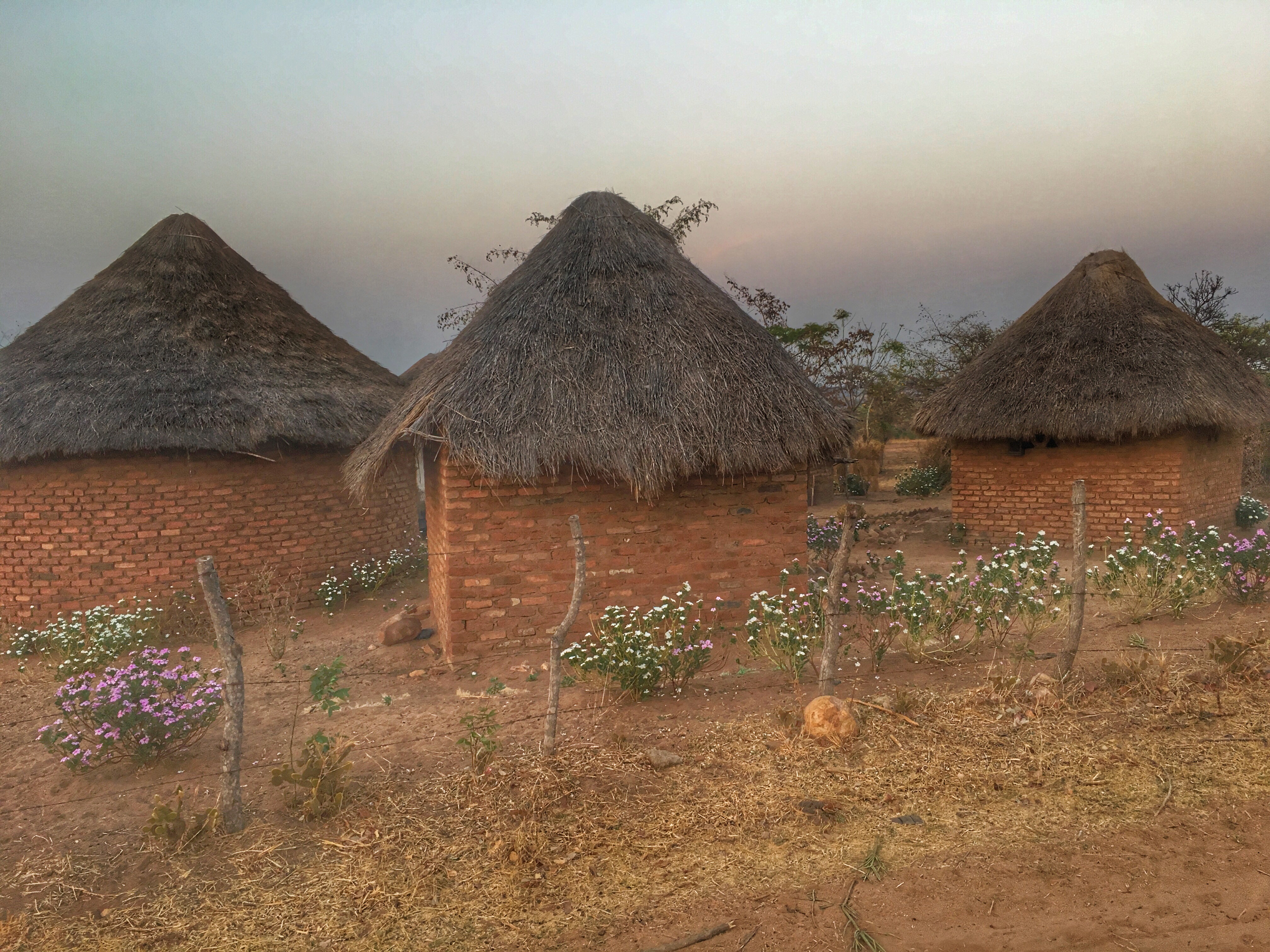
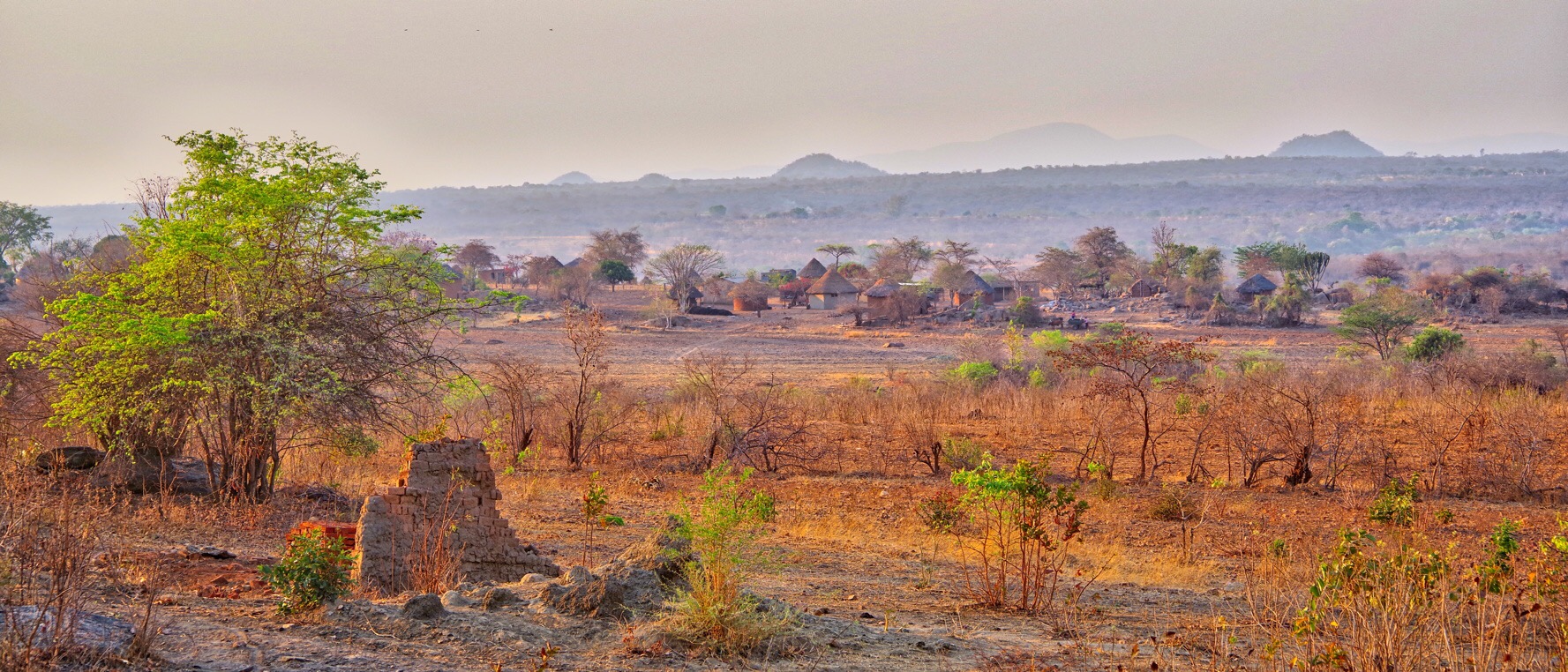
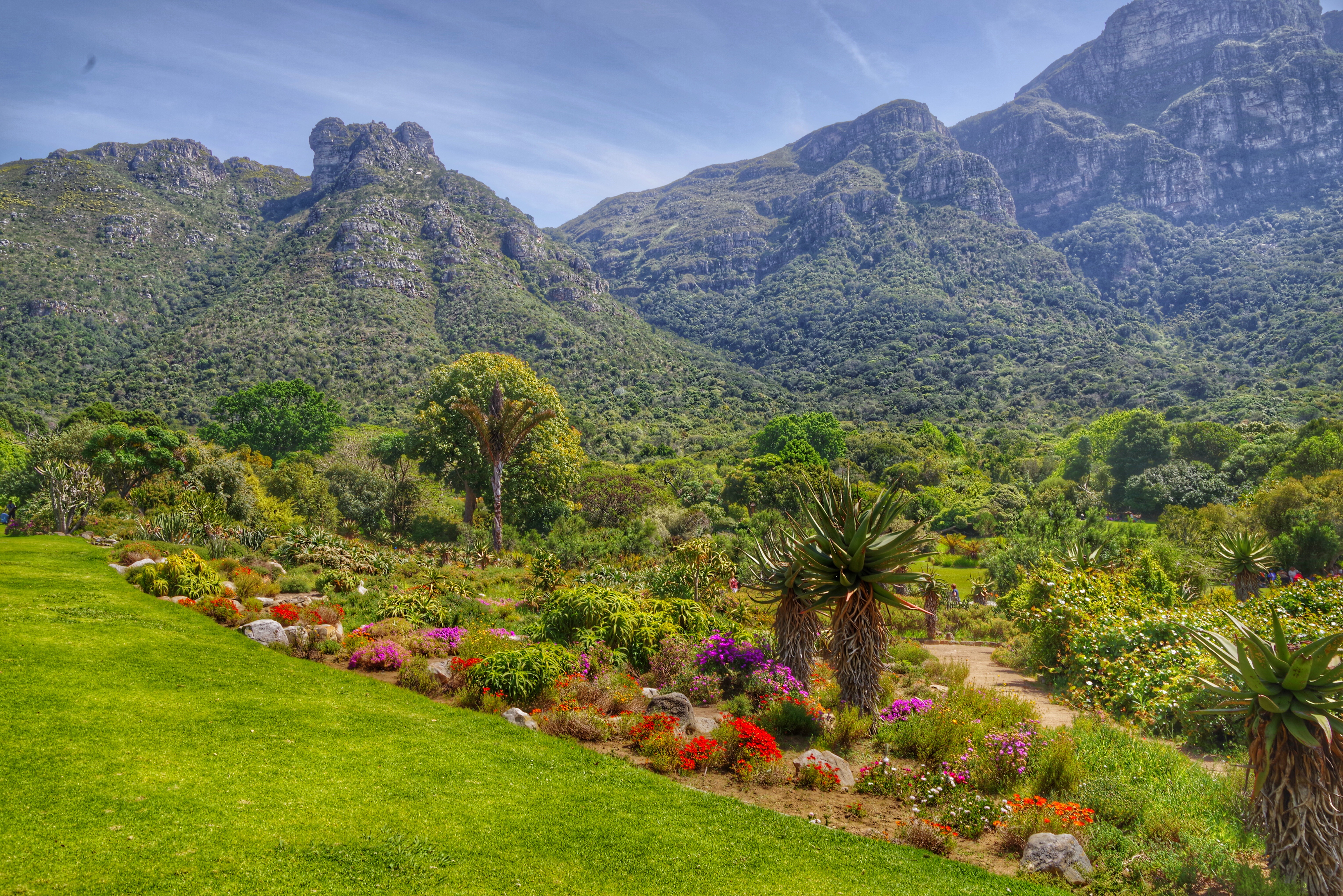
Despite the misgovernment and the misery it has inflicted on the citizens, the inefficiencies, the heat, the overwhelming disease burden we witnessed, in less than 2 months Zimbabwe and the people ingratiated itself into my heart and I was reluctant to leave. The landscape that initially seemed so stark revealed its beauty – the image of the round hut with the thatched roof is imprinted in my memory – and we met so many fascinating people. Paul and I wished we had had longer than 3 weeks at Karanda Hospital in order to follow through on a few projects. Paul pulled almost an all-nighter one evening in order to facilitate a MOIS software download and upgrade and doggedly updated the computers in various departments the following day. He also sorted out some software for reporting cervical cancer results. (A system had been donated and was being used but little training had been provided and staff were still having to tally results manually.) The pharmacy staff transitioned to doing order entry on the computer and this will save lots of time for month-end reporting. I admit I got comfortable in a routine and could have stayed in the known rather than adapt to the unknown of the next 5 weeks. Rachelle and Thea managed a fair bit of schoolwork despite spotty internet, taught some Origami and cat’s cradle at the school on site and counted tablets in the pharmacy.
Our meals at Karanda got increasingly interesting as our groceries dwindled (topped up with dairy products by the nurse instructors one weekend when they went to Harare). We became devotees of Mazoe, the cordial that comes in various flavours to be diluted with water. I was grateful for the toffee sauce that was left by the previous volunteer in the fridge as it was a taste sensation on pancakes for supper one evening as well as for the cinnamon as it meant I could bake a carrot cake. One day a patient insisted on giving me a Pfuko ye Maheu, a commercial drink that mimics their traditional breakfast – maize meal, milk, sugar. Shake well is imperative – the texture is disconcertingly gritty (and lingers between your teeth) but definitely a meal in 300 ml. We did manage to cater a curry and rice meal for about 13 people on our last evening as a thank you for various meals and hospitality we had been offered.
The music at Karanda was a highlight. The student nurses’ singing every morning was always beautiful and often sublime. The on-site radio keeps the energy at the hospital up during the day, although I found it made me a bit anxious when I was spending time in the out-patient department as it added to the chaos. The music at the Sunday church service was enlivening (more cow-hide drum!), although I felt particularly white and nerdy at the times when most people were dancing.
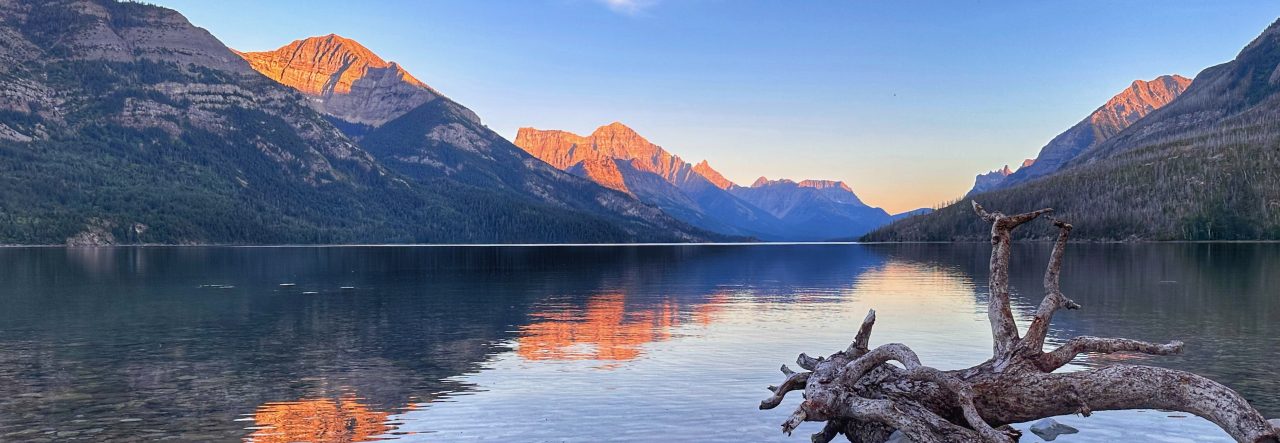
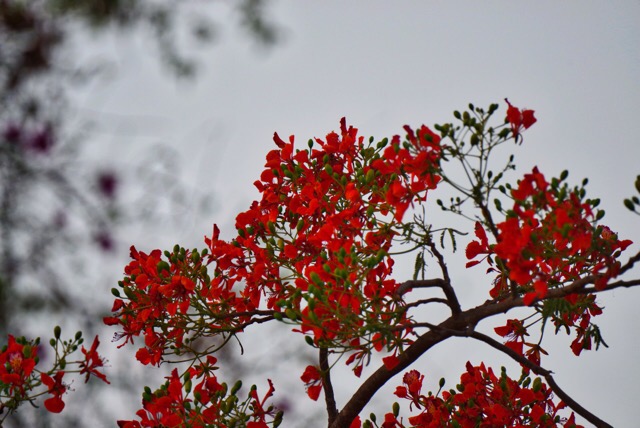
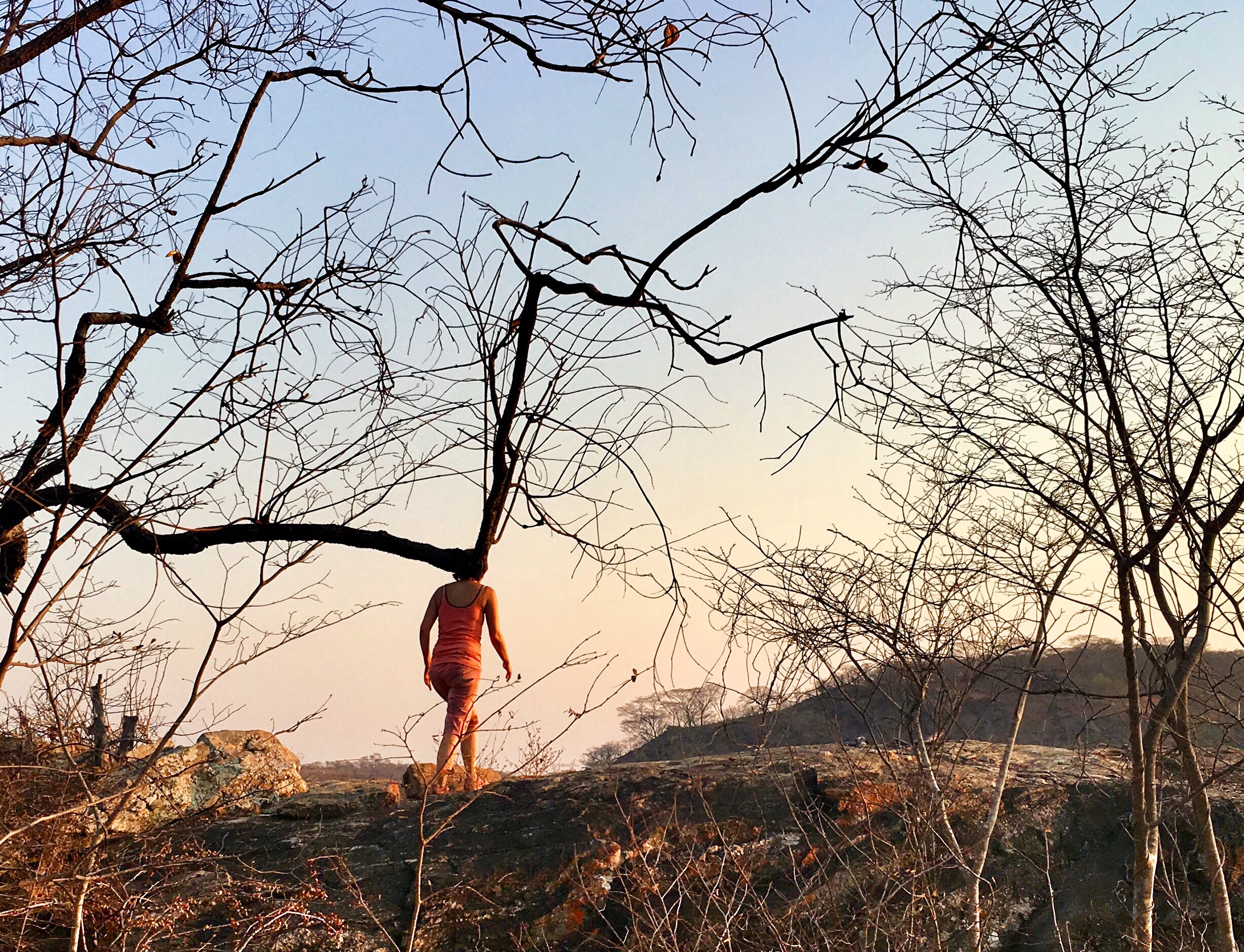
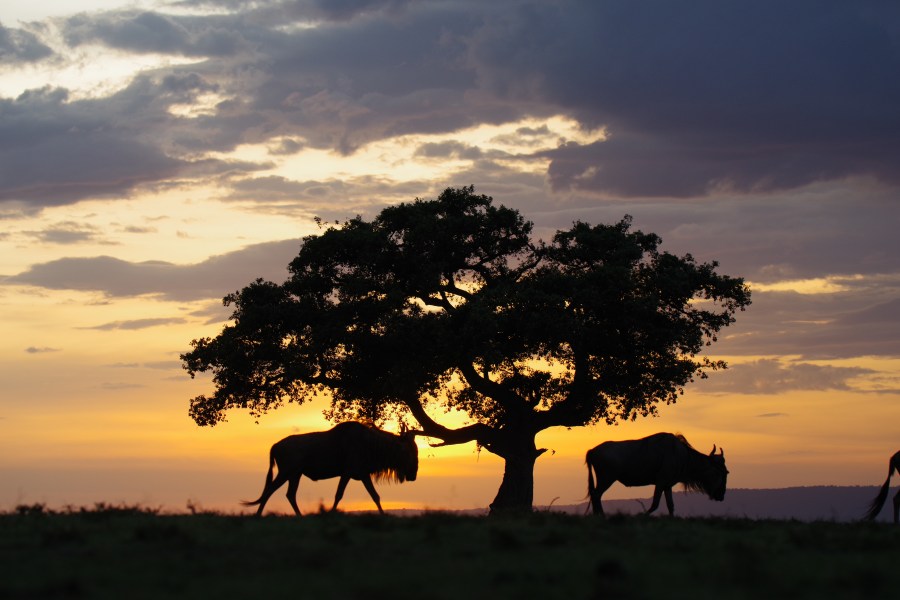
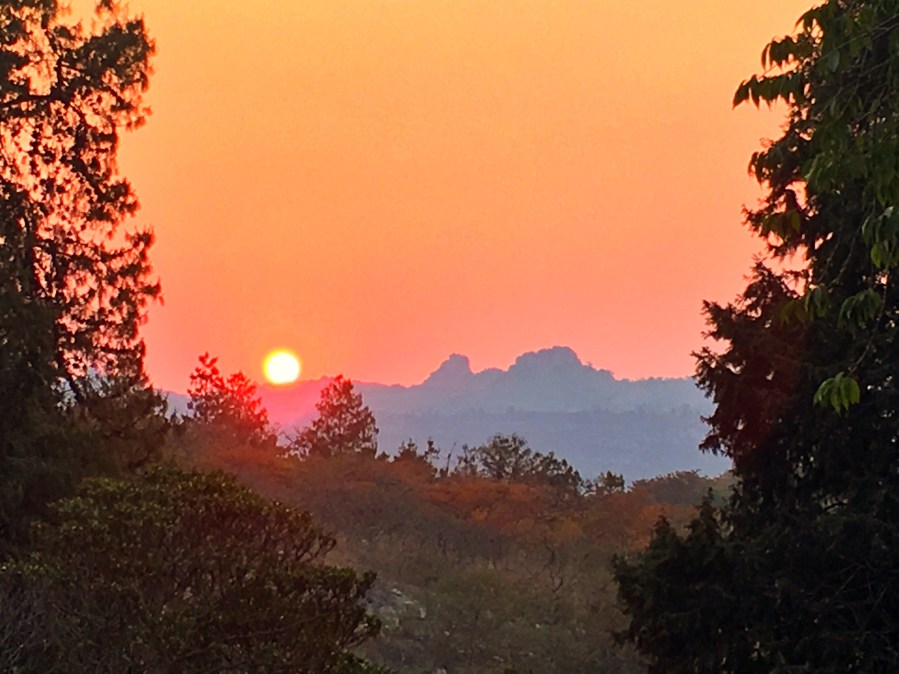
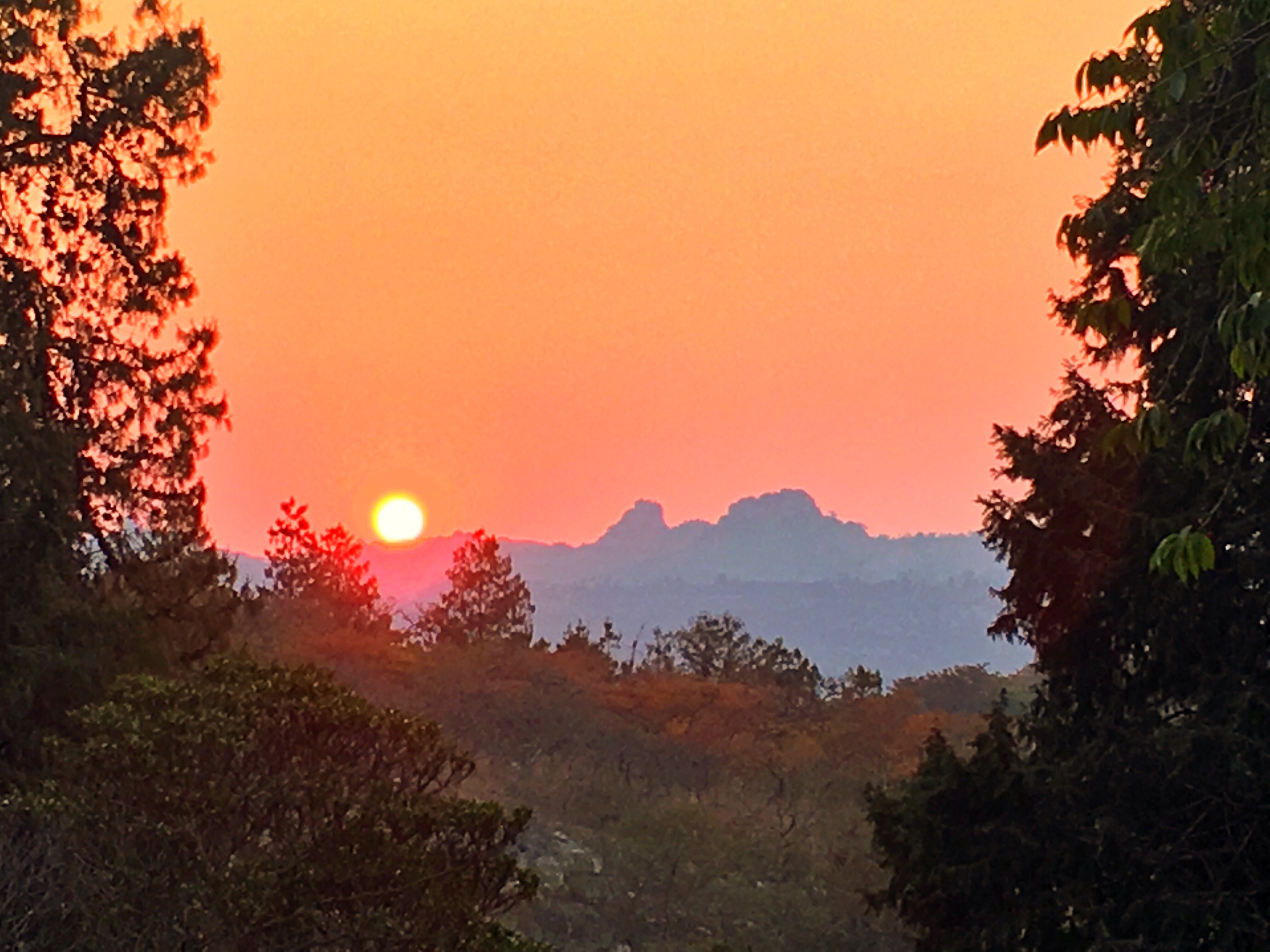
The sunrises on the walks we did several mornings before 6 am were spectacular and the sunsets each evening similarly stunning.
I was very appreciative of the range of books at the houses, specifically Alan Paton and Helen Suzman’s autobiographies, both of which condense the last 100 years of South African history from intimate perspectives. Robert Guest’s book The Shackled Continent published more than 10 years ago set out some suggestions for various African countries that, particularly in Zimbabwe’s case, have sadly been ignored. Why have the rolling water barrels not been adapted more widely? Perhaps simply the cost. Sekai Nzenz-Shand’s book Songs to an African Sunset describes how a woman transitioned from traditional life in a Zimbabwean village to going to university overseas and returning to Zimbabwe. And the Sue Grafton mysteries were a welcome diversion from the heat.
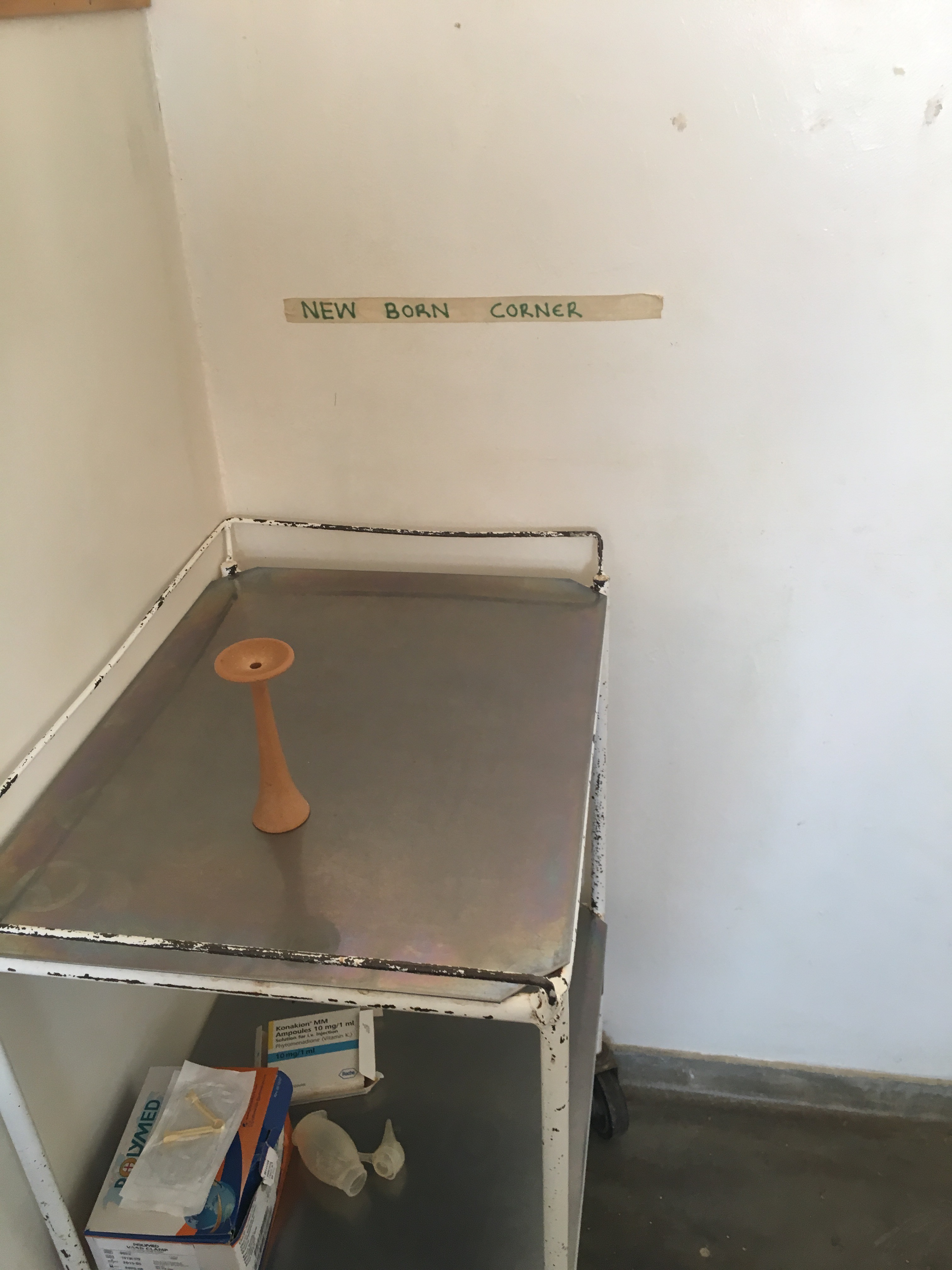
Our admiration for the Zimbabwean, American and Canadian staff at Karanda Hospital – many of whom have been there for decades – continued to grow over the 3 weeks. They work long hours in challenging circumstances with few supplies yet provide true care. They are professionally isolated yet have amazing skill sets; they work and live in close quarters yet are gracious and welcoming towards the part-time voluntourists like us. Daily they treat life-threatening and chronic diseases caused in large part by poverty yet retain a keen sense of humour and respect for the individual. In 3 weeks I did not get inured to the serious diagnoses on the patients’ notebooks that they all carry – anything from amputation resulting from injury or animal contact to opportunistic infections associated with HIV. It was heart-rending dispensing Plumpy Nut packets, prescribed for malnourished children.
We had the wonderful experience on our last day in Zimbabwe of attending UN day at the Harare International School that Dr Thistle’s sons attend. A UN official spoke movingly on the theme of Unity through Diversity and quoted the UN Secretary General’s remark that the current generation is the first that could end poverty and the last that could end global warming. Parents from over 70 countries provided the lunch and it was fantastic. Dr Thistle’s Zimbabwean wife Padrina makes an amazing Nainamo bar. A brief rain shower was refreshing (once we got our bags off the top of the Land Rover and inside.) That evening I was fortunate to attend another art exhibition with our hosts in Harare – so many talented artists in a small population. A dinner out that evening was accompanied by the cold beer Paul had been fantasizing about for 3 weeks at Karanda.
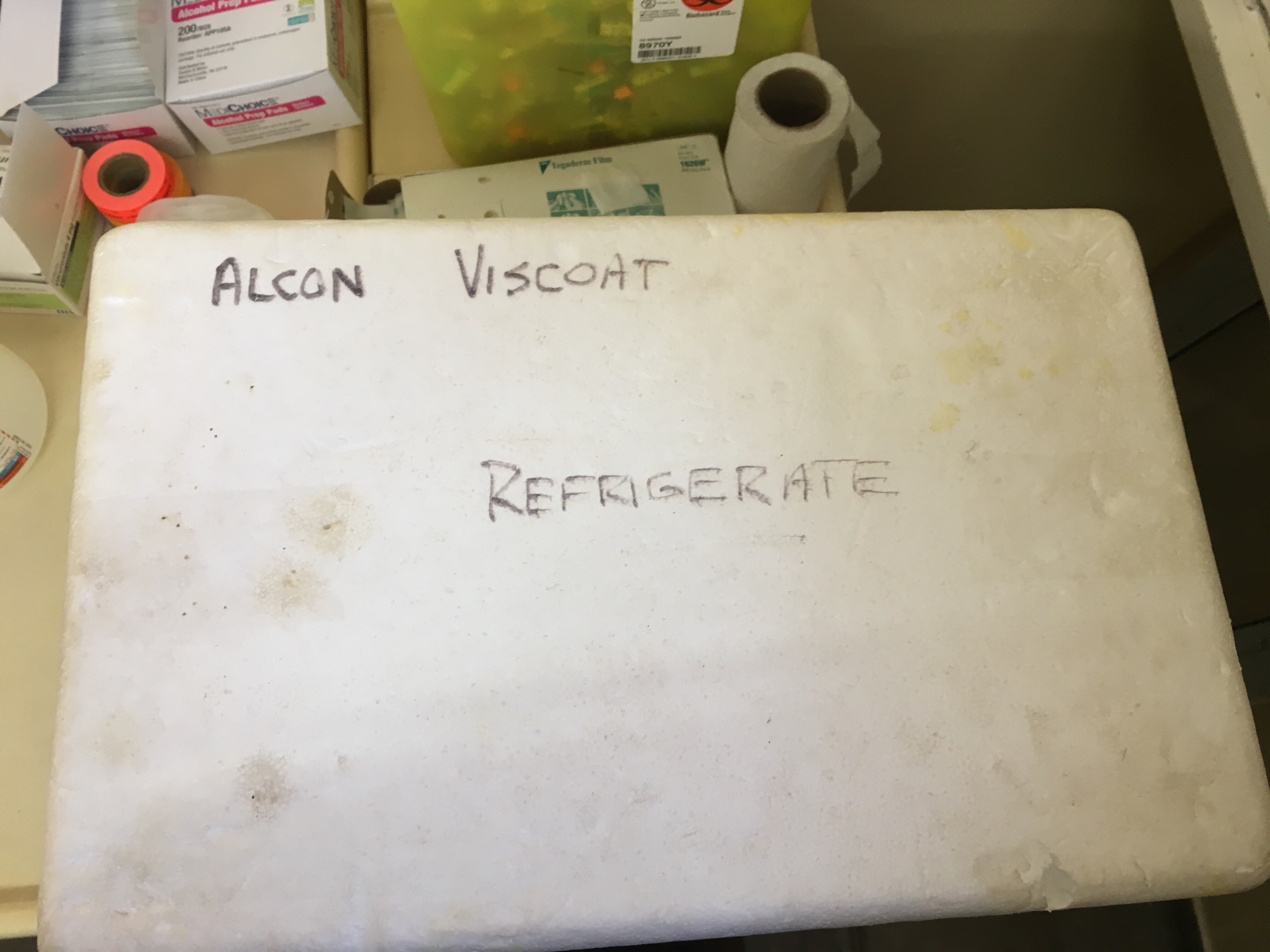
We again want to thank all those who donated items for us to bring – the nurses at FSJ Hospital who collected unused items from the OR, the school supplies others donated, the soccer balls Home Hardware donated, the Canada pins Bob Zimmer’s office donated, the soccer jerseys from the FSJ Soccer club, and the extra bags individuals donated. All have been received gratefully.
Thank you for the Music from Paul Mackey on Vimeo.

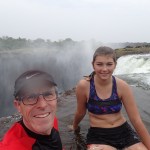
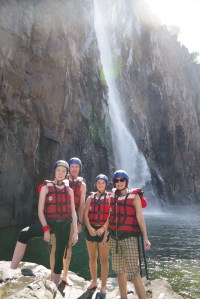 That afternoon we wandered along the top of the falls in 38-degree heat. In the evening we had a sunset cruise on the Zambezi River followed by a short concert from Mick Thomas and Wally. It was very strange travelling around with the musicians. I discovered Mick Thomas and I have similar taste in fiction. There were 13 other people on the tour – a British couple (concidentally a friend of theirs married a woman from my home town a couple of years ago and they attended the wedding at Castle Mountain) and the rest are Aussies, all in our age demographic. Thea and Rachelle were the only kids so became mascots in a way and were quite comfortable sitting with other people by the end of the tour. Everyone was very easy to get along with to the point that Rachelle was putting Snapchat filters on Mick’s face to transform him into a drag queen and a deer (and showing him). The highlight of the concert that evening for me was the excellent version of Four Strong Winds – almost made me cry as we are so far from home.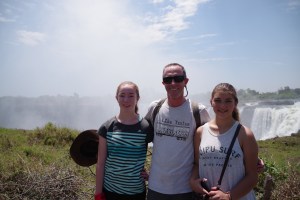
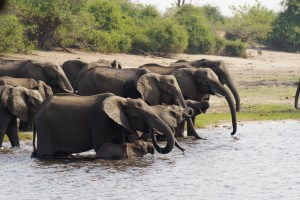
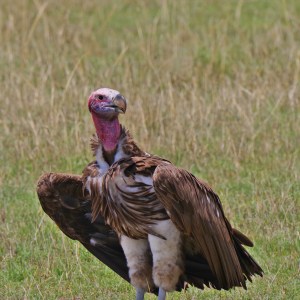 The concert that evening took place around the campfire. Mick played our favourite song ‘If You Were a Cloud’, but forgot some of the words! (cue Stephen and Paul).
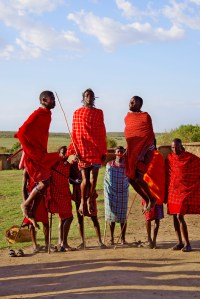 It was upsetting to learn female circumcision is still the traditional practice. One of the Australians on the music tour is a lawyer and ex-politician and is involved in combatting female genital mutilation in Somalialand. Rather sobering social studies lesson for Rachelle and Thea that day (other schoolwork is not getting done at present because of inconsistent internet).
 The final concert was short as some people had an early morning. For the second time on our adventure, we have felt uneasy about our accommodation. When we tried to use the Visa card to pay for our extras, the transaction would not go through. When we called Visa in Canada to find out why, the service agent said it was because the merchant was coming through as an off-shore on-line gambling syndicate. We had to have the tour guide pay and reimburse him. I knew it was very unlikely the lodge was owned by a Kenyan and that any profits would be plowed back into the economy but now we are really suspicious that it is even worse than just foreign ownership and that the Russian mafia or other profiteers own the lodge.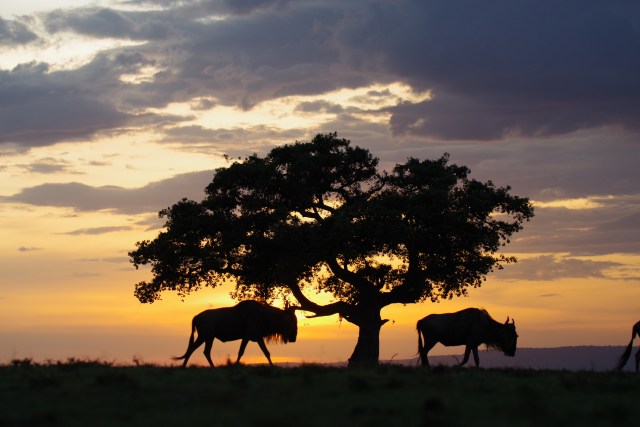
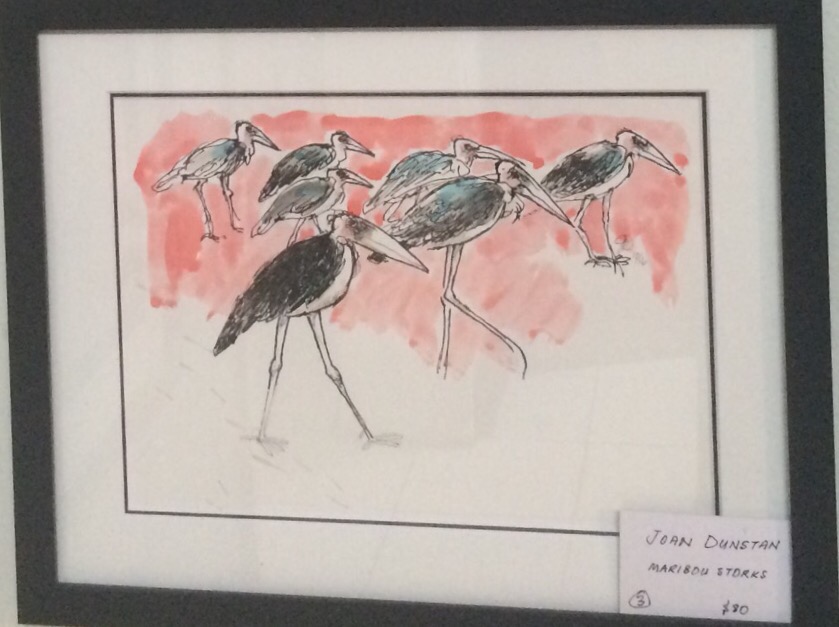
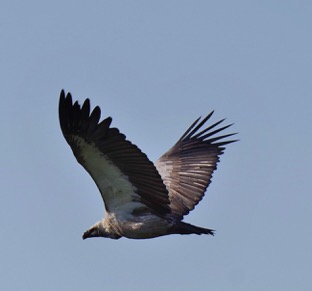
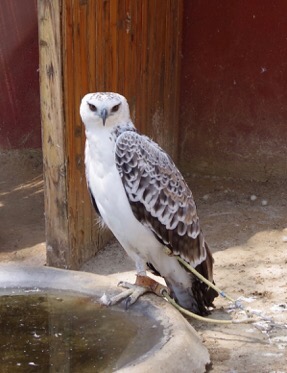
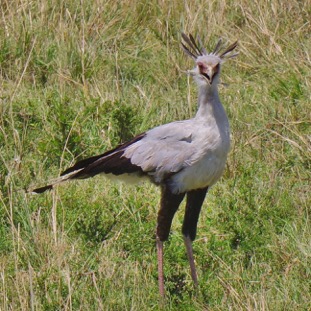
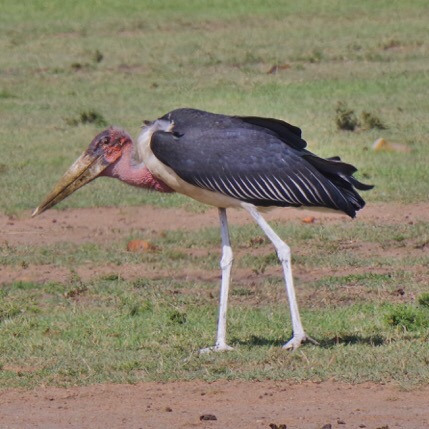
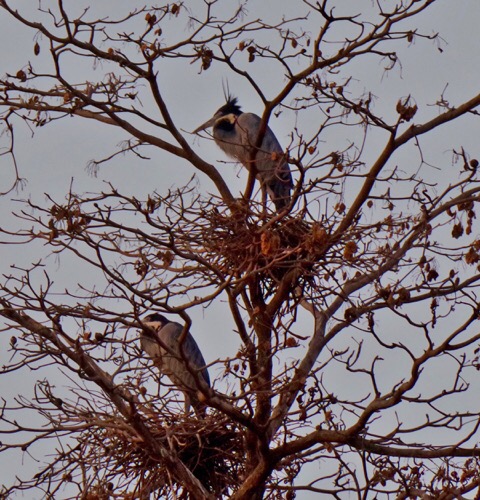
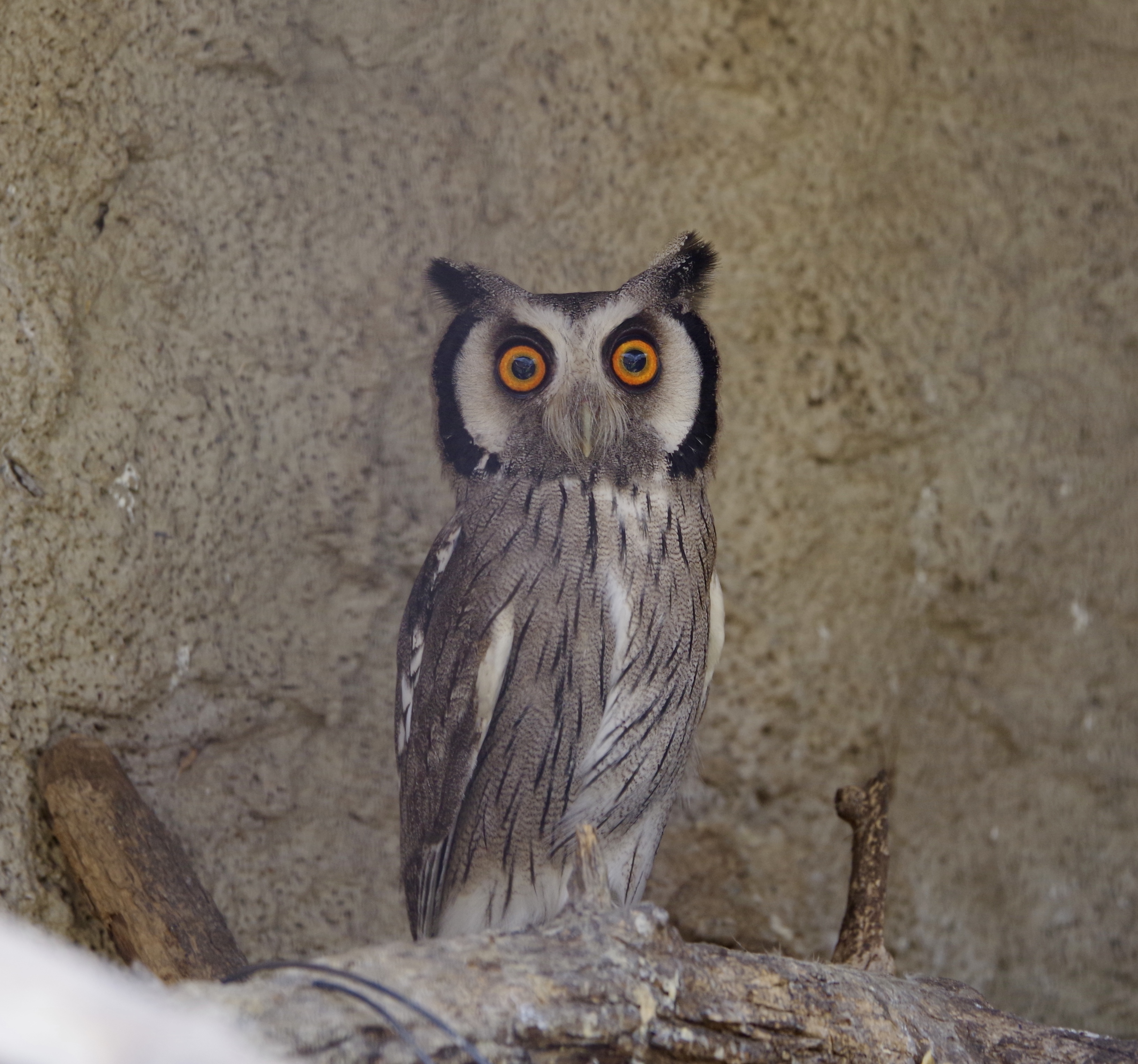 The last few days have me searching for appropriate adjectives. Harare was no less overwhelming the second time we were exposed to it – so many people desperately trying to scrape together some money selling produce and other items beside the main highways and even in the middle of the city streets. Our unflappable driver Tafadzwa (we keep getting tempted to ask him to do something outrageous such as a moon landing to see if he will still respond ‘No Problem’) took us to the local bird park this time and we were awed by the size of some of the birds and the initiative of the owner to continue to care for injured and endangered birds in the face of great financial challenge. That evening our hosts – who publish a quarterly magazine ZimArtist – took us to an exhibition by several local artists. The convivial event felt a planet away from the seething streets of downtown Harare. Paul met David Filer, who is renowned world-wide for his realistic pencil drawings of African wildlife (www.davidfiler.com). We also especially enjoyed the paintings by a woman who had every Zimbabwe bank note printed since 1980 as her background canvases with a local cow or steer painted overtop (‘cash cows’ – a telling statement). En route back home, our hosts drove us past the road that is closed every evening at 6 pm and reopened at 6 am and obsessively guarded by the army because Mugabe’s town house is down it, although he rarely stays there.



 Mackey Musings