What do you do when you’ve already hiked 15km into a gale.
Why you walk another 10. And run to catch the train to boot.
The upside of hoofing the day’s walk to get out of the wind was that we arrived at our hotel in Prestatyn by early afternoon. As this eventuality became evident during the morning walk we realised we could actually catch the 1/2 hour train up to Chester. If we hoofed it to the station.
So we did.
We just made it.
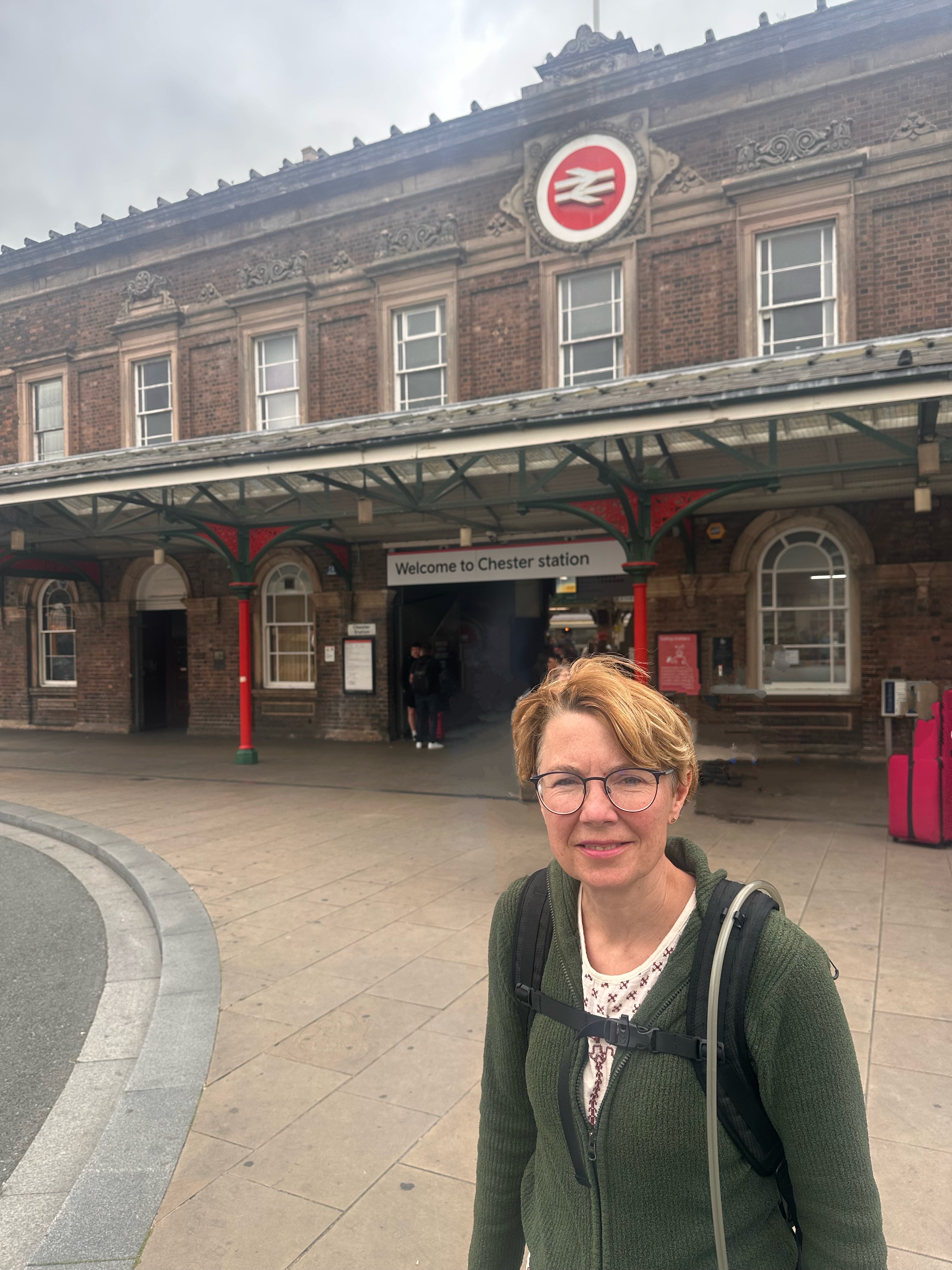
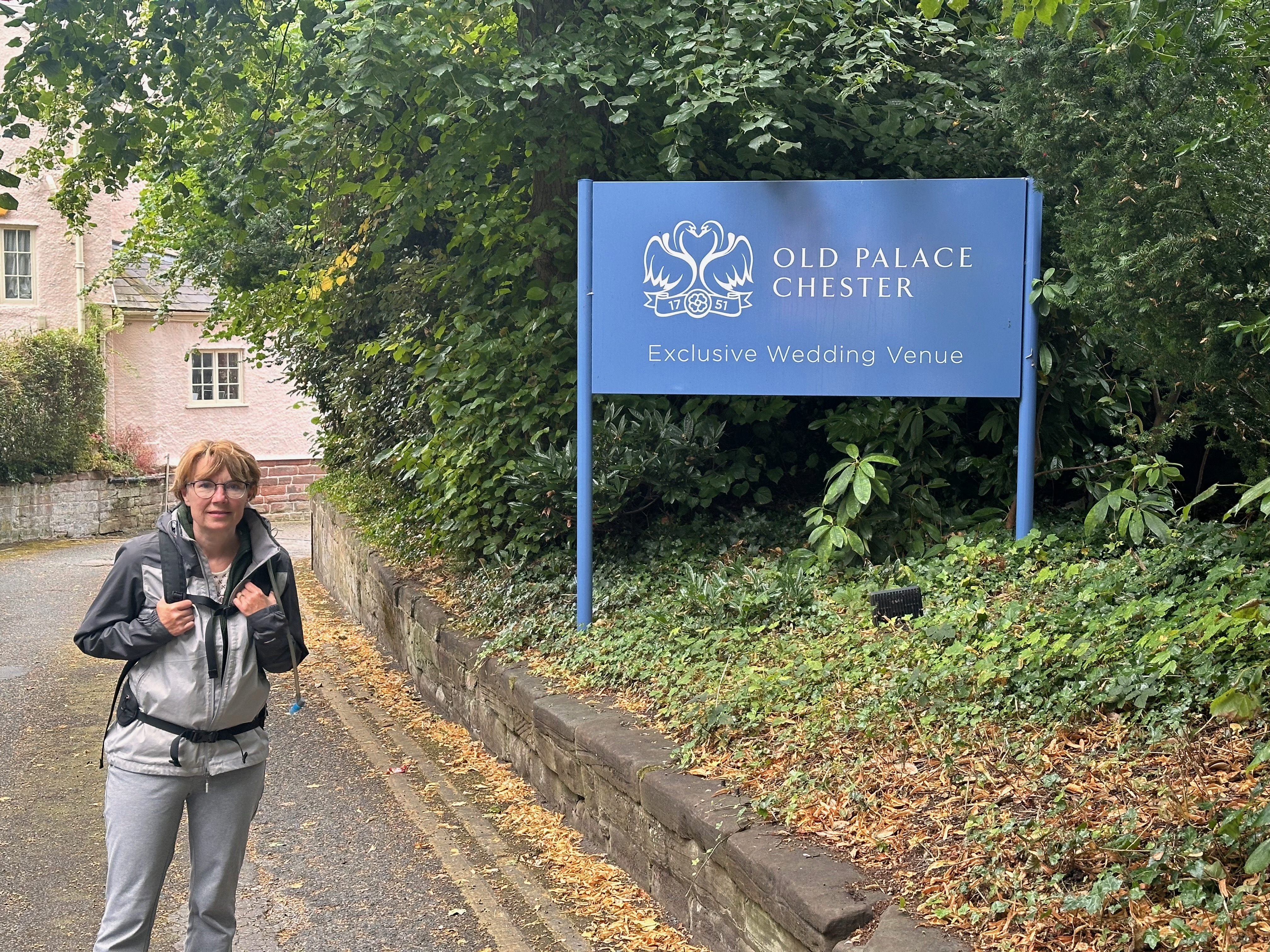
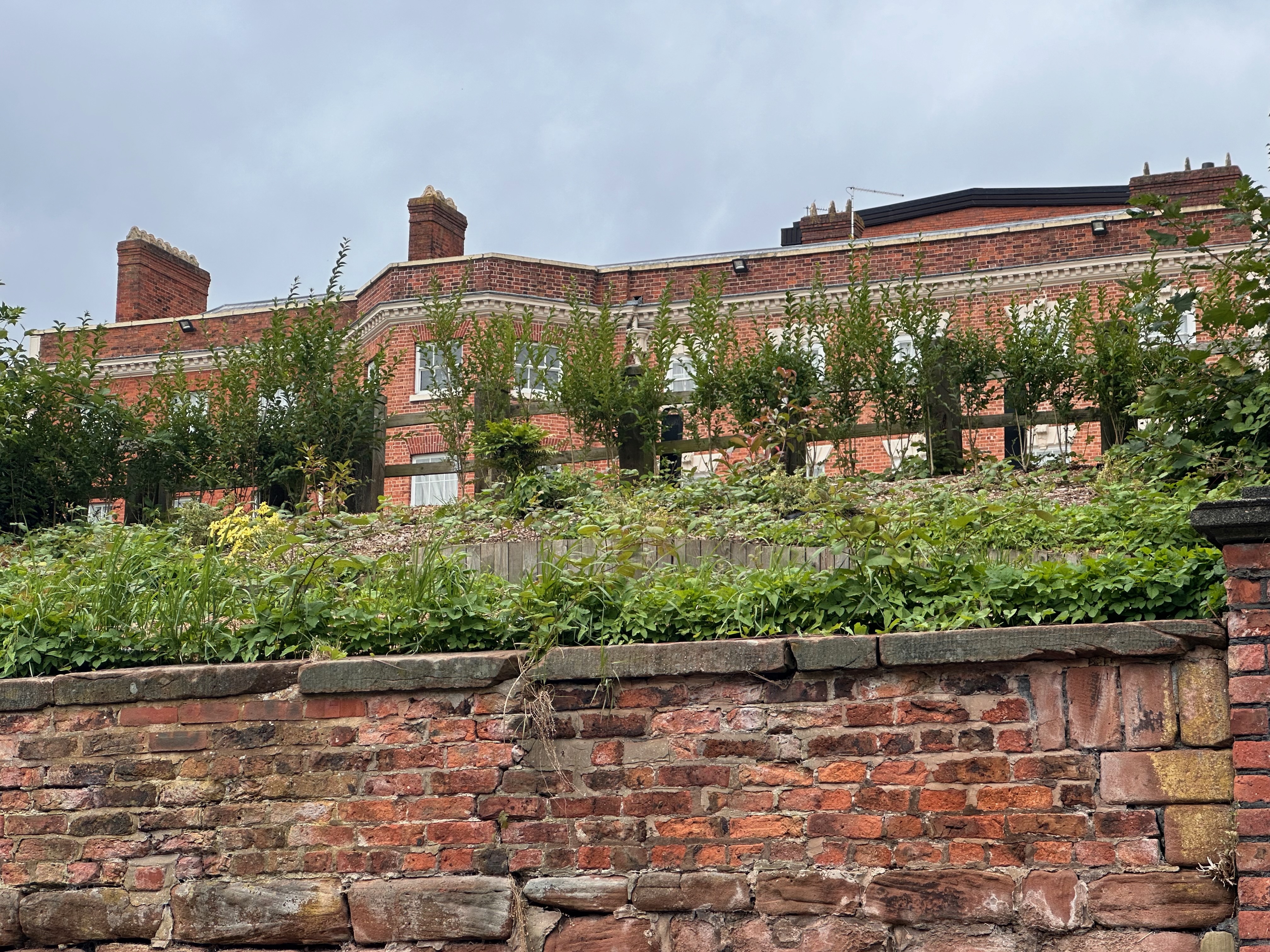
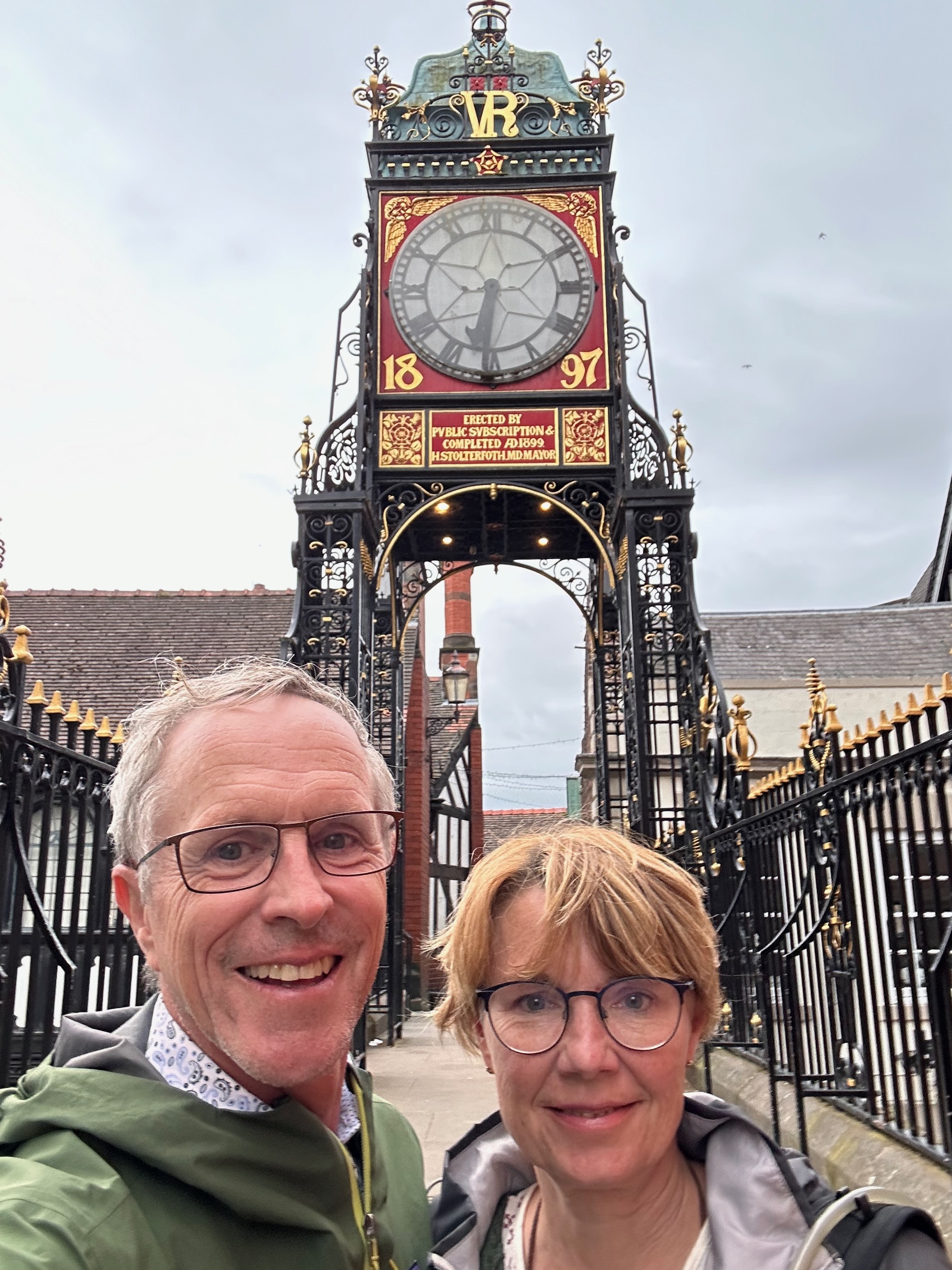
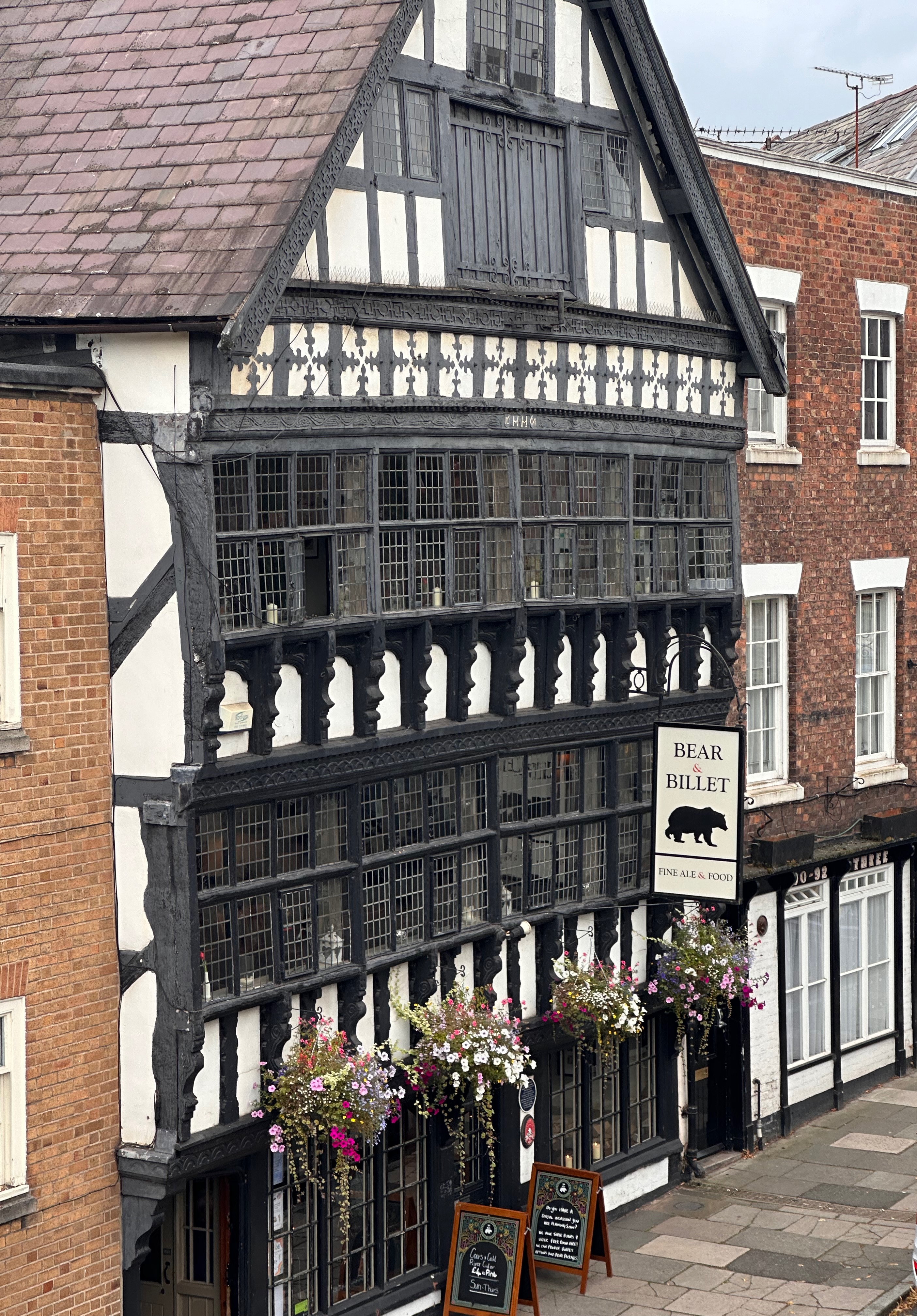
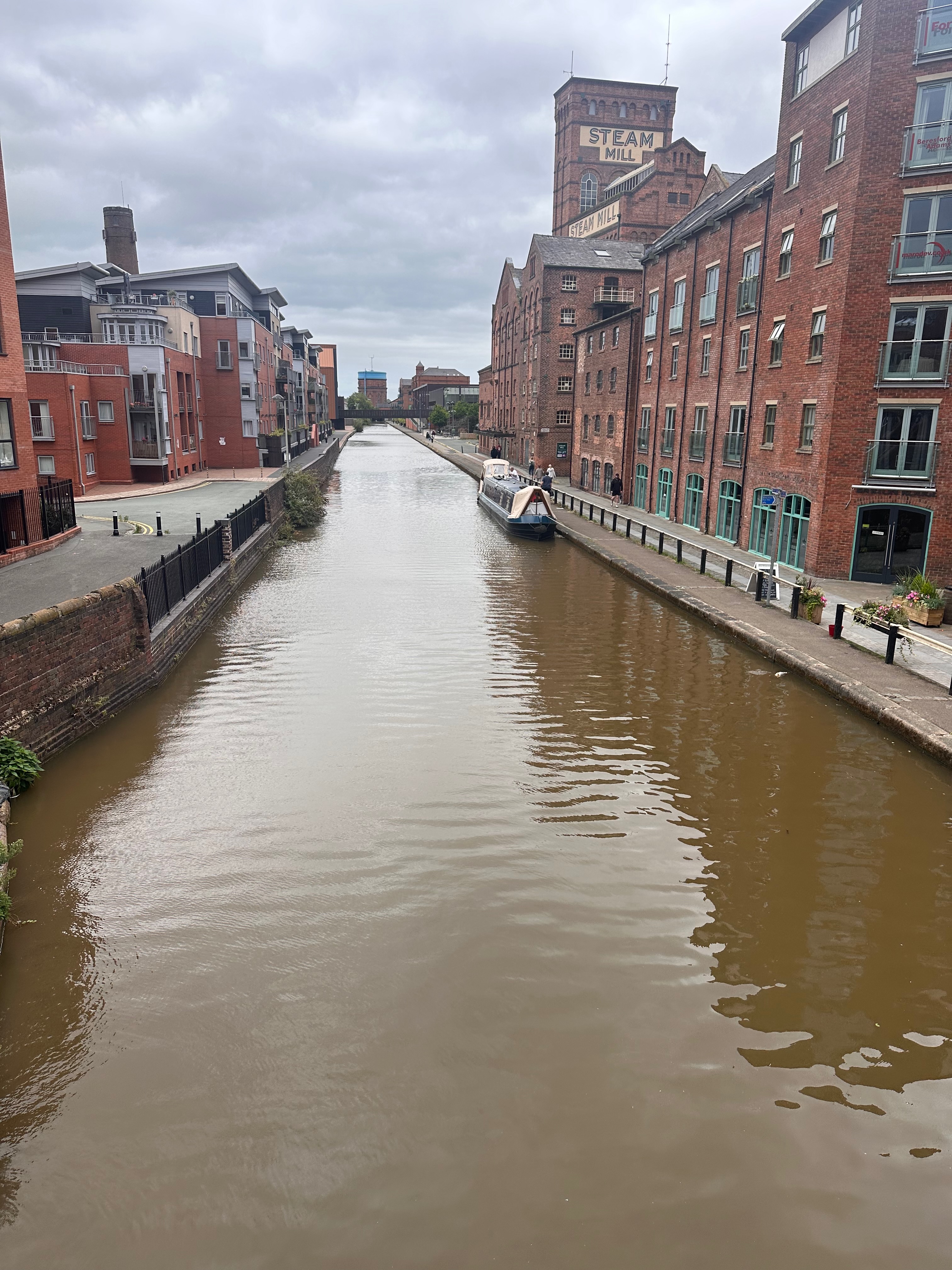
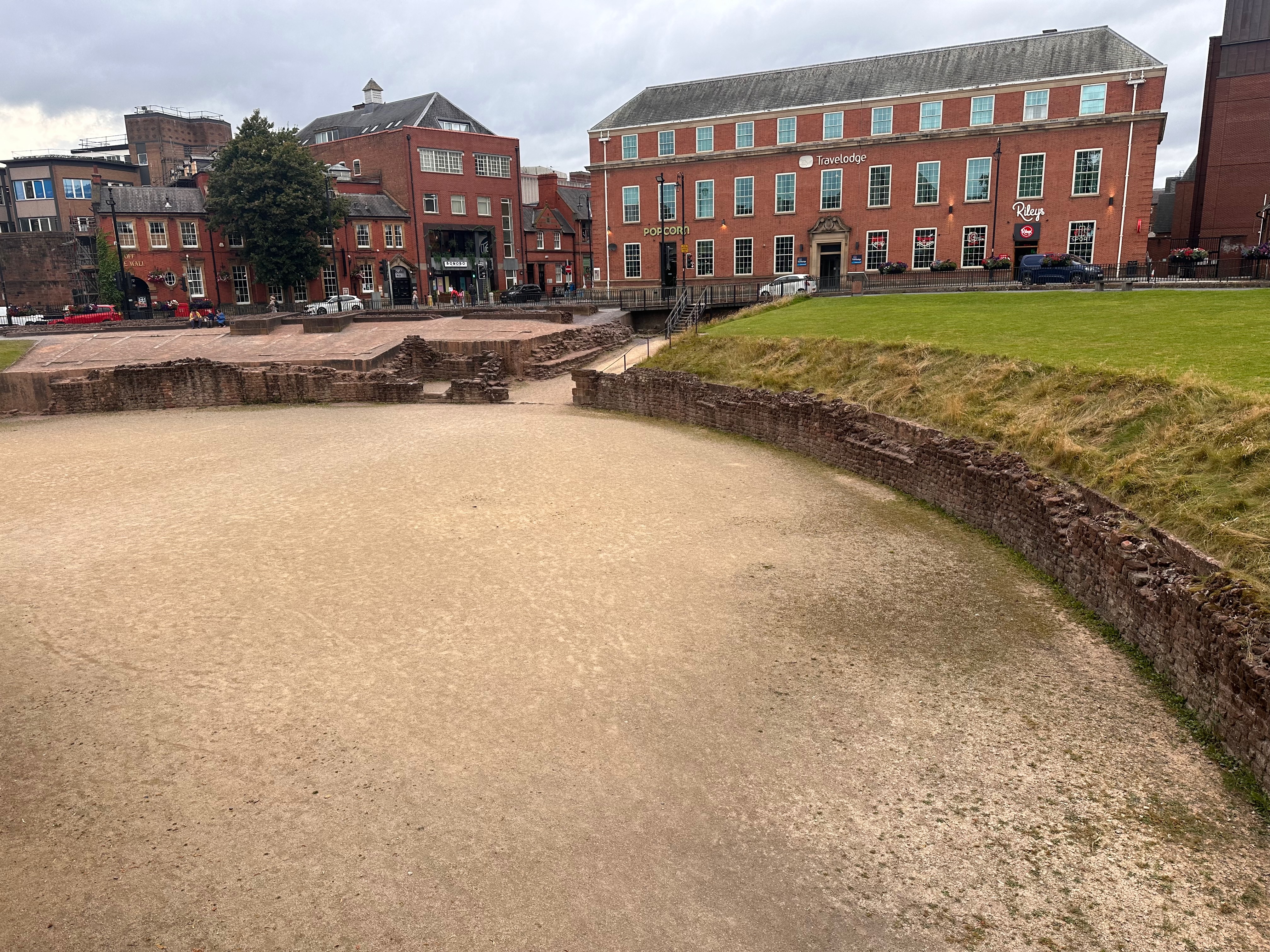
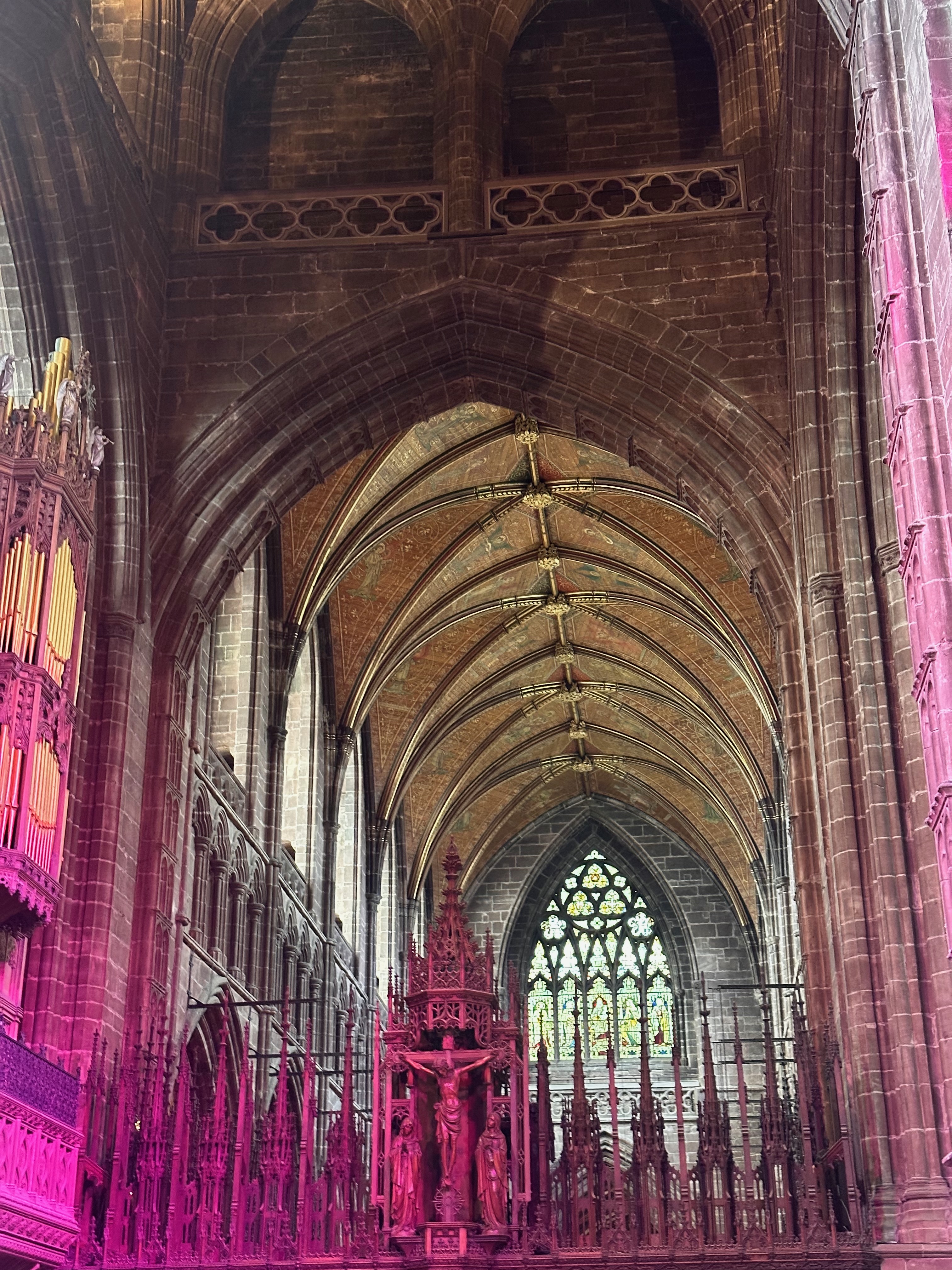
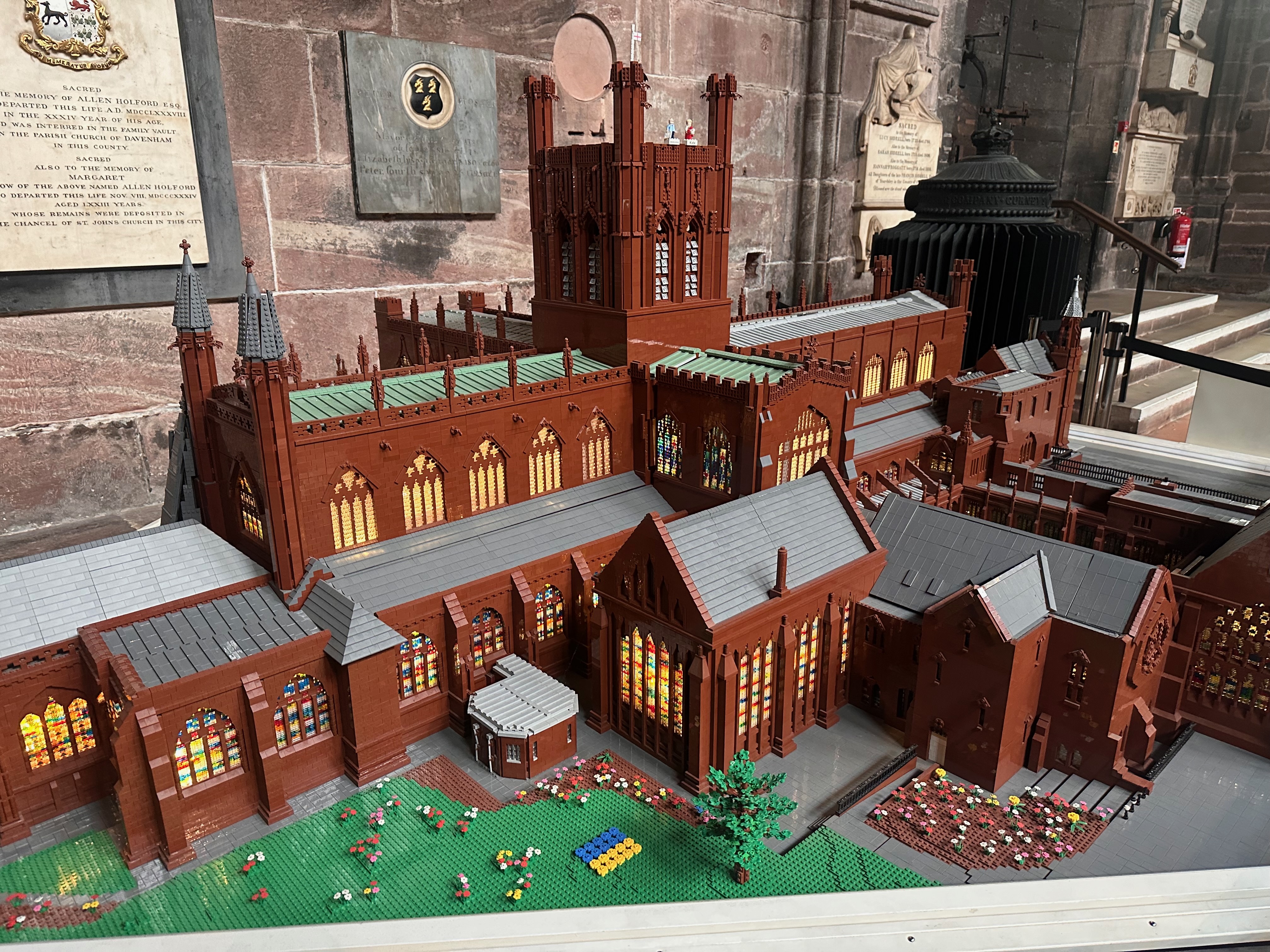
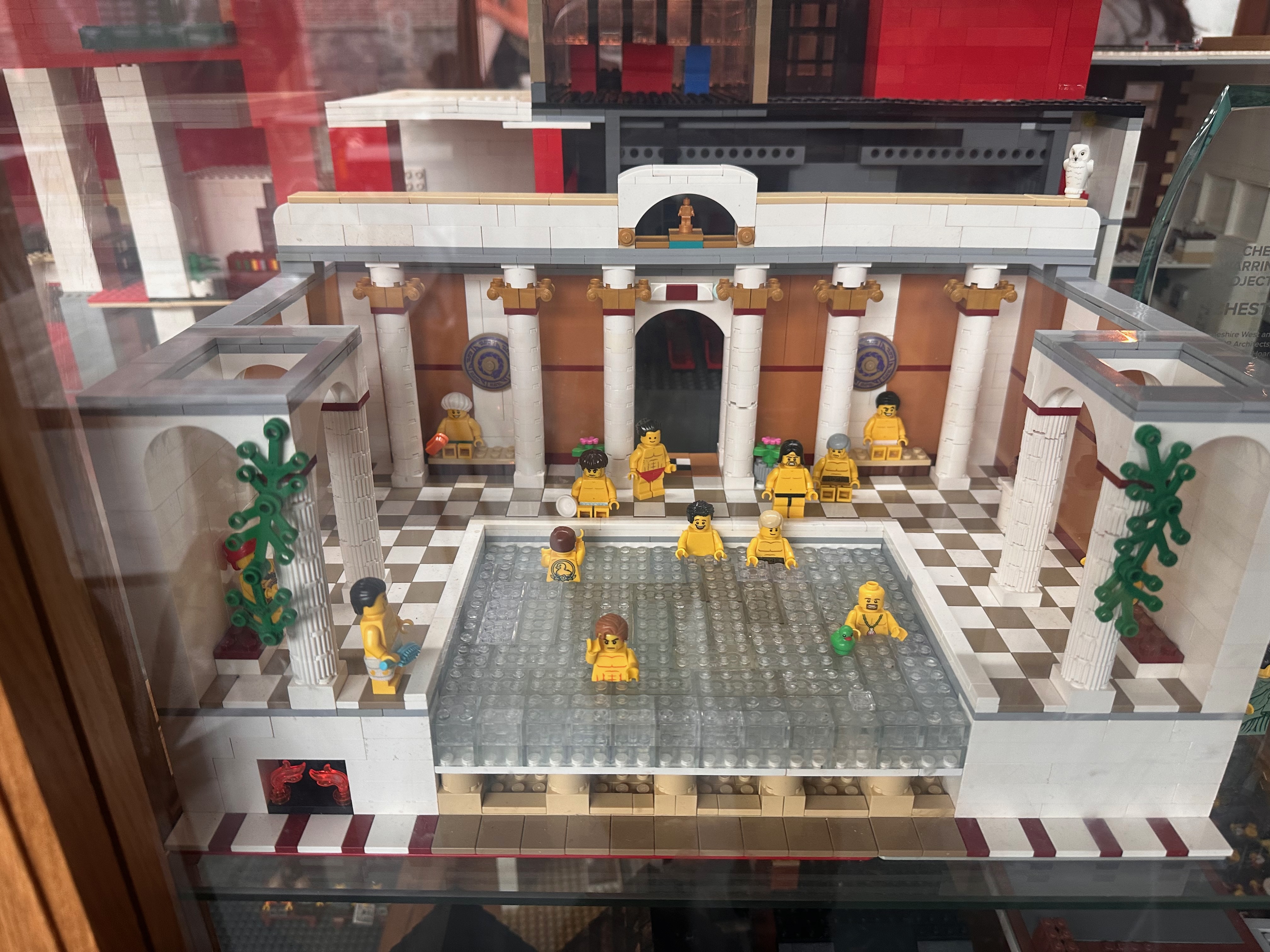
Thus we spent the afternoon revisiting Lori’s old haunts in Chester, including a circuit around the city walls and then dinner before catching the train back to Prestatyn.
Chester StationThe Bishop’s Palace. What used to be Lori’s office.Bishop’s PalaceCity WallsOld ChesterShropshire Union Canal.Roman AmphitheaterCathedralCathedralRoman Baths
Even made it back it time to soothe my feet in the lukewarm spa.
What better idea than to fill the space of an unused cathedral…
Sorry… I thought I’d got all the Offa’s Dyke posts from IG posted on WordPress….appears I didn’t.
A Bit Breezy Up Top Wednesday August 21 2024
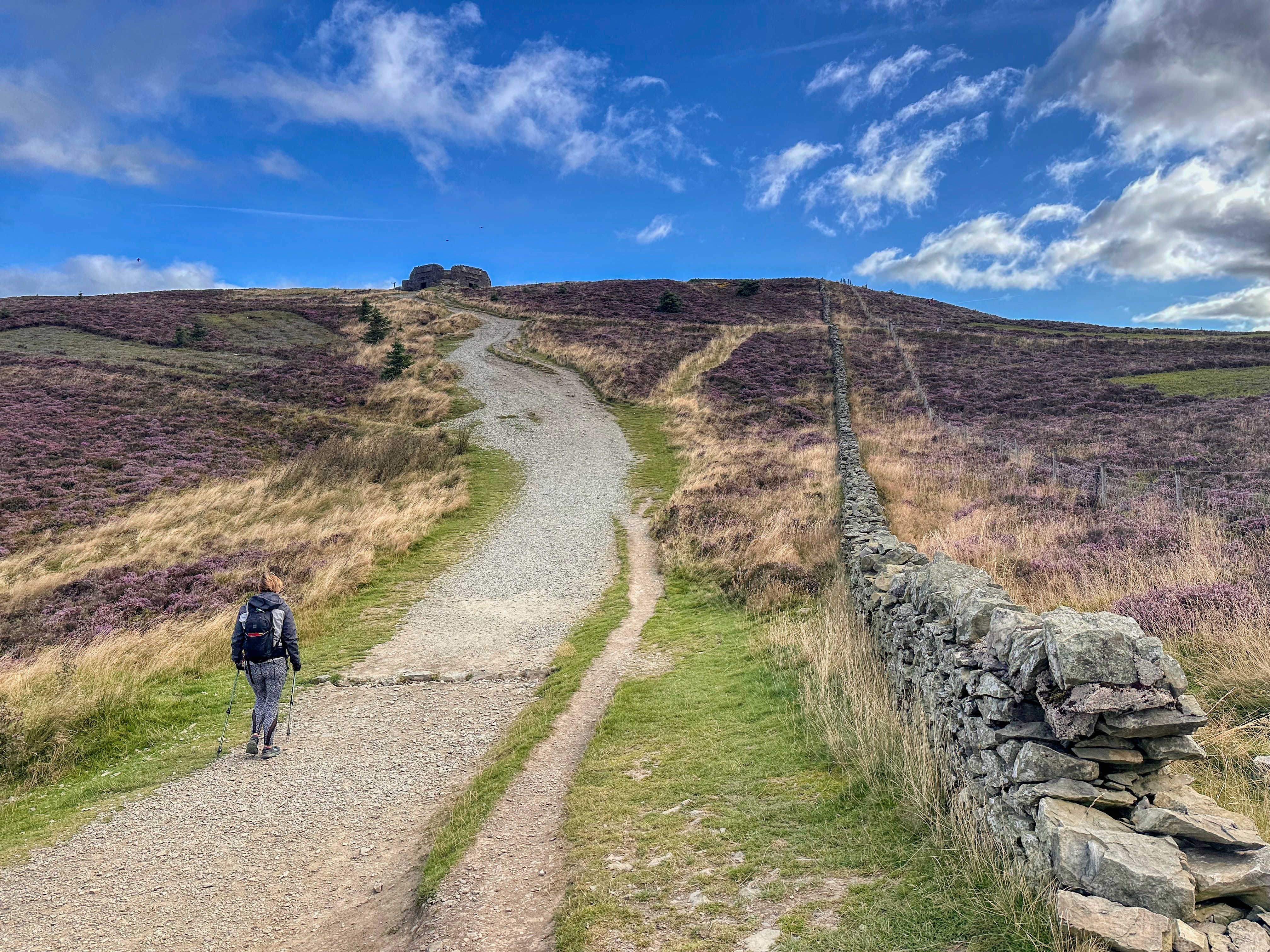
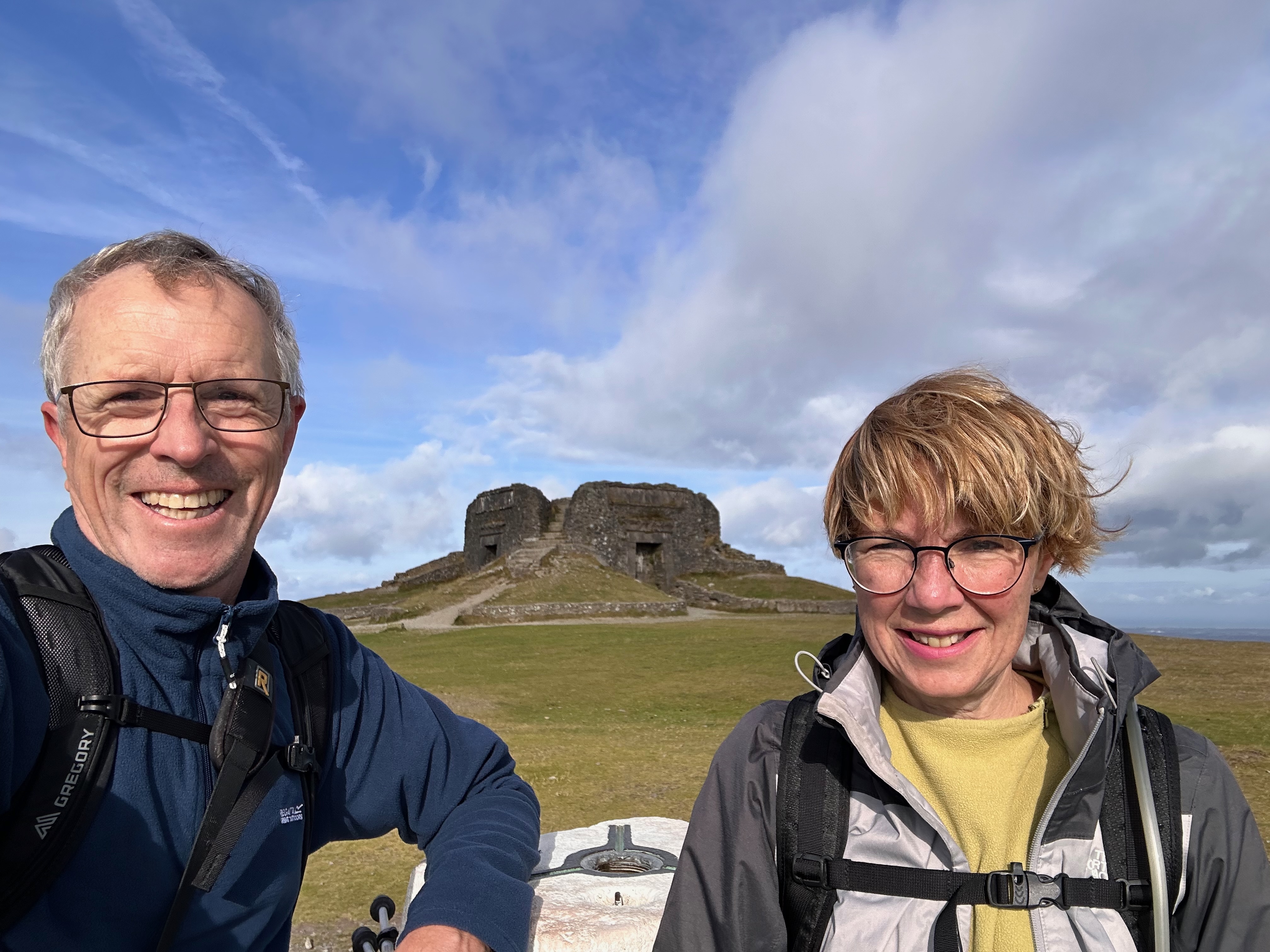
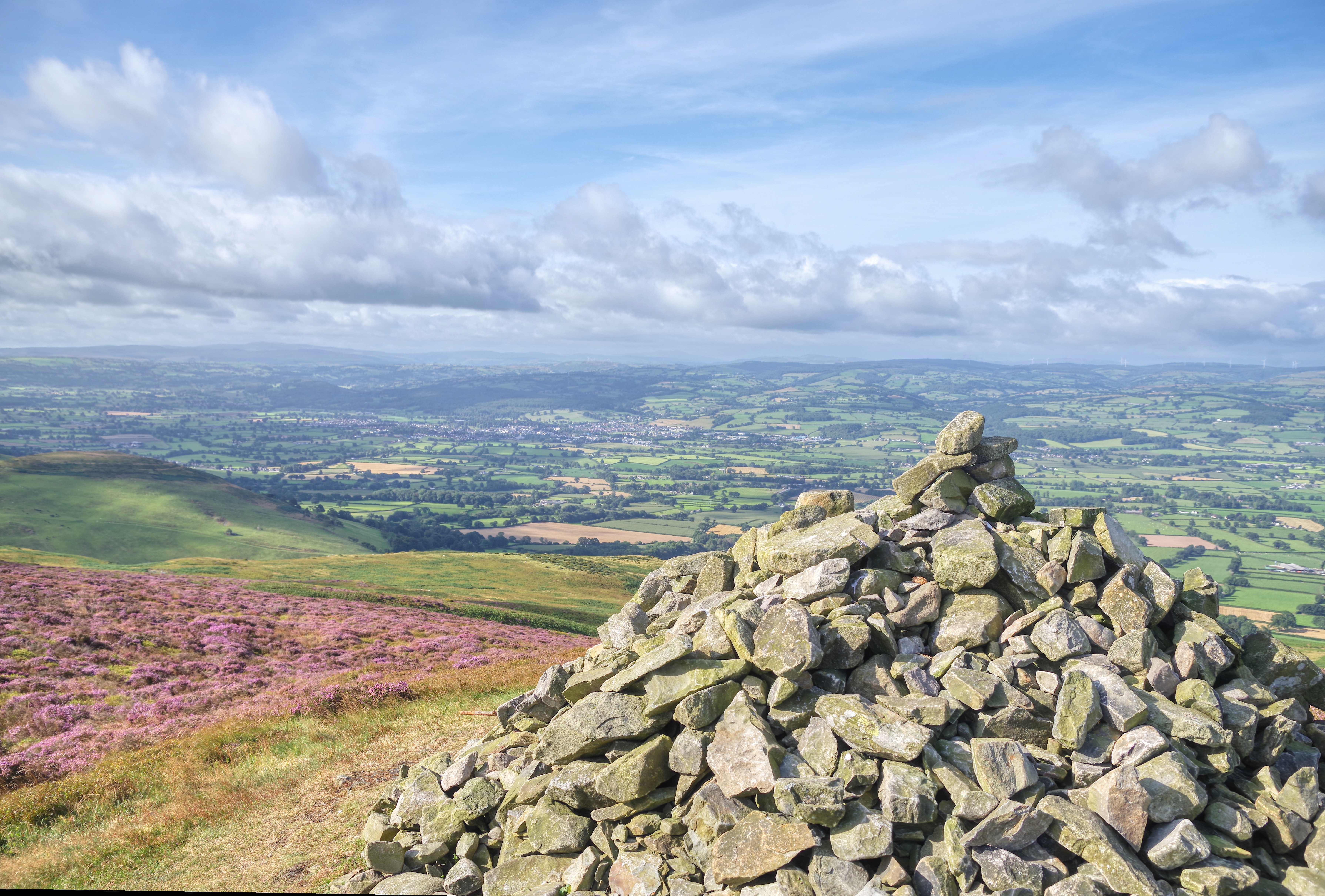
This morning we were returned to the Bwlch Penbarras to start our day with the climb up to Moel Famau, our highest point in the trail. Moel Famau was another of these “we can’t believe we never visited when we lived here” as it really was that close. Moel Famau is a somewhat popular spot to visit as it is adorned by the ruins of the Jubilee Tower. It was built to commemorate the Golden Jubilee of George III in 1810. I am guessing not by the Welsh.
It collapsed in 1862.
It was blown down by the wind.
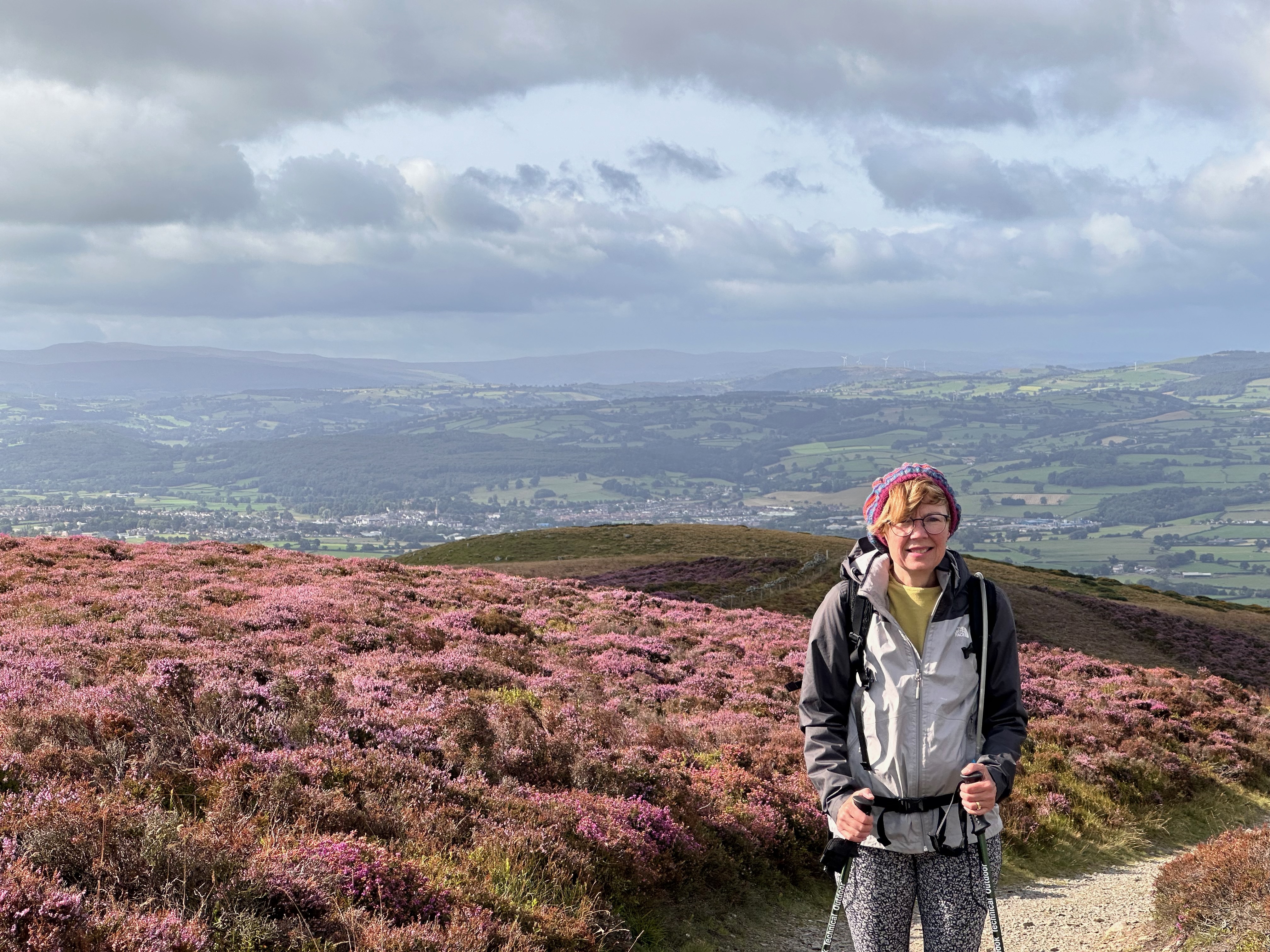
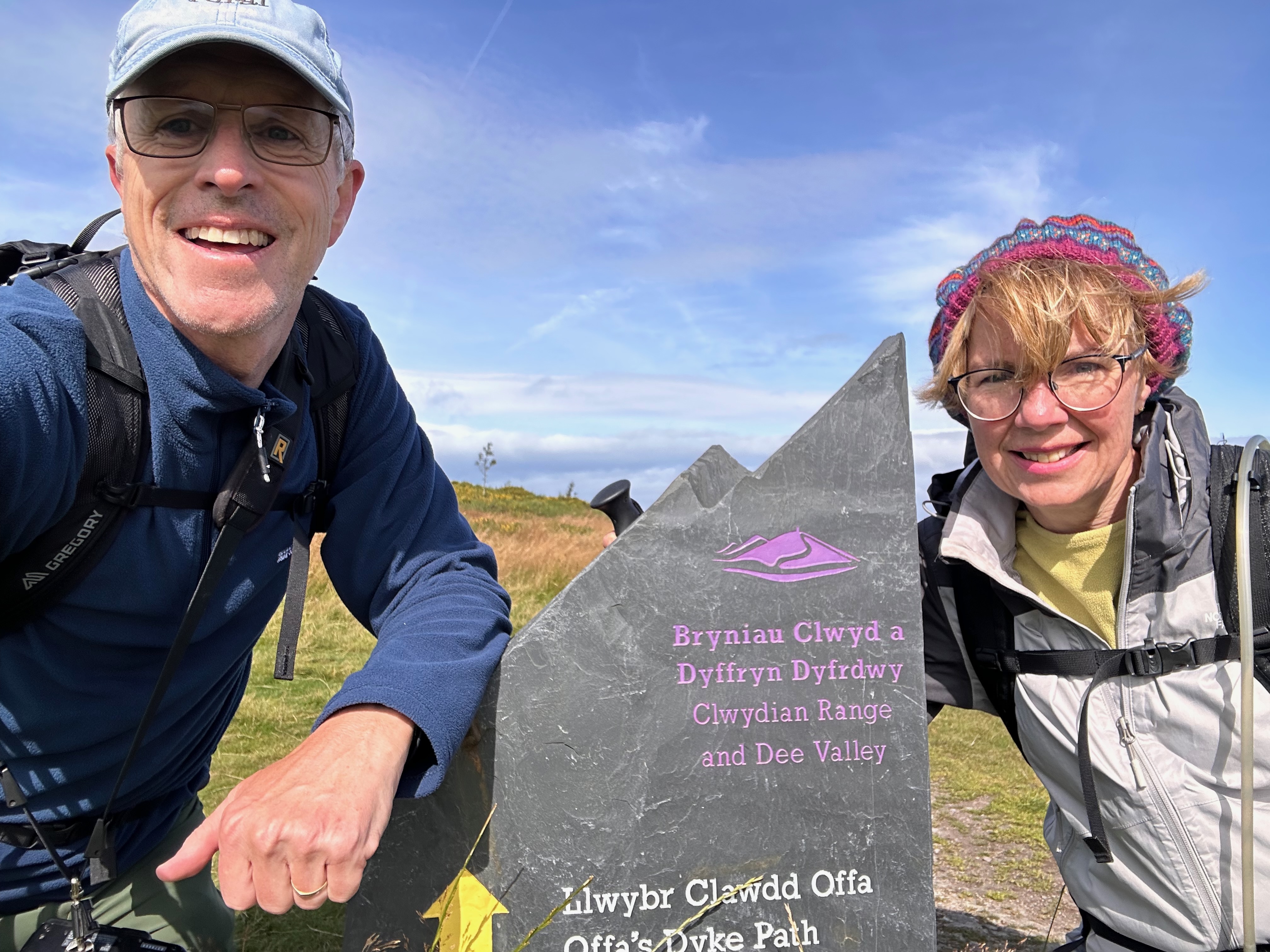
Lori was very glad for the hat knitted for her by Carrie.
We had it to ourselves this morning. Well except for the crazy mountain biker doing hill repeats and a couple of very hardy fell runners.
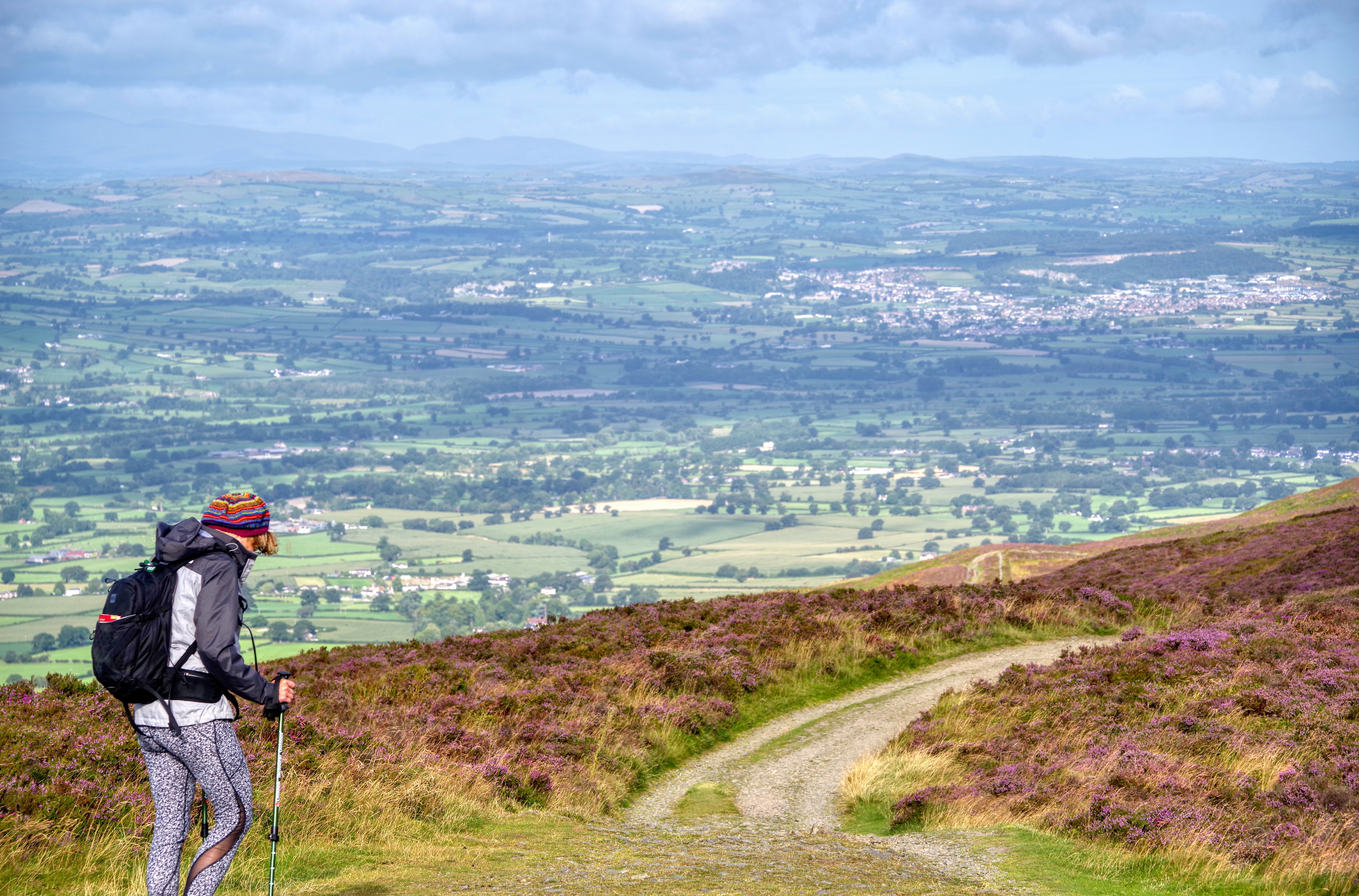
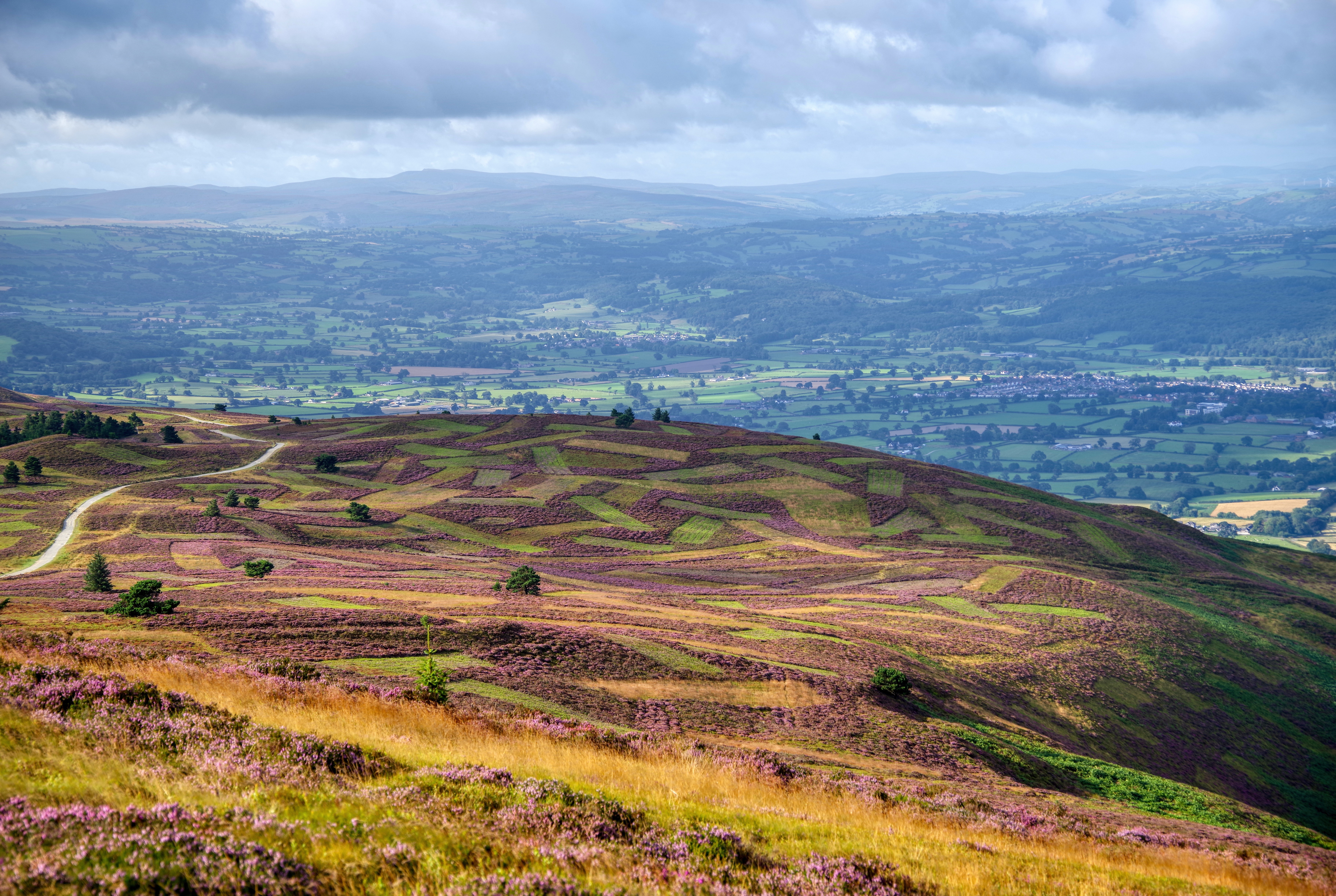
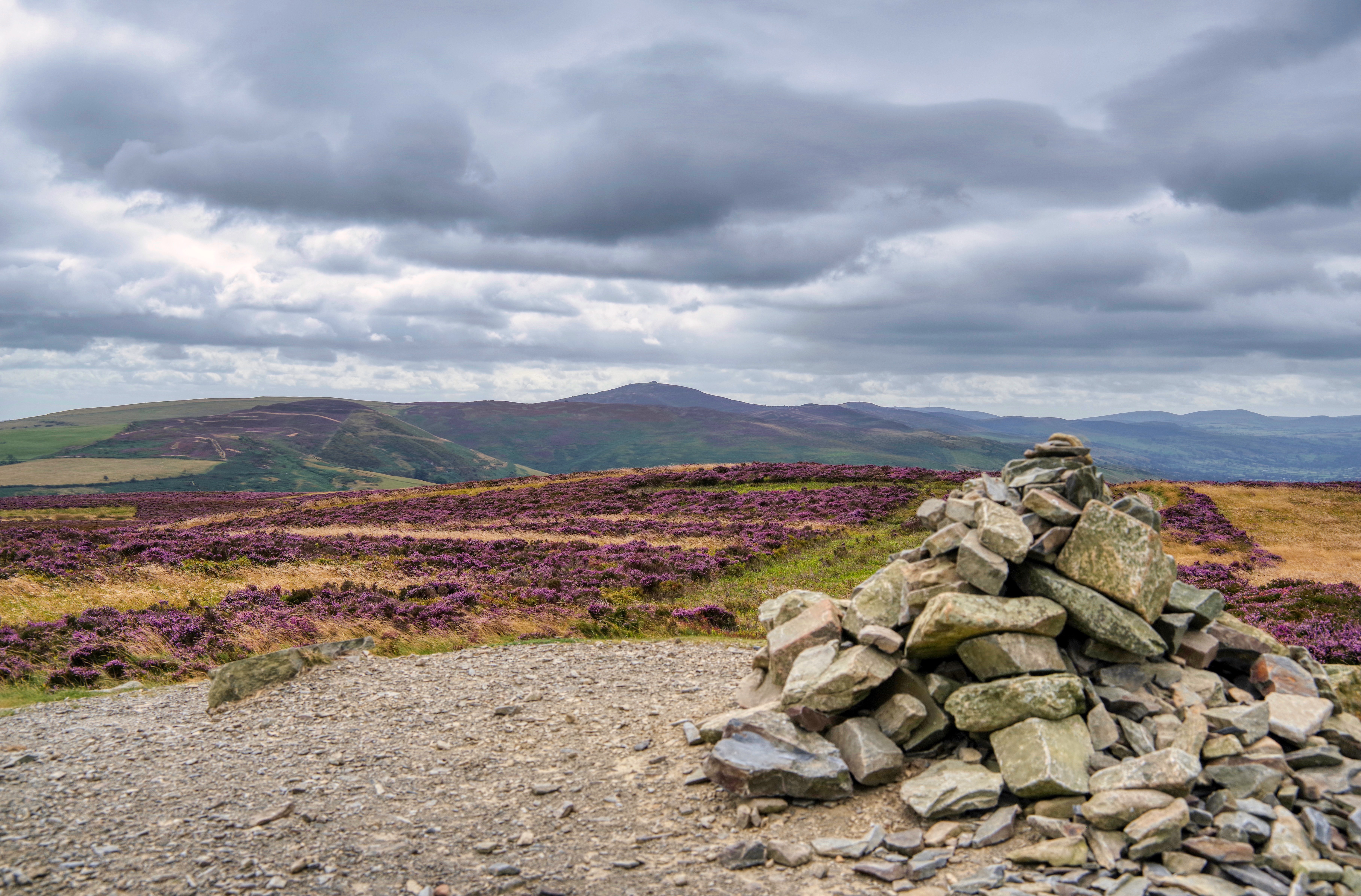
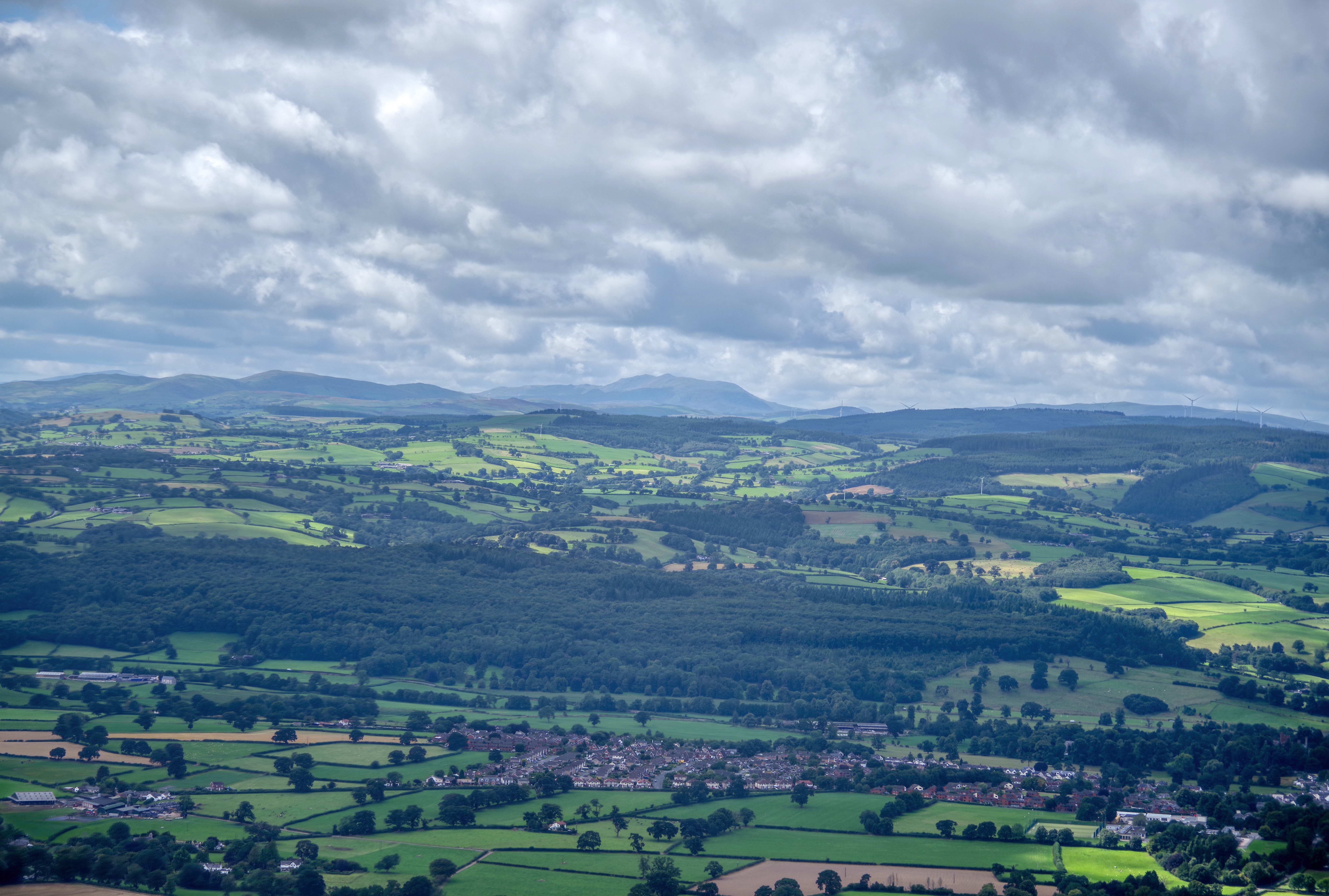
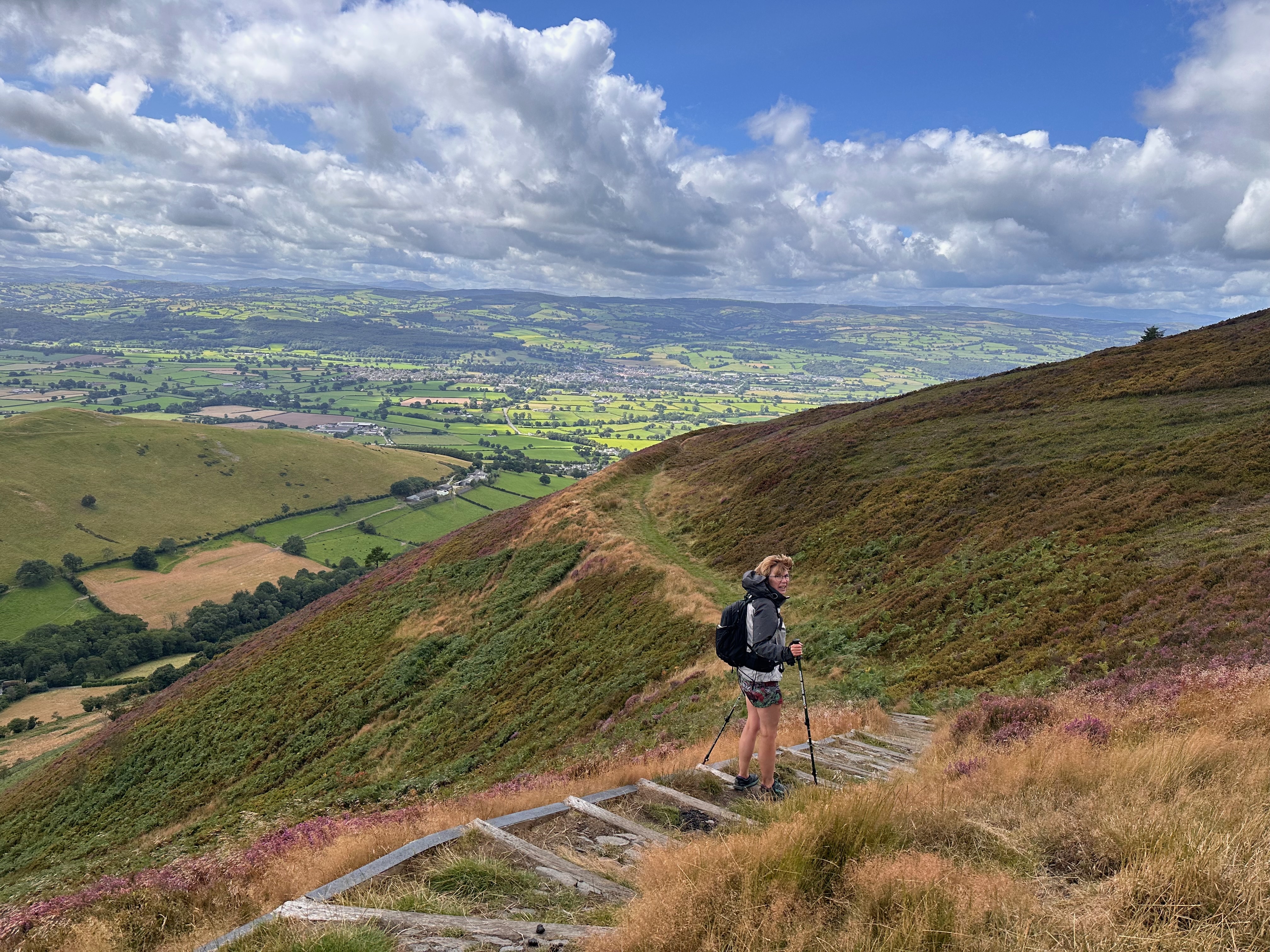
Ascending to Moel FamauMoel FamauLori’s HatThe Vale of ClwydPatchwork HeatherMulticoloured Heather
The well built (and drained!) trails were a blessing after the overnight rain.
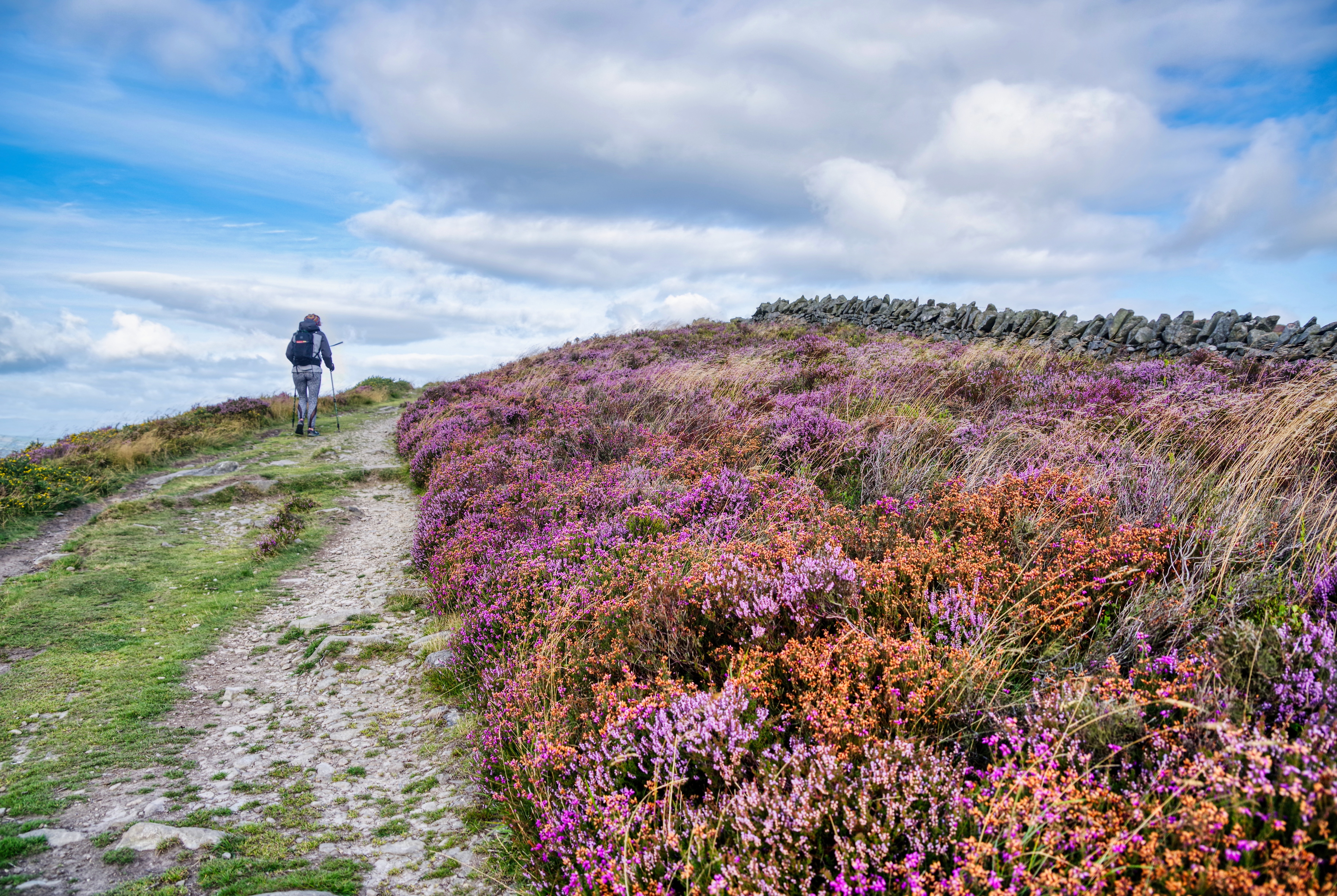
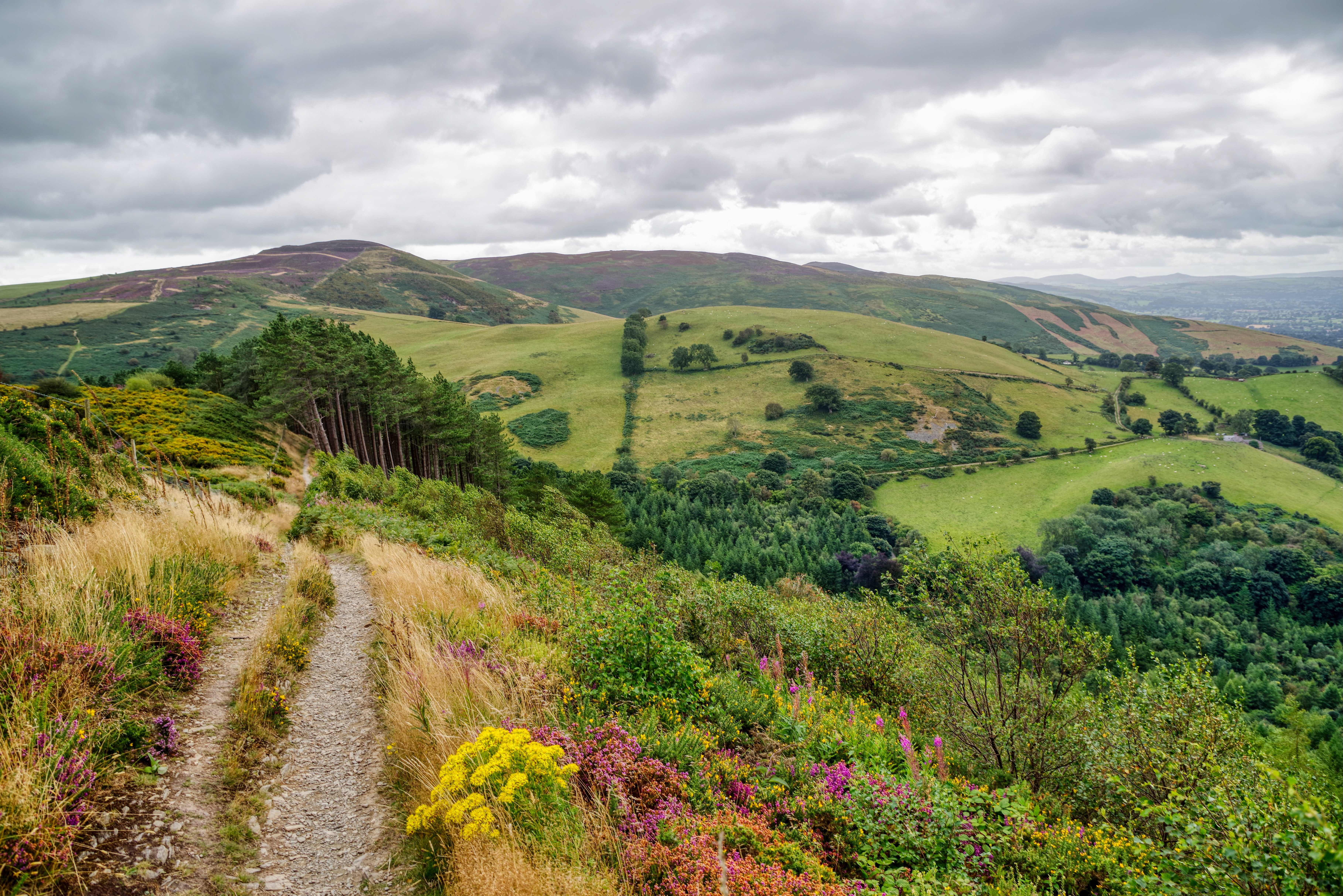
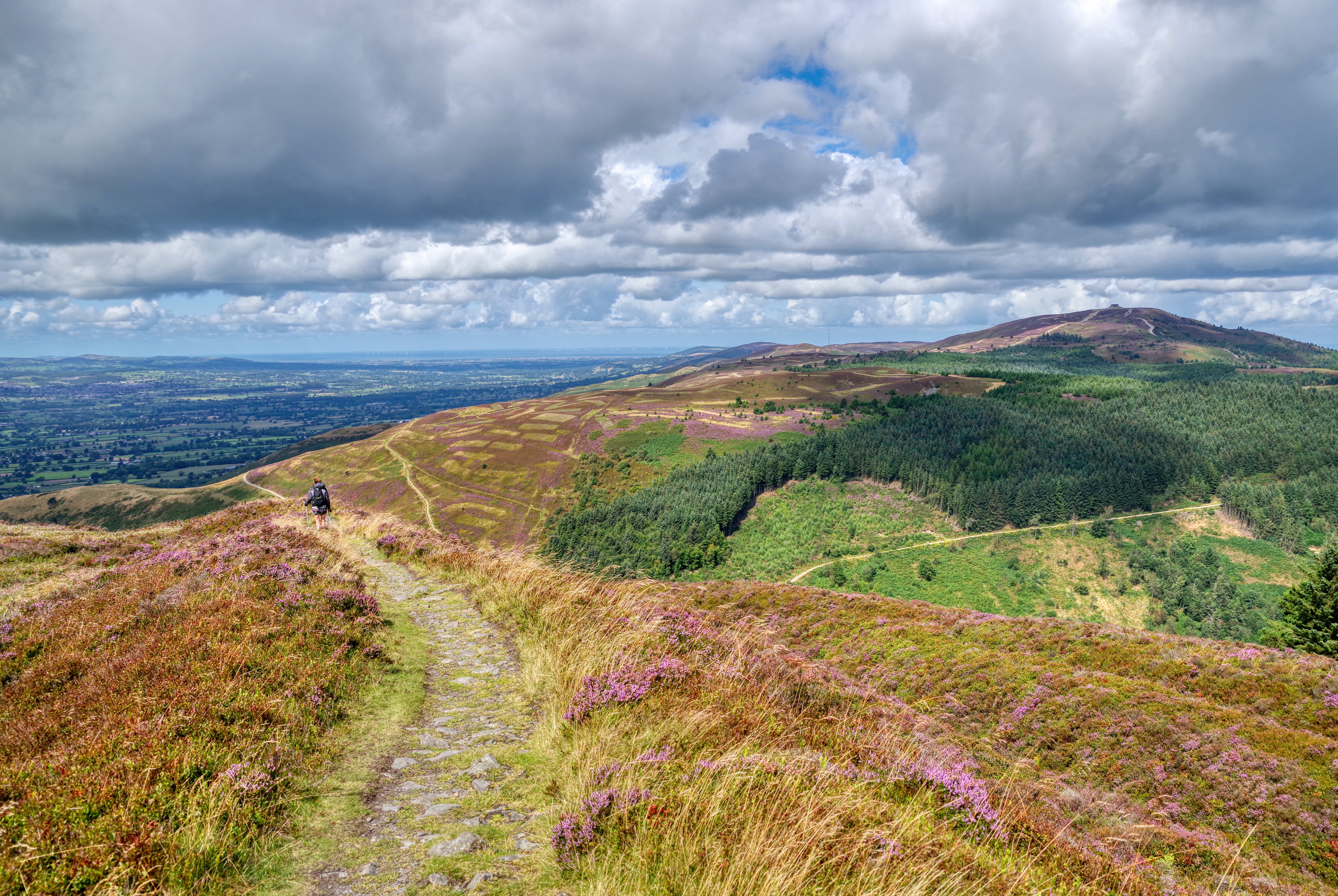
Today we were walking up and down the ridge of the Clwydian Hills, again taking in several Iron Age hill forts. Again forts that were well defended by the wind. At times I had to remove my cap for fear of losing it and on one occasion my glasses nearly blew off.
We forgoed climbing Moel Arthur because of the wind. The descent down to the Clwyd forest gave us a welcome respite. It was there we met a walker coming down from our next hilltop climb, Penycloddiau, who summed up the day wth perfect British understatement. “A bit breezy up top”.
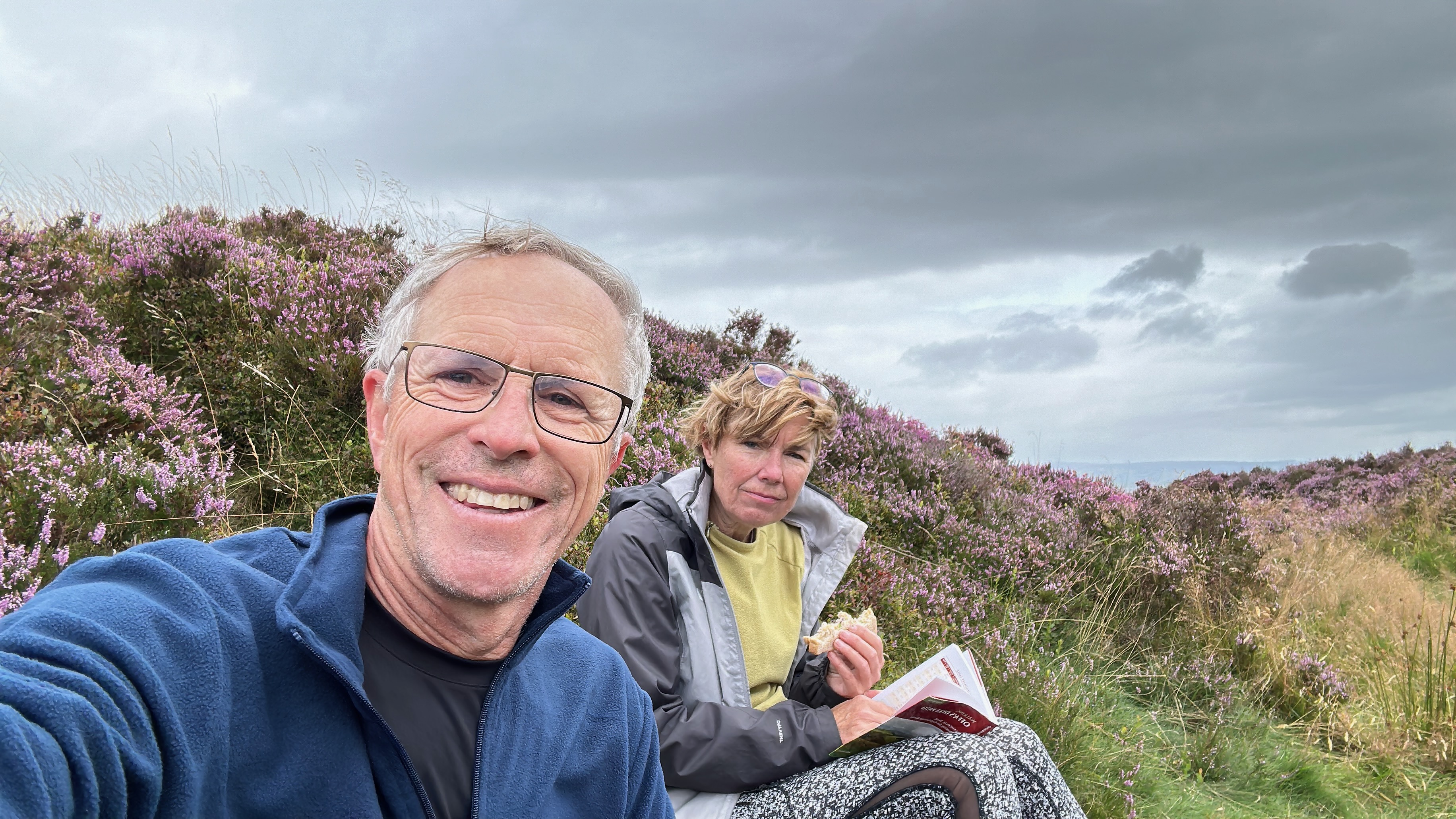
Moel ArthurHang on to your hatA seat. And therefore to sit.The Path AheadThe Path travelled (Moel Famau in the distance).Yes it was that windy.Looking back from Penycloddiau to Moel FamauSheltering from the wind for lunch.
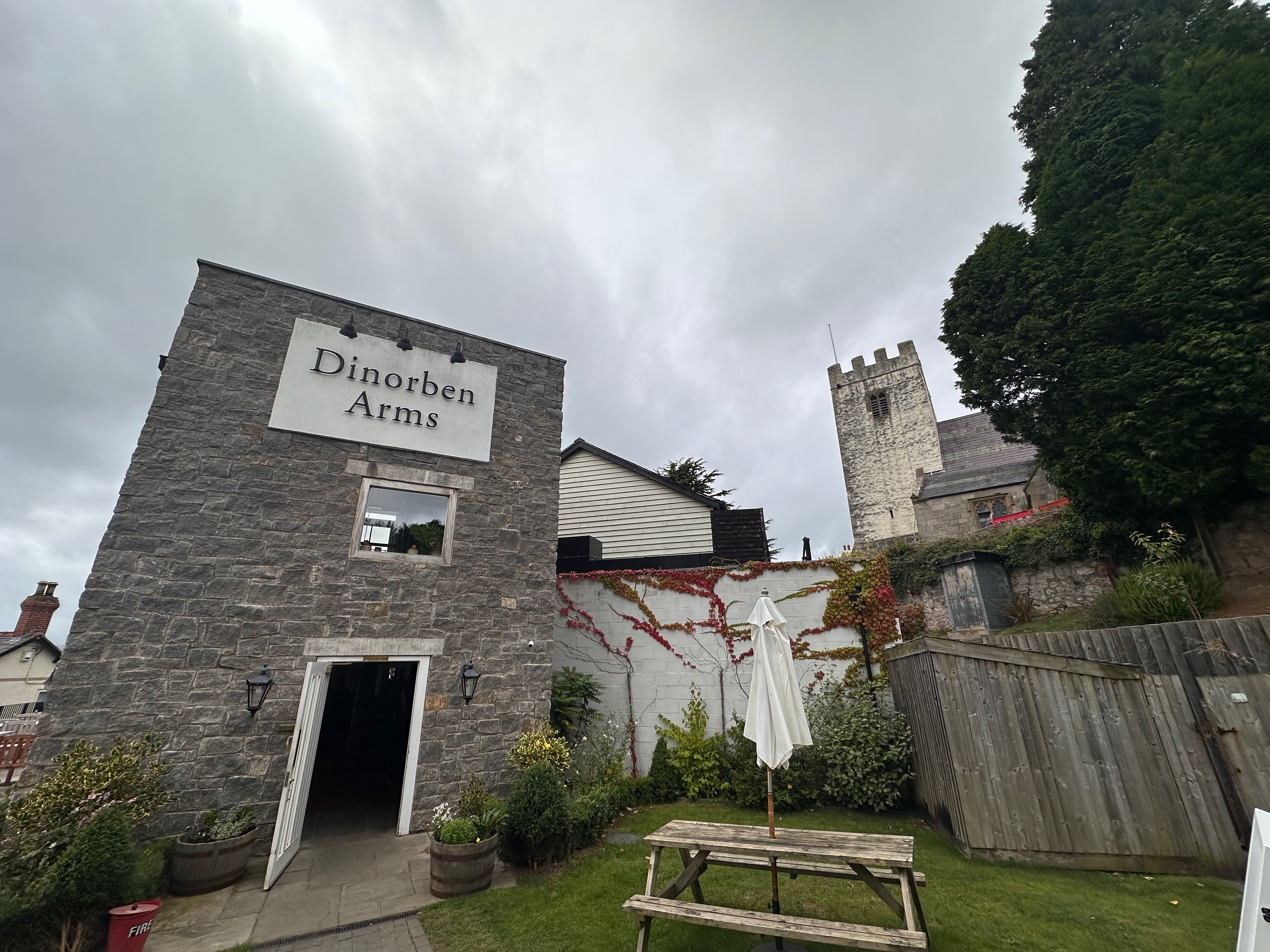
We sheltered in a Iron Age ditch to eat our lunch then descended down to Bodfari to be rewarded by a fine cappuccino at the equally fine (and very popular) Dinorben Arms while awaiting our taxi to the hotel at Prestatyn.
Due to the lack of facilities along the path we were very prudent about what we chose for breakfast. Usually we had yoghurt mixed with granola and fruit. So when the server this morning asked “And what would you like for your real breakfast?” we politely declined, understanding full well what the outcome of indulging in a good fry up would be later in the morning.
Suitably abluted we were returned to Llandegla to rejoin the path.
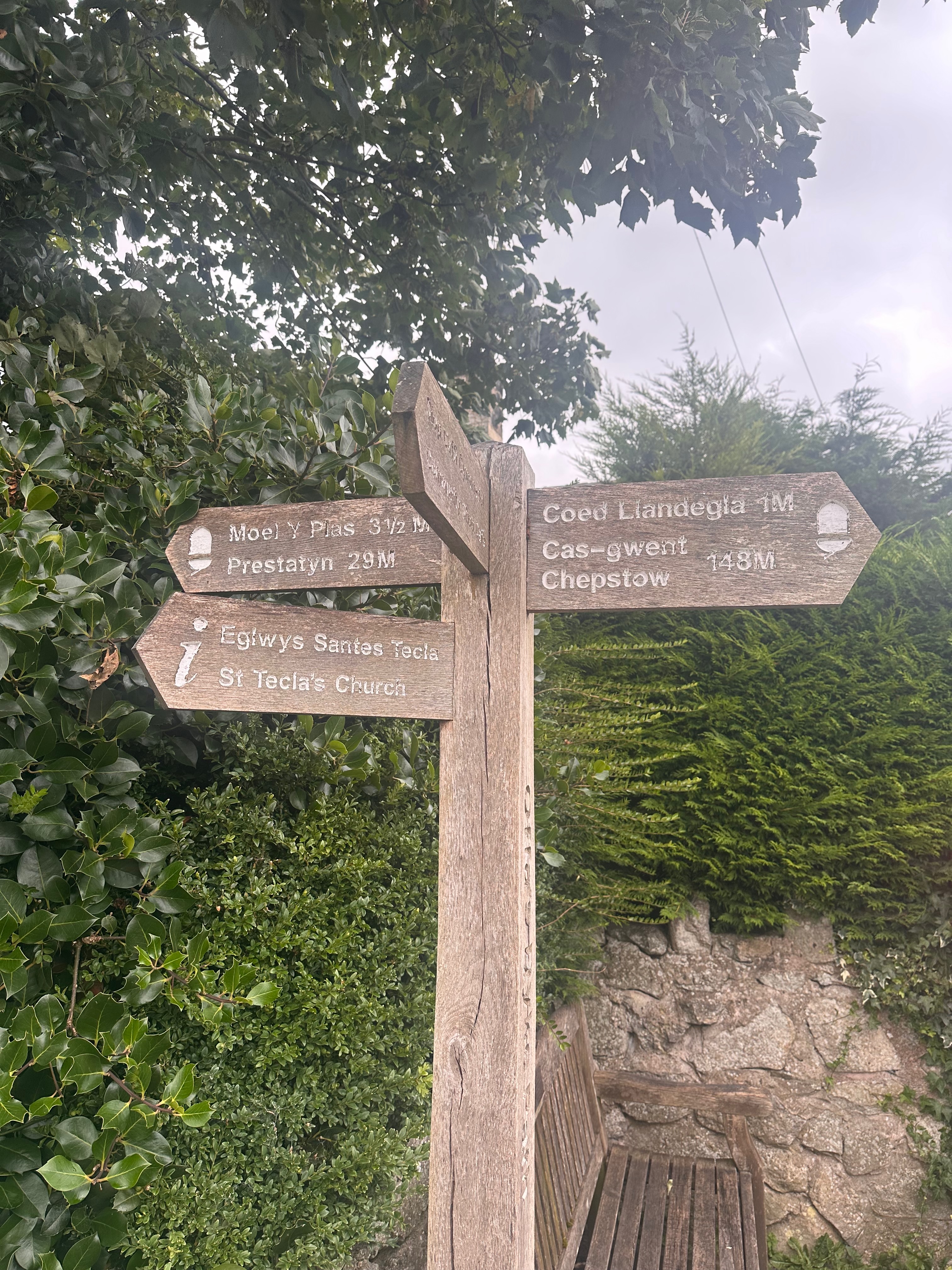
We started out walking through the customary (damp) farmer’s fields alongside and over brooks and streams (rather ostentatiously called the River Alyn). As we climbed back up towards the hills we could stop to look back and remark “Goodness did we really come that far”.
That far to goRiver Alyn
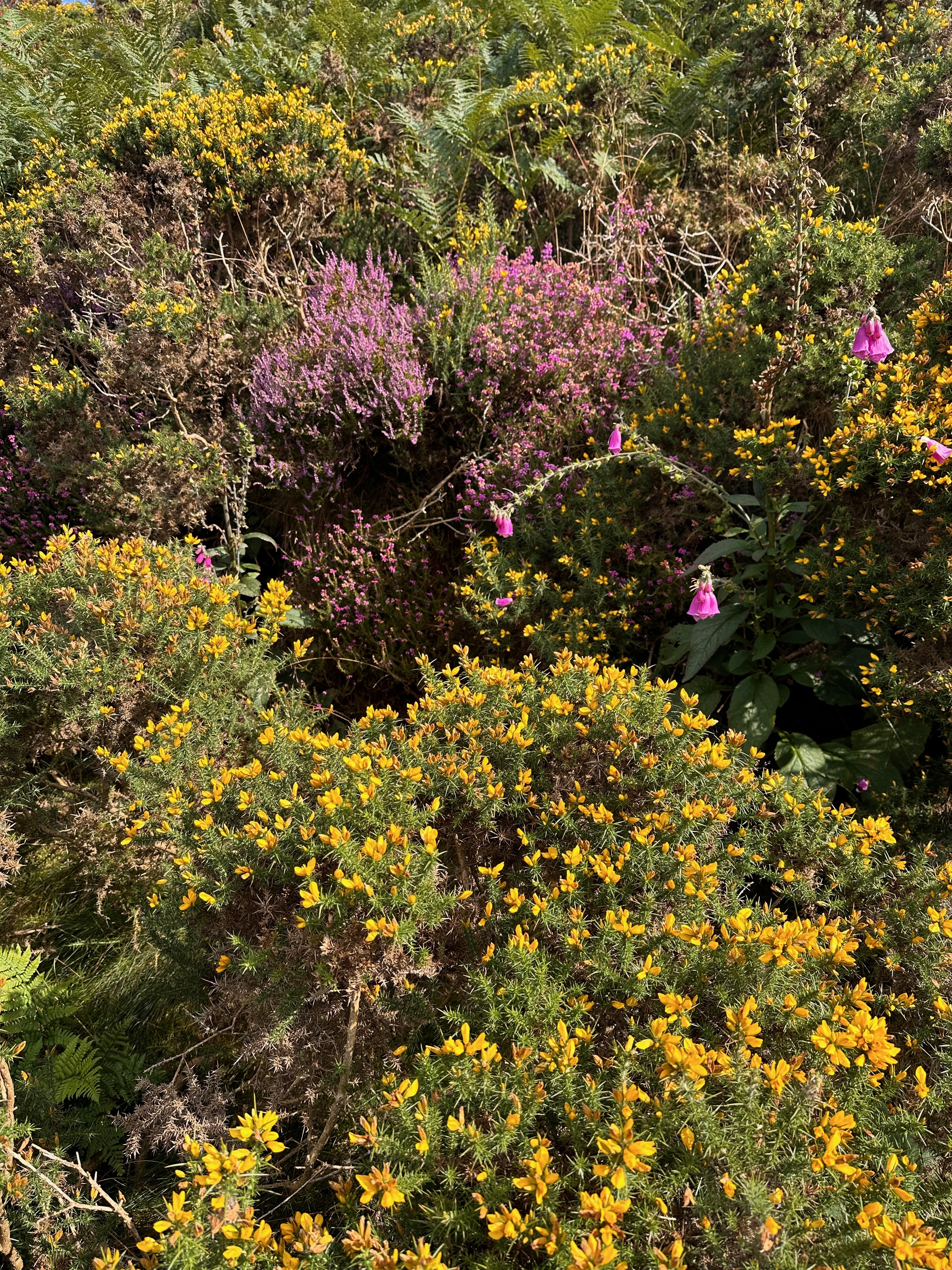
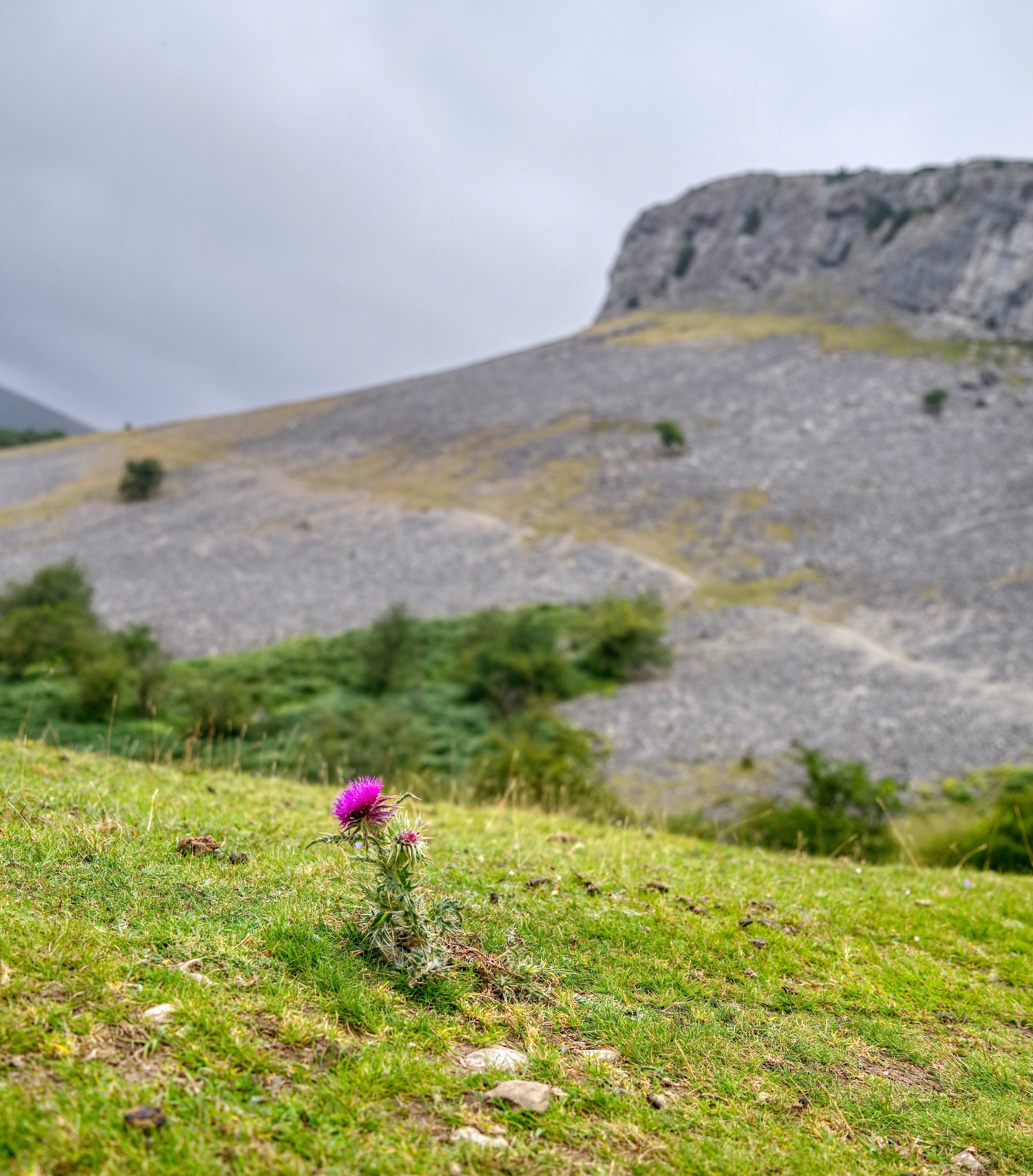
We gradually climbed up the western ridge of Moel Y Plas, Moel Llanfair and Noel Gyw which afforded us views down into the Vale of Clwyd and eventually, as we climbed higher, further afield to distant Snowdonia. As we climbed higher we returned to the fields adorned with heather and gorse, and erm, “caressed” by the wind.
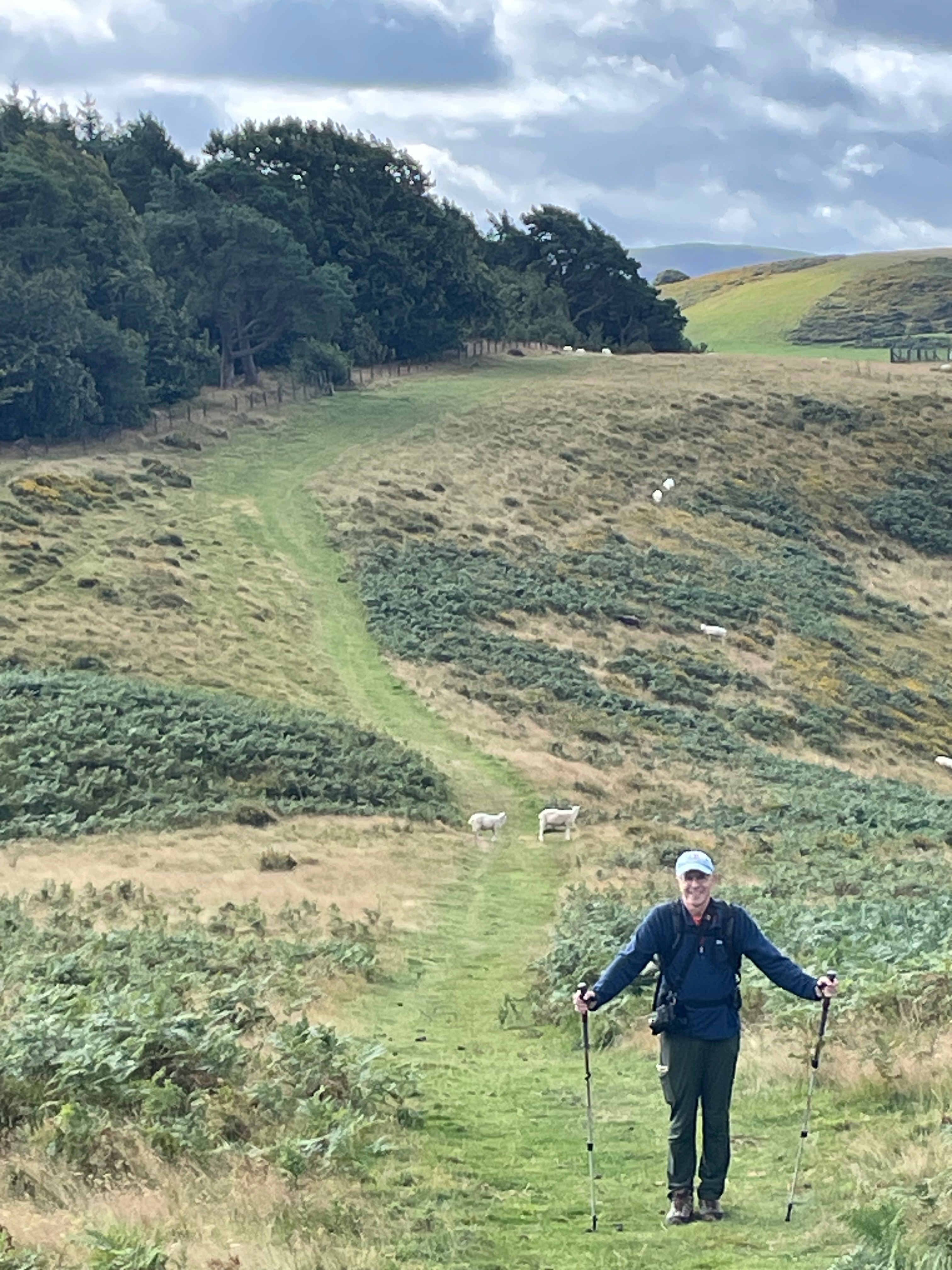
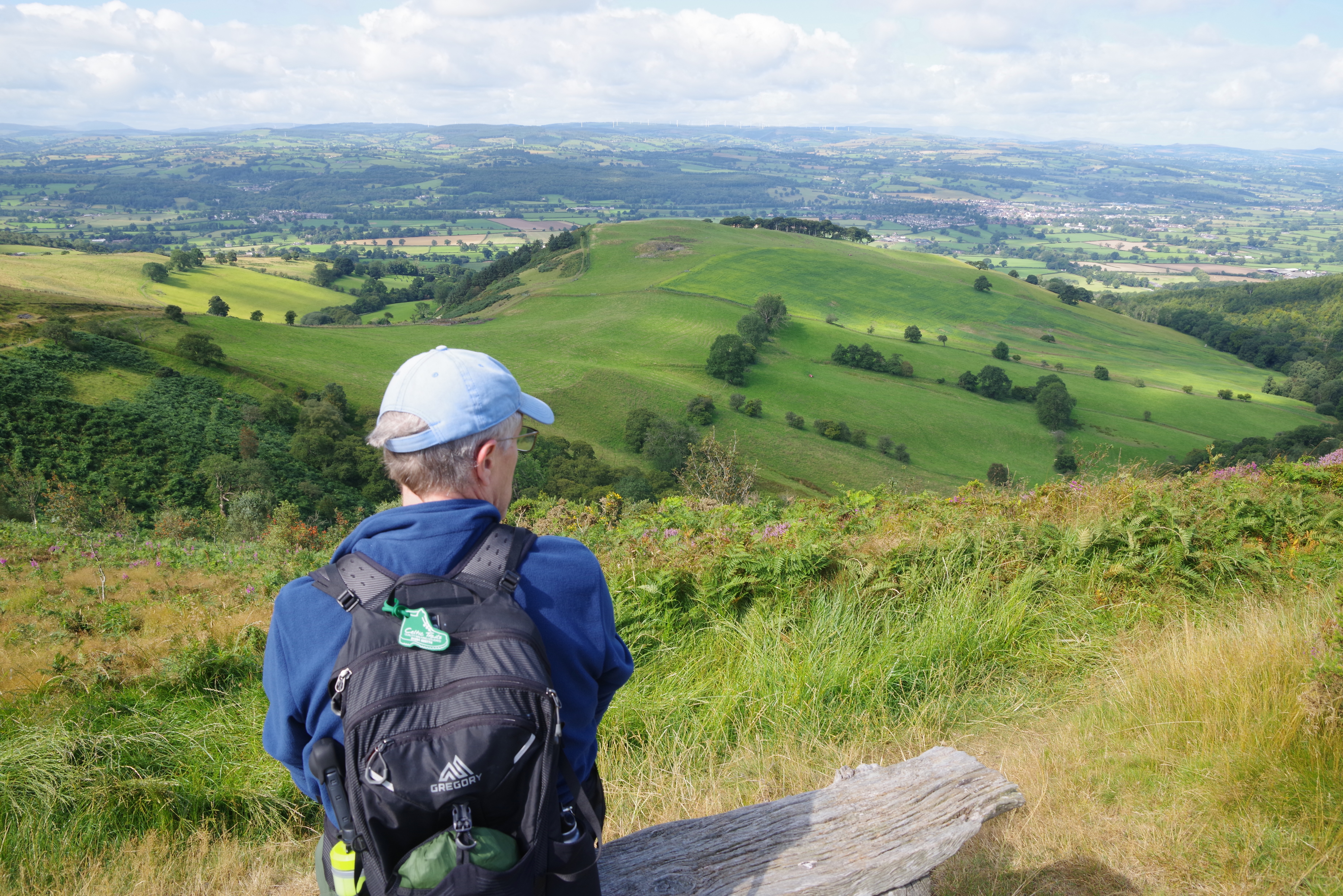
I think we can go around this oneSheep stand-offStand-off successfully negotiatedGorseHeatherNever pass up a seatGorse and HeatherTowards Snowdonia
Rather than take the path around we chose to climb up and over the hill fort of Foel Fellni. This summit afforded us views of our path tomorrow over Moel Famau as well as views north east to The Wirral and Liverpool and even the Dee Estuary and our final destination.
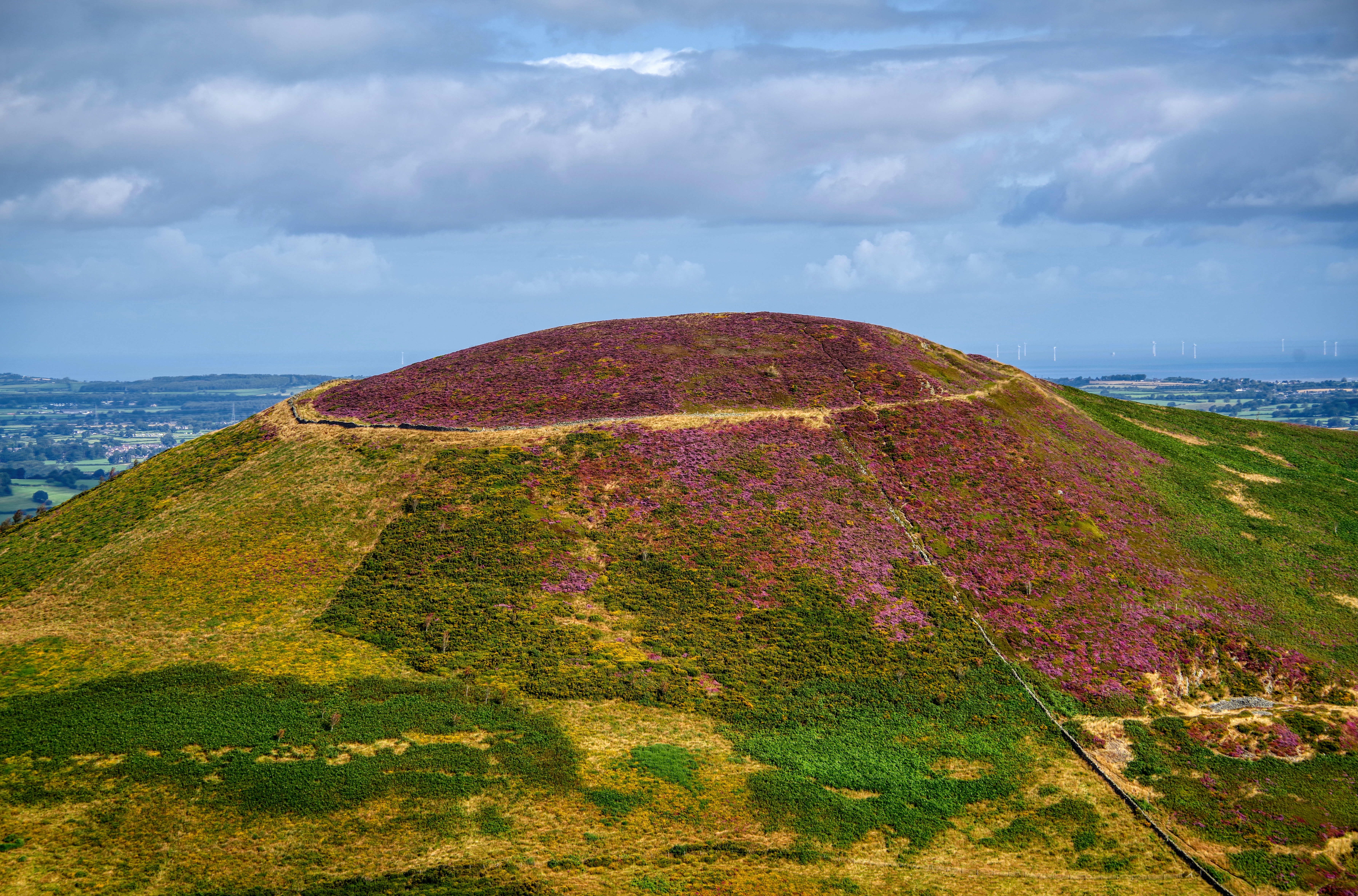
Fellni was one of the many hill forts adorning the peaks of these hills. Though why one would need to fortify it was unclear as the wind was enough to keep anyone at bay.
Foel FellniTowards Moel Famau and the Dee Estuary
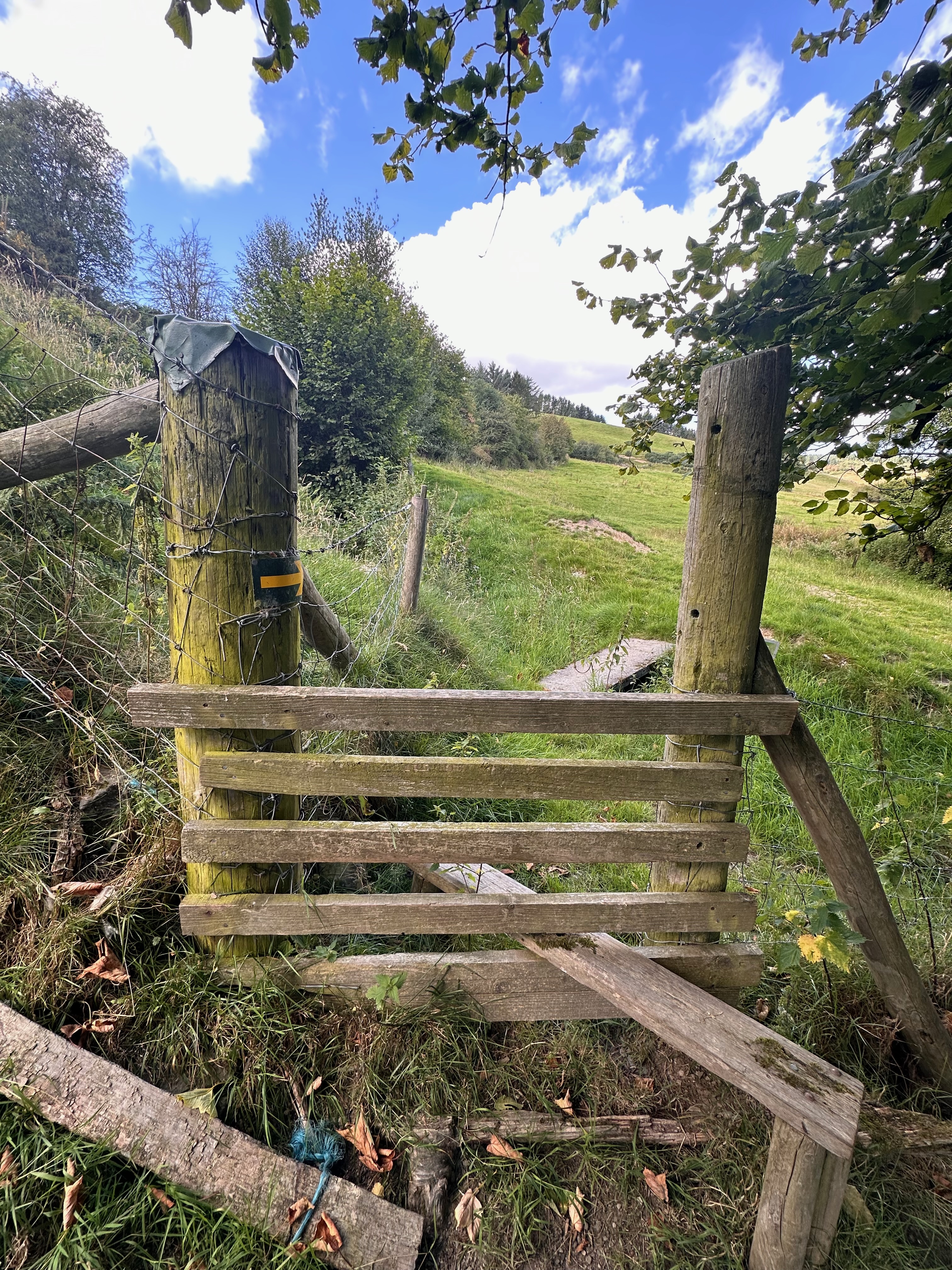
We descended the sleep slope down into Bwlch Penbarras (and marvelled at those hiking up the other way). Here, instead of calling for our ride, we chose to walk the extra back to the Druid Inn. After a pleasant forest walk it became a bit more adventurous and uncertain as we were really walking through a farmers yard and then we picked the wrong side of the fence to continue down to the next style and so had to scramble back over a barb wire fence.
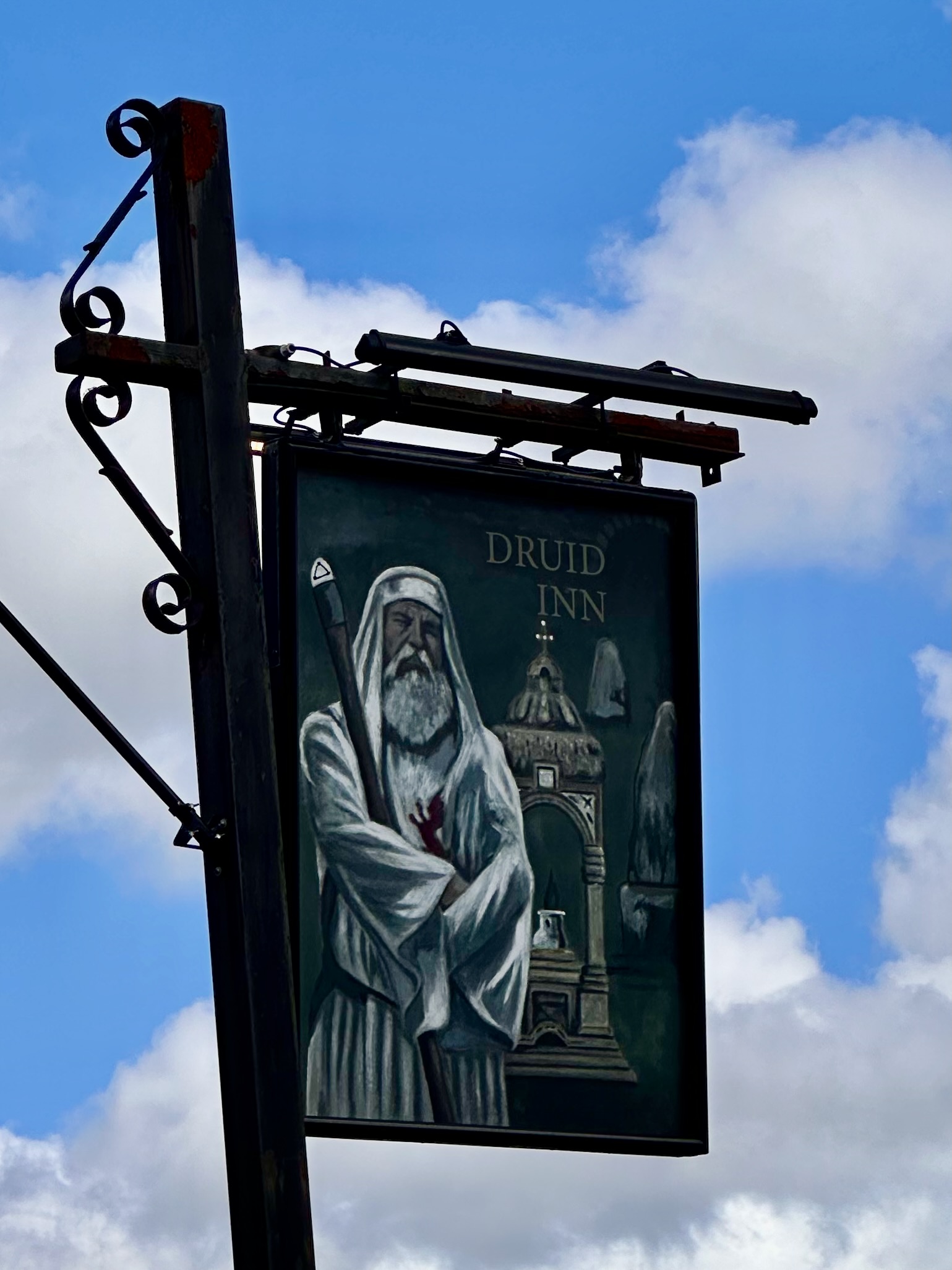
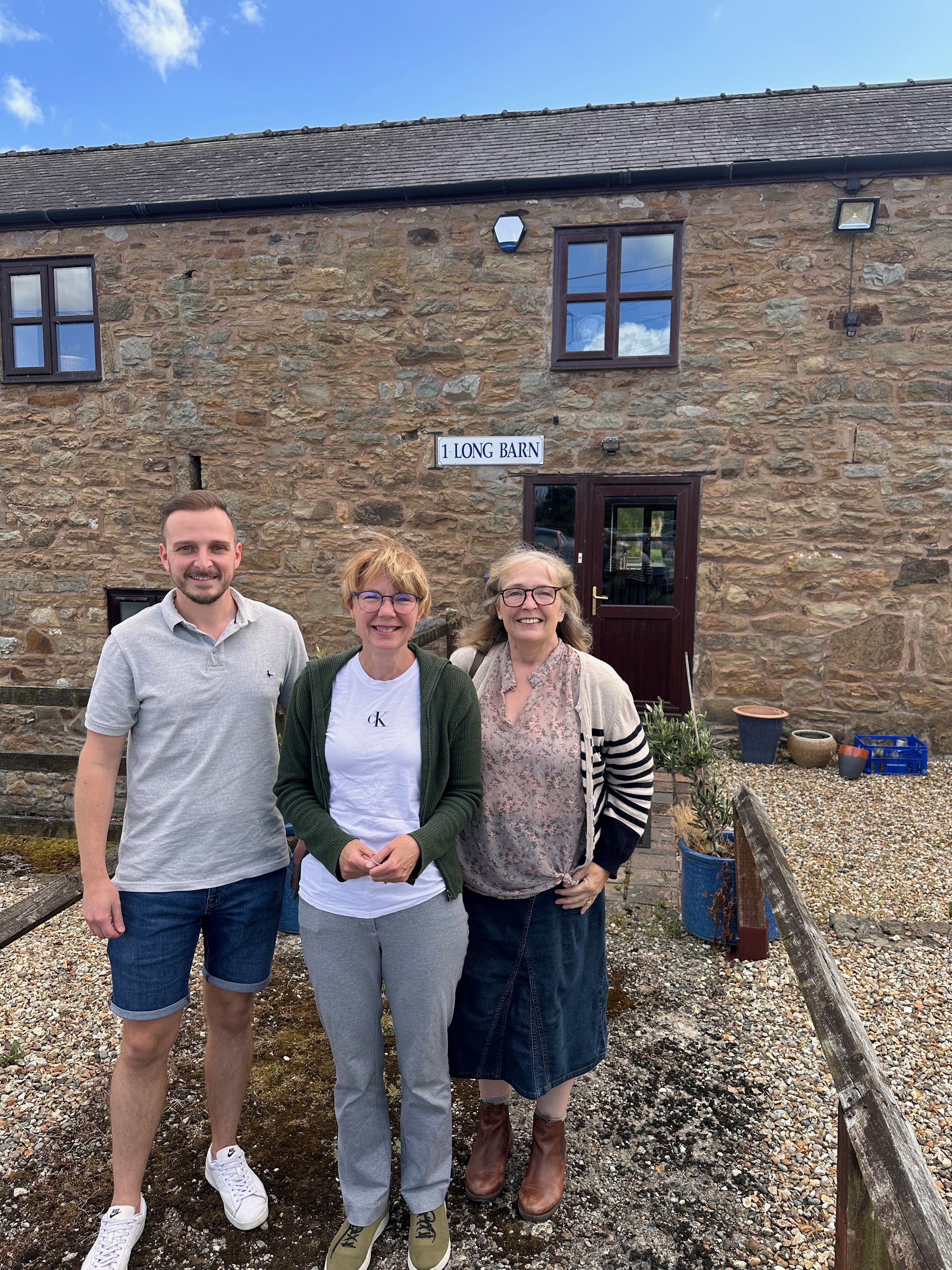
As a bookend that evening, Carrie and Josh from Rx Communications based nearby in Mold, came and picked us up for a tour of the office and then Carrie and family joined us for dinner back at the Druid.
Well it was obvious which side we should have gone once at the bottomAt Rx Communications
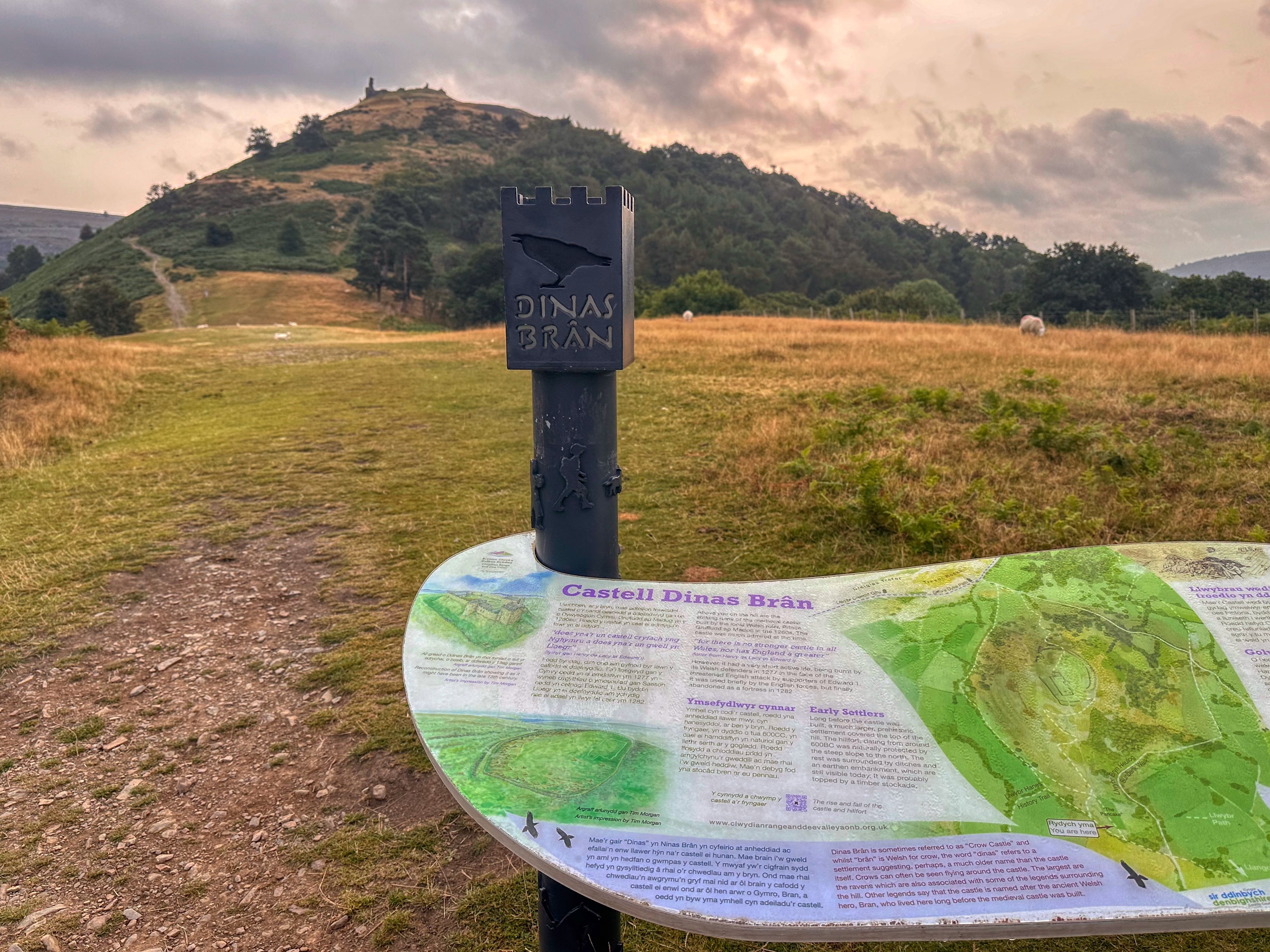
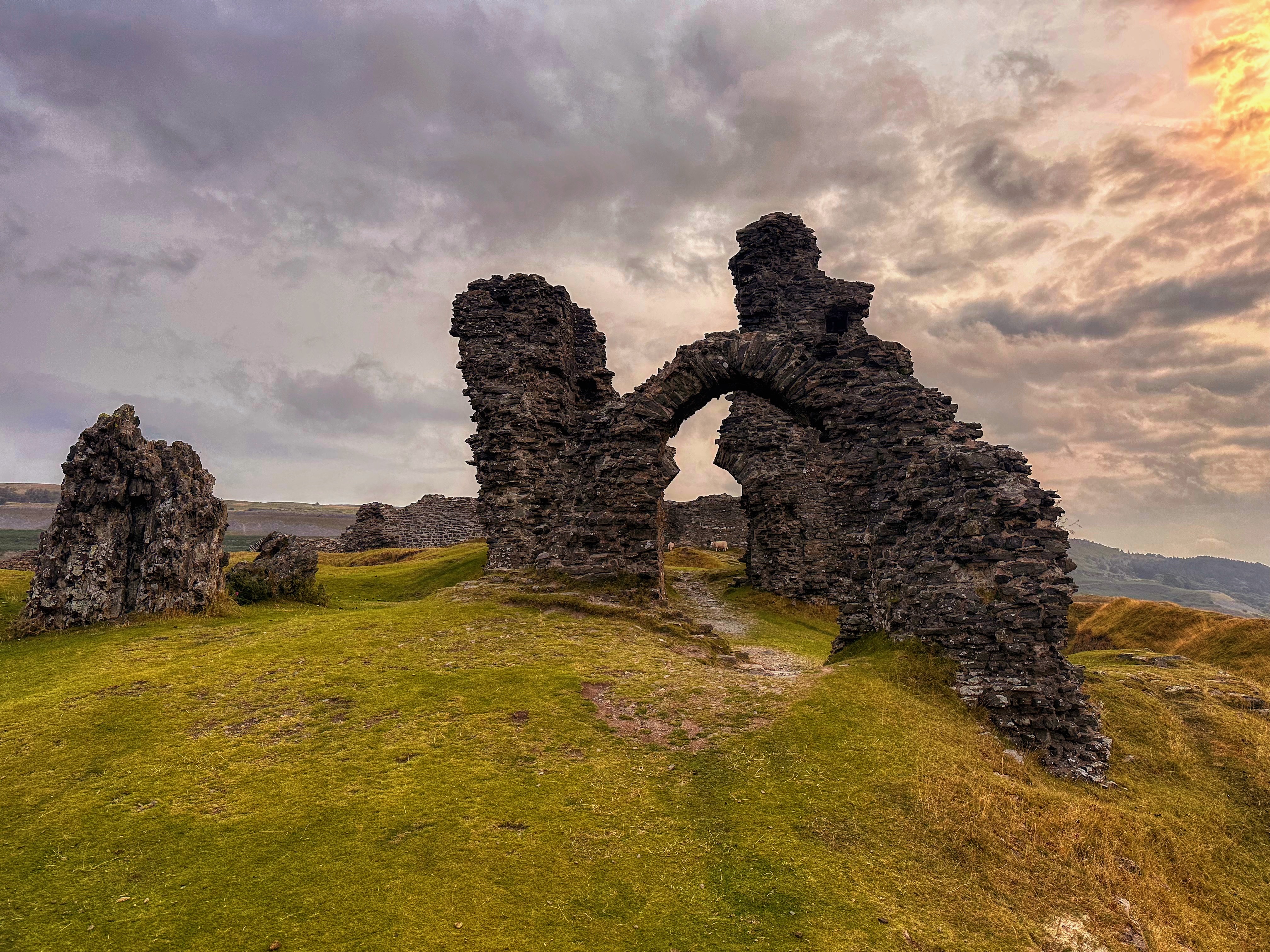
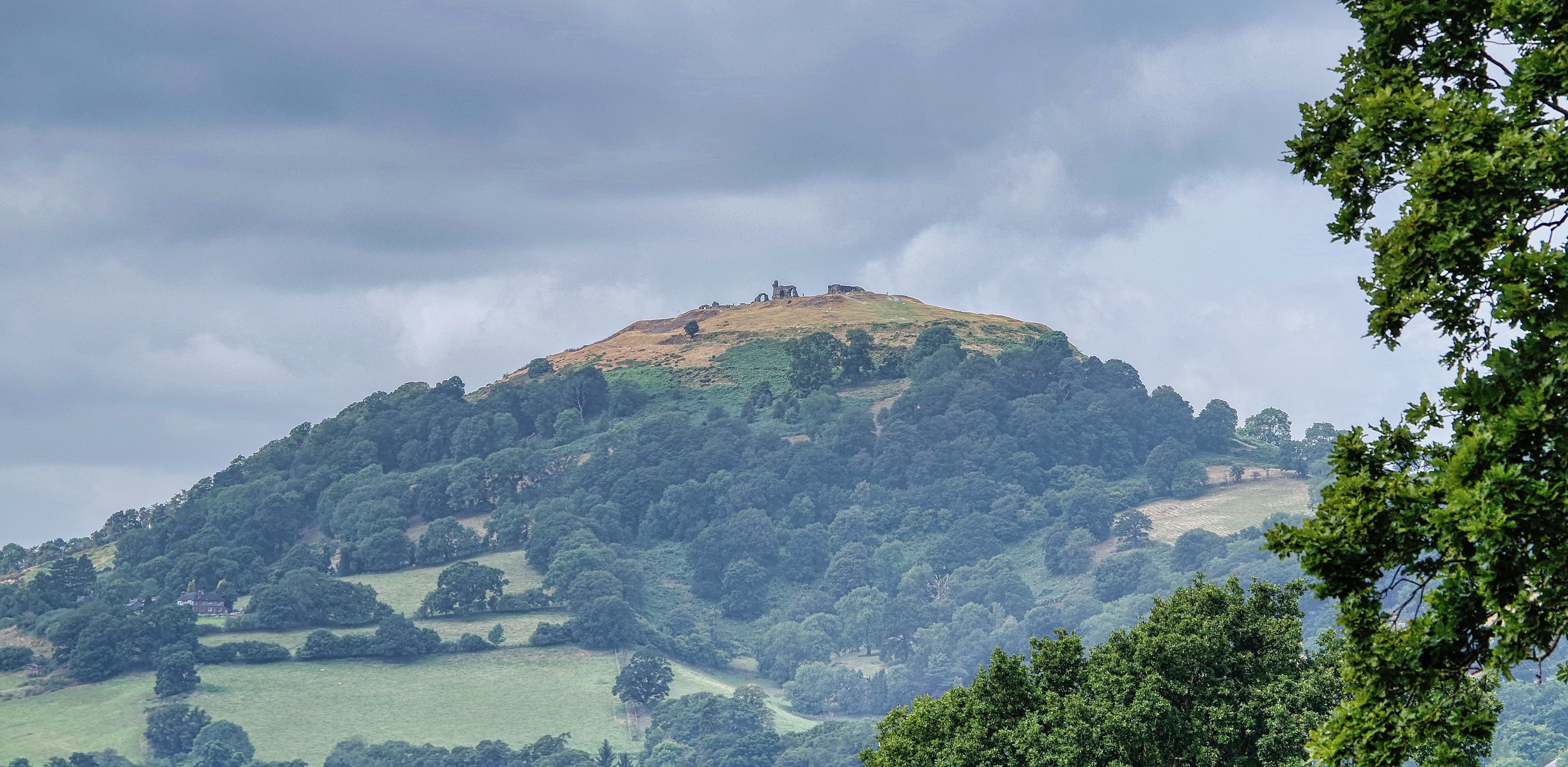
Today’s journey started by climbing back up the canal then up to the ruins of Castel Dinas Bran.
Dinas Bran was to be the first of many Iron Age hill forts we would encounter in the Clwydian Hills which would be our path for the next several days. This one was converted to a castle in the 1260s but was then burned by its defenders lest it fall into the hands of Edward I (of Chirk Castle fame).
Now it is steadfastly defended by sheep.
We would also be leaving the crowds of Pontcysllte and Llangollen behind. We remarked how few people we met on the trail. Today would be no different.
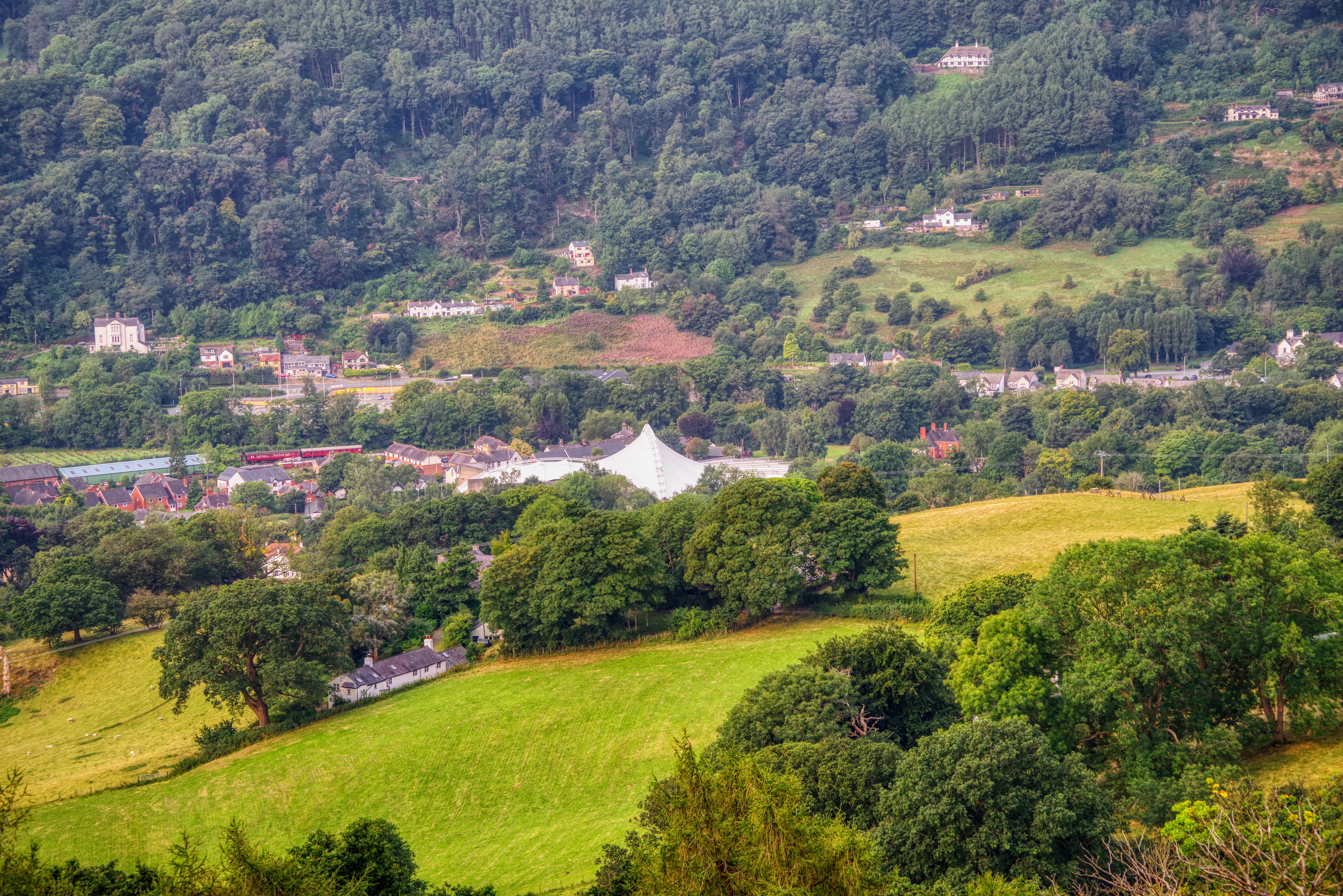
As we climbed up towards the ruin we could look back and over the vale of Llangollen, including the eisteddfod tent where we famously didn’t see Pavarotti.
The path left Dinas Bran and took us the lee of Creigiau Eglwyseg. This was certainly the wildest part of the path so far. No more evident than in the name of “Rock Farm”!
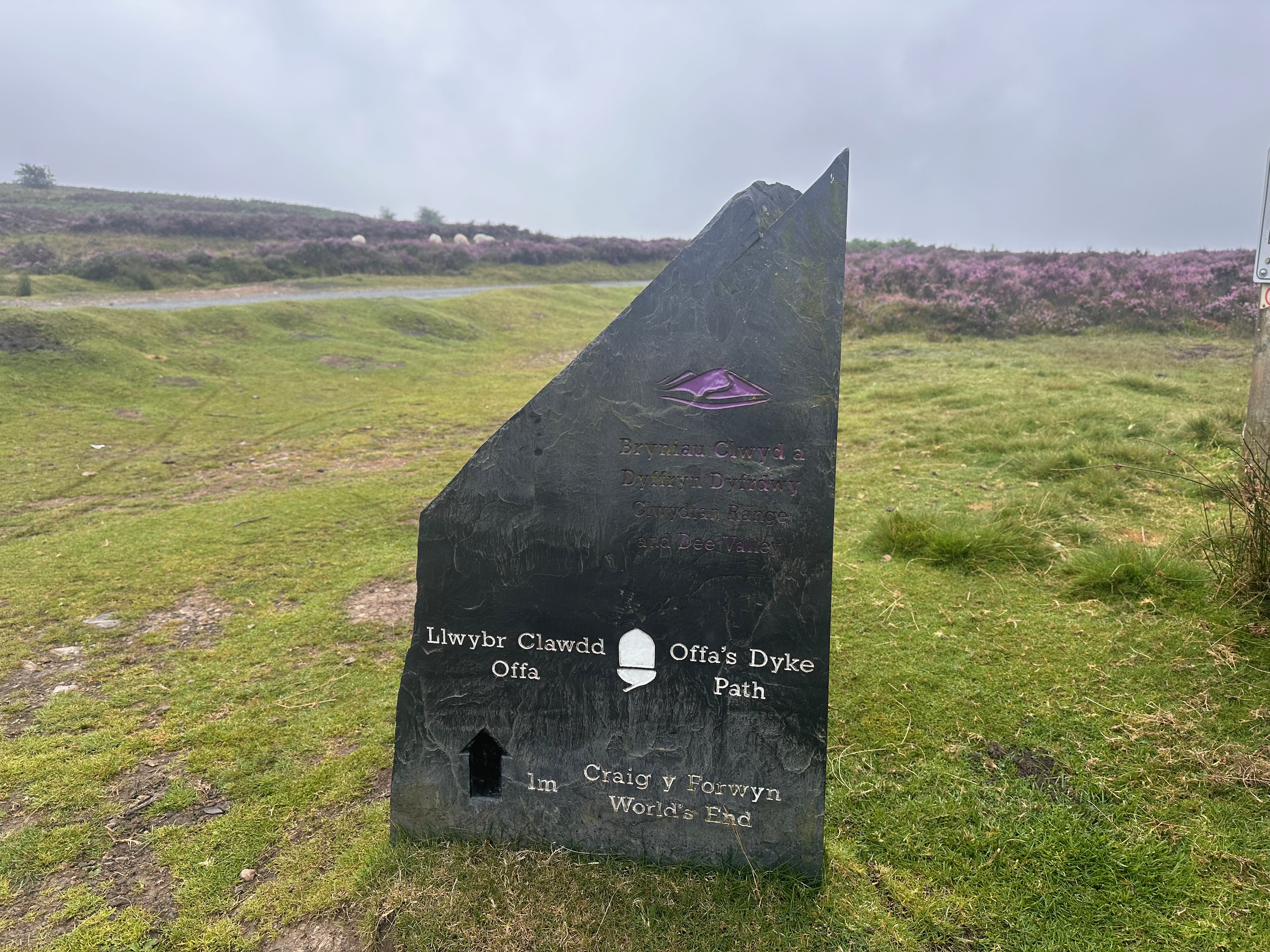
We passed beneath Craig Arthur and Craig yr Adar and into the valley leading to World’s End.
Yes really.
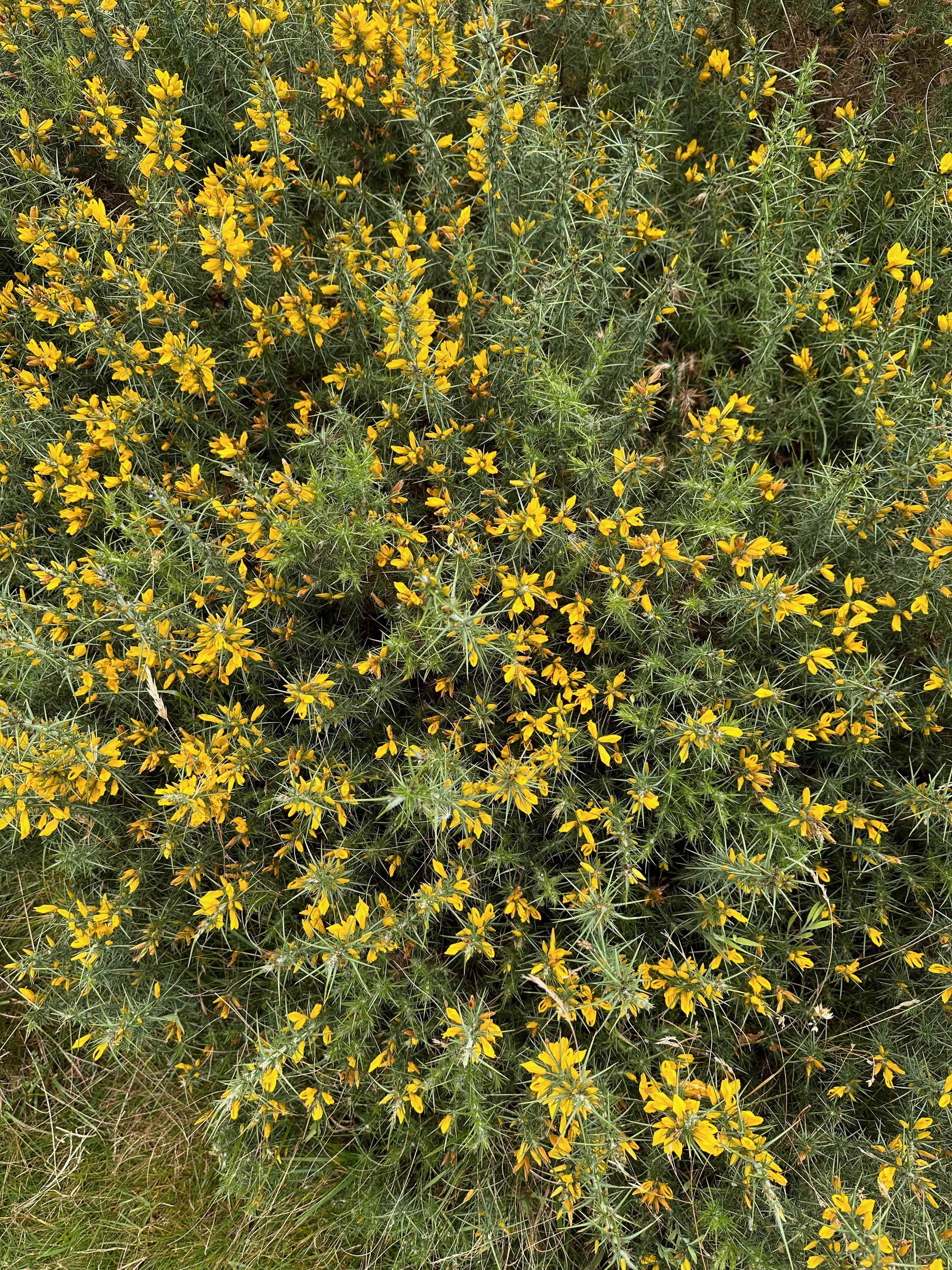
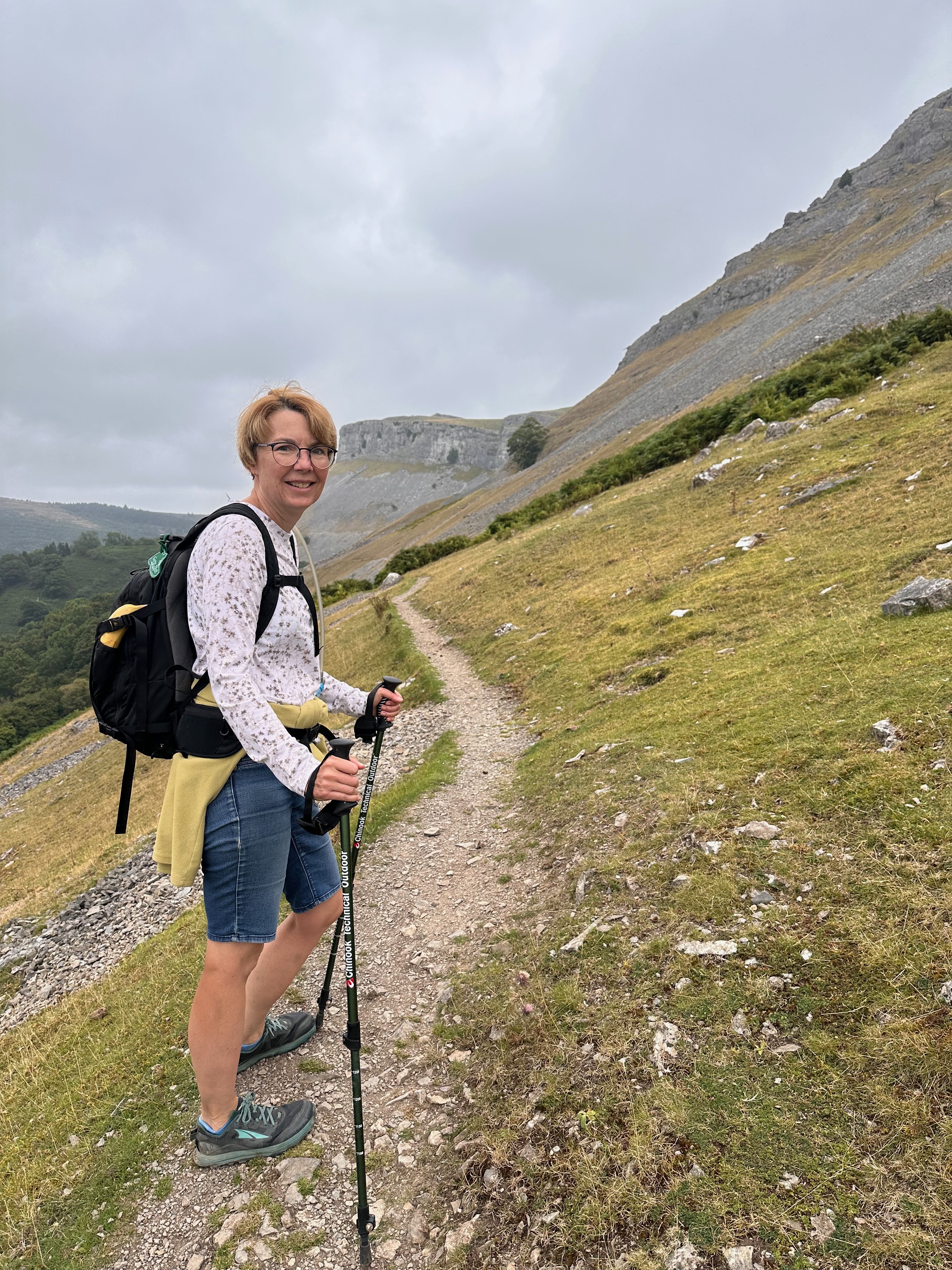
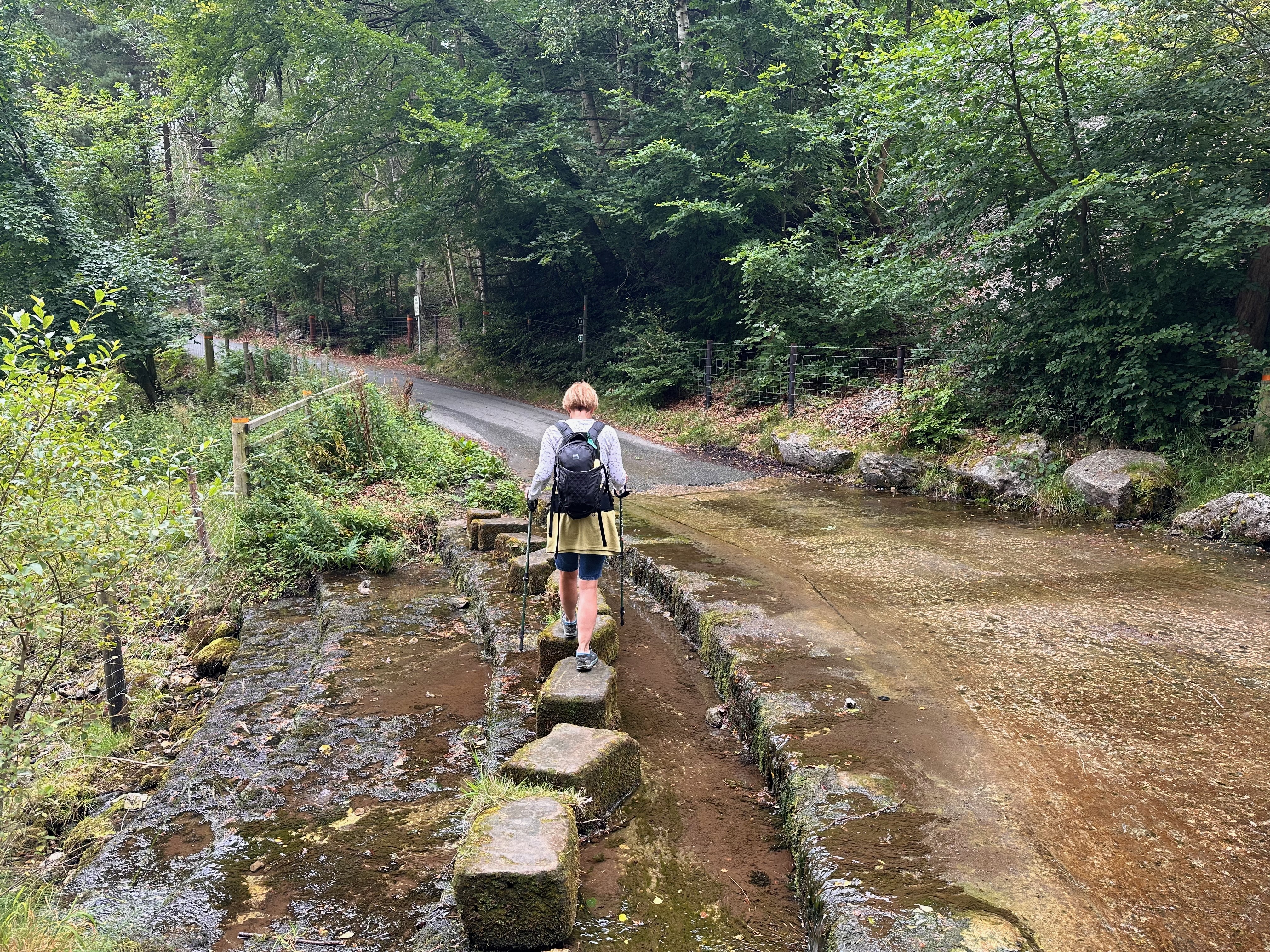
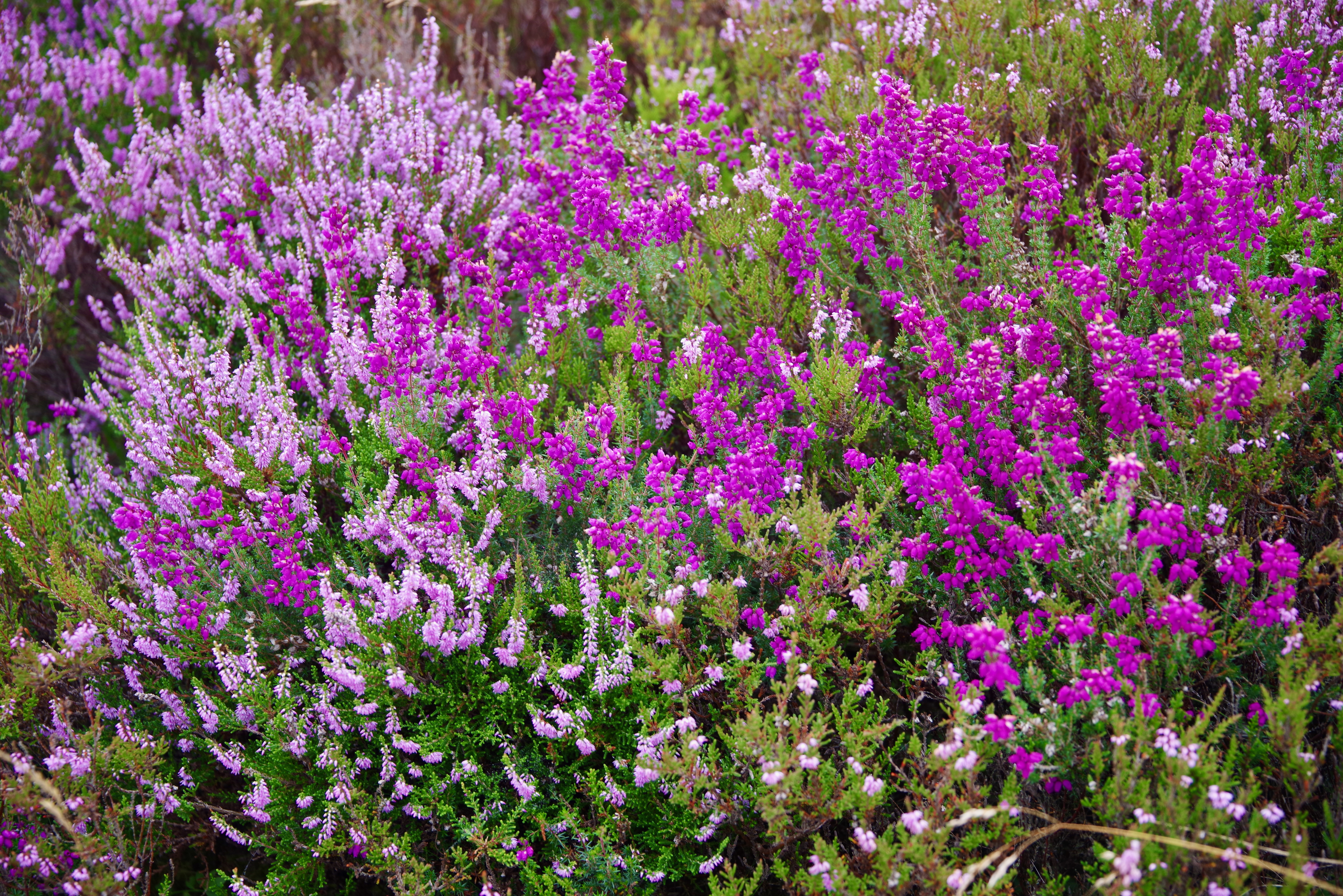
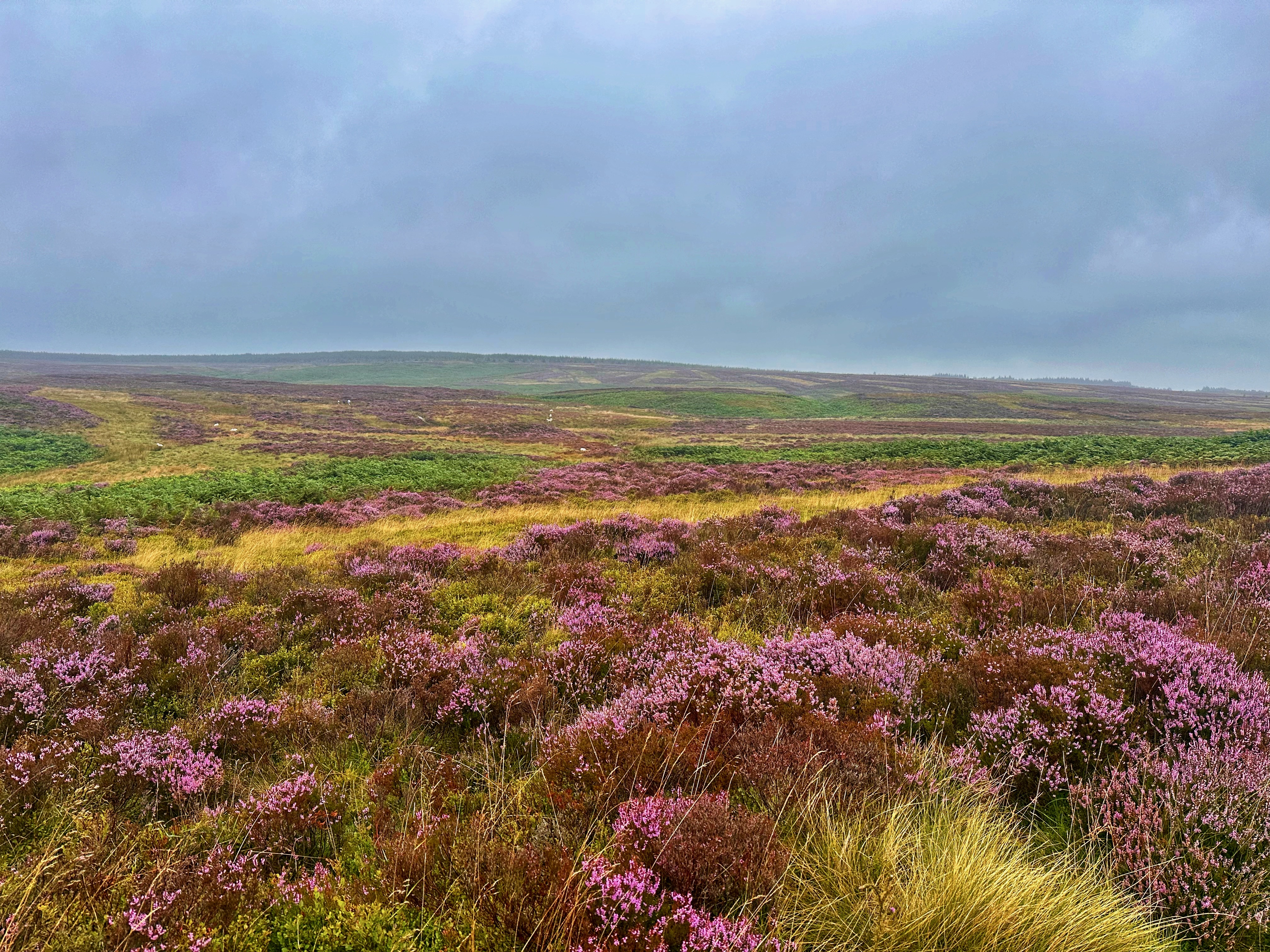
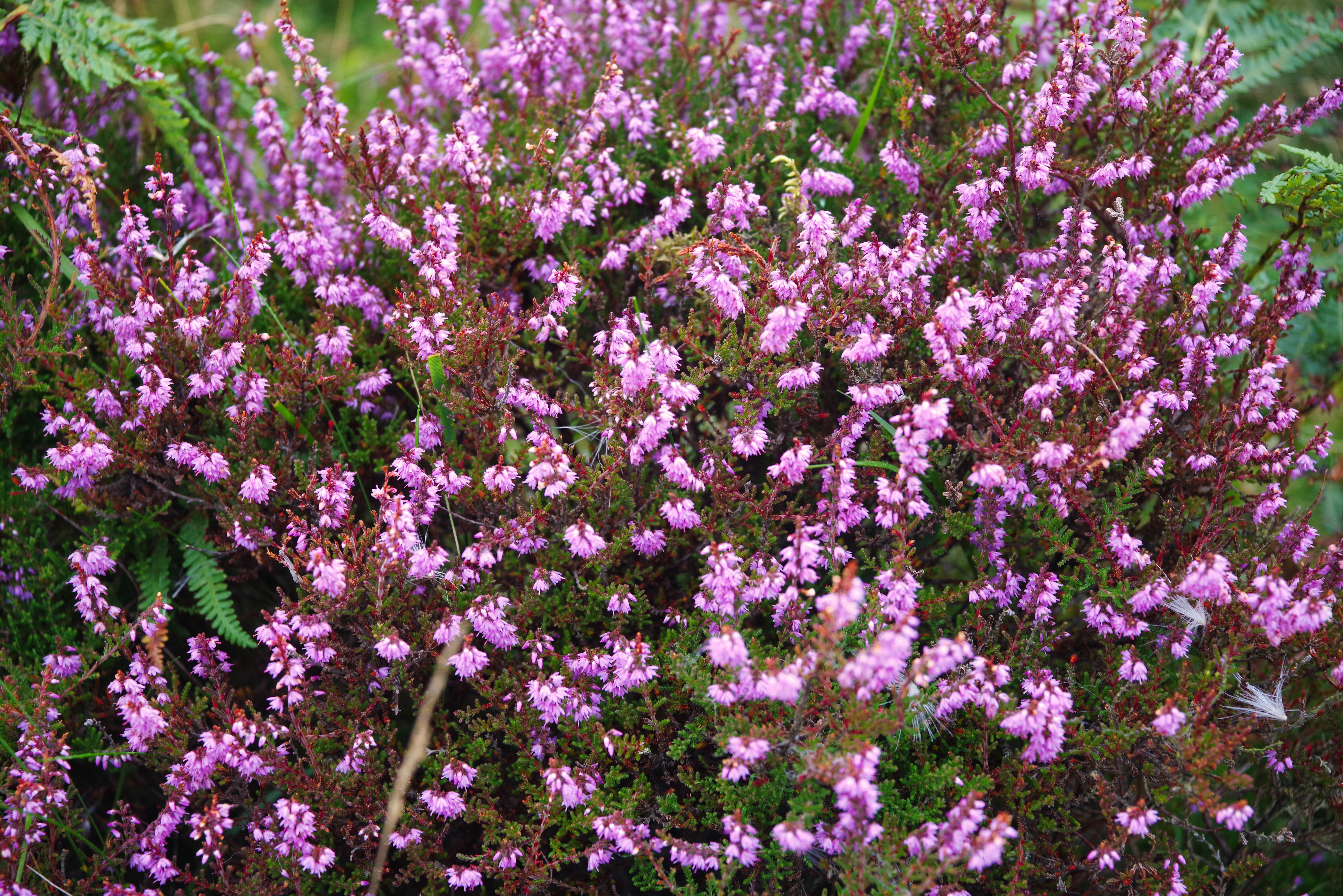
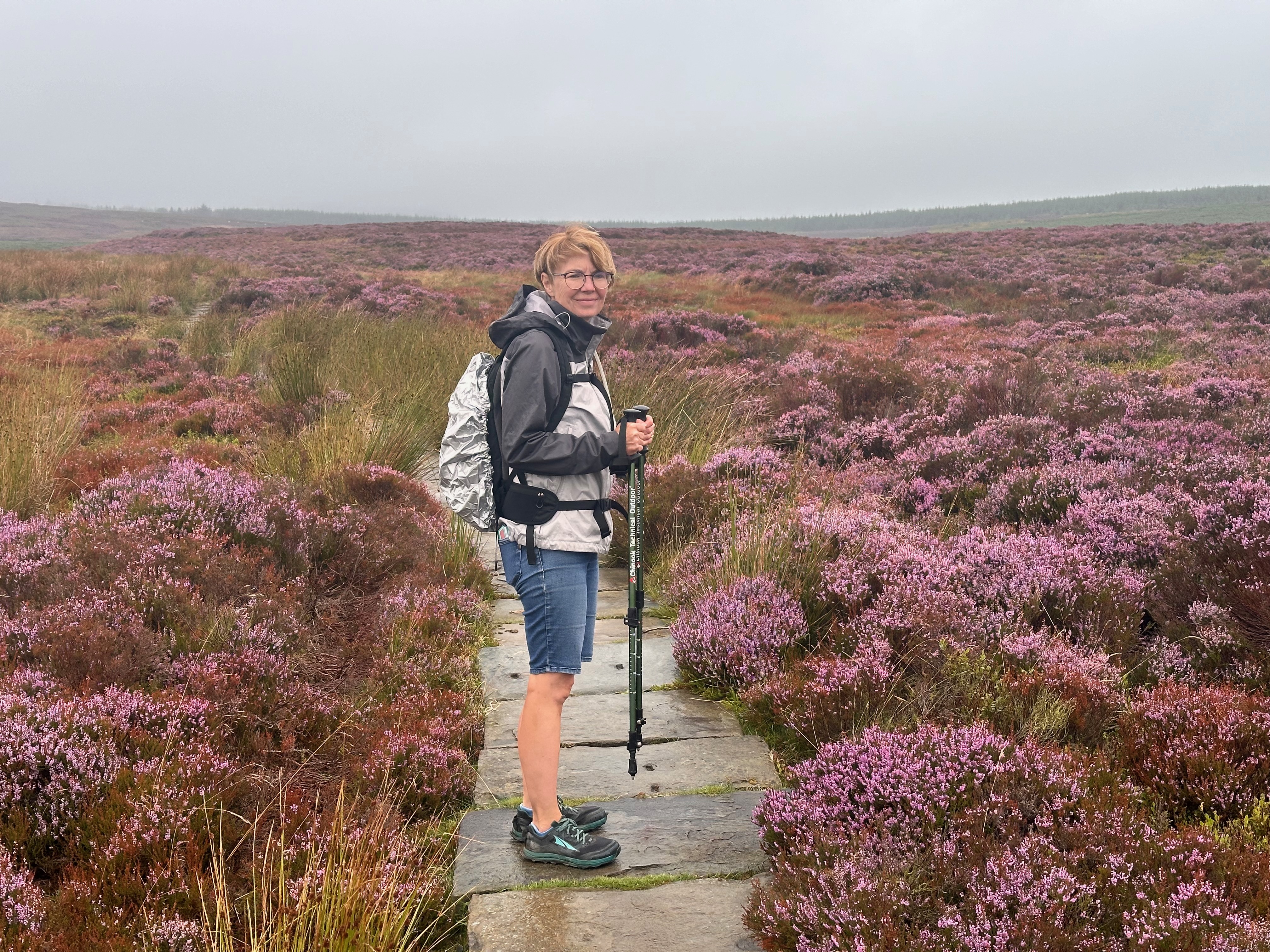
But instead of taking that path we forded the stream and climbed up onto the moorland of Cyrn-y-Brain. The heather and gorse were in brilliant bloom. Our marvel at the spectacle as we crossed the wild and windy moor was not dampened by the drizzle that accompanied us. Well not much.
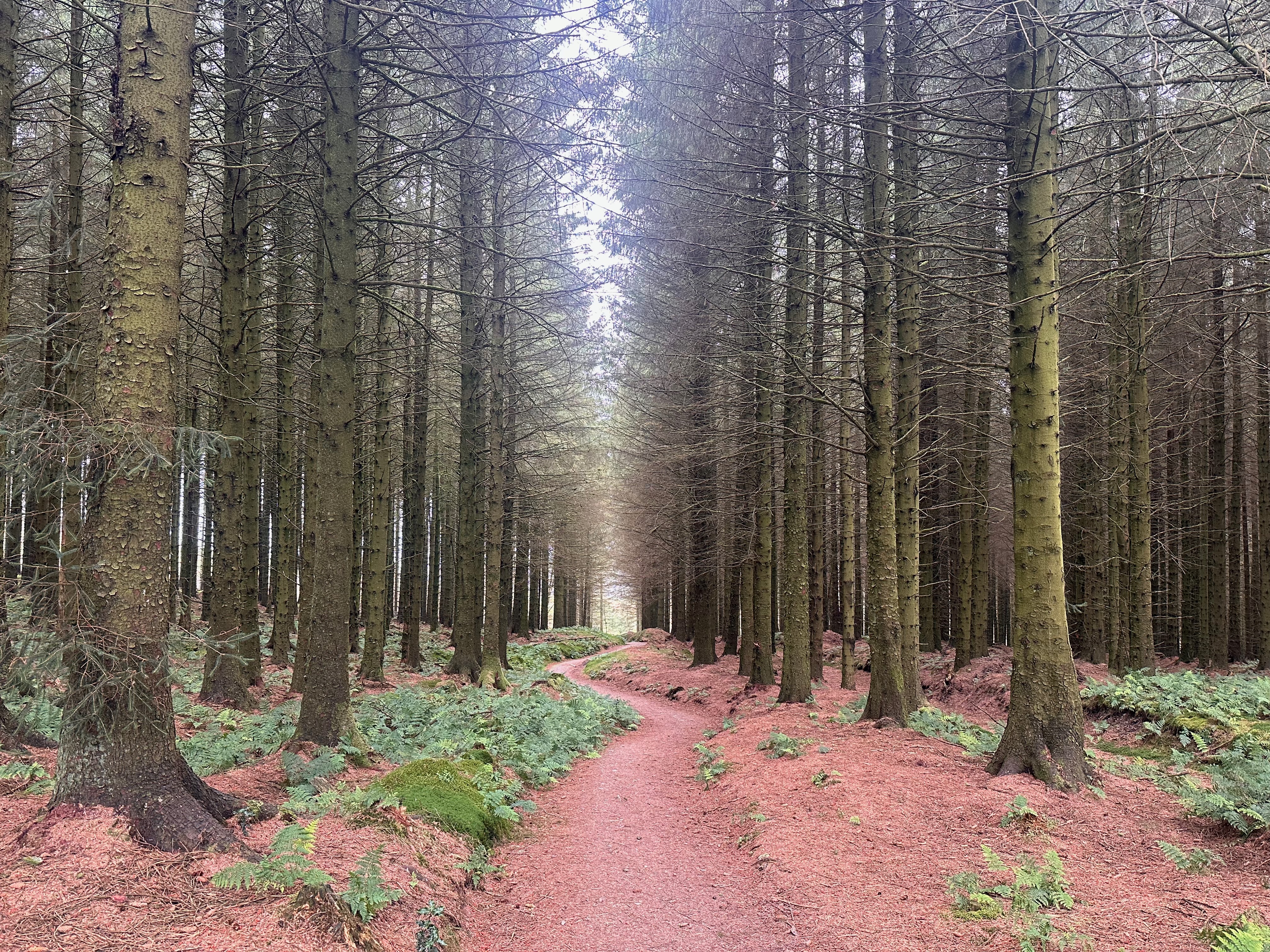
The path then descended down through a plantation of Sitka spruce in which we had to keep an eye out for mountain bikers. This then lead us into the village of Llandegla where we enjoyed our reward of a coffee and sausage roll while awaiting our pick-up to the Druid Inn at Llanferres. A fitting end to our medieval day.
Today we would be starting out from Castle Mill up the Ceriog Valley and making our way to Llangollen up the Dee valley. We were joined by Kerry, Paul and Jude as well as Anne Hendrie.
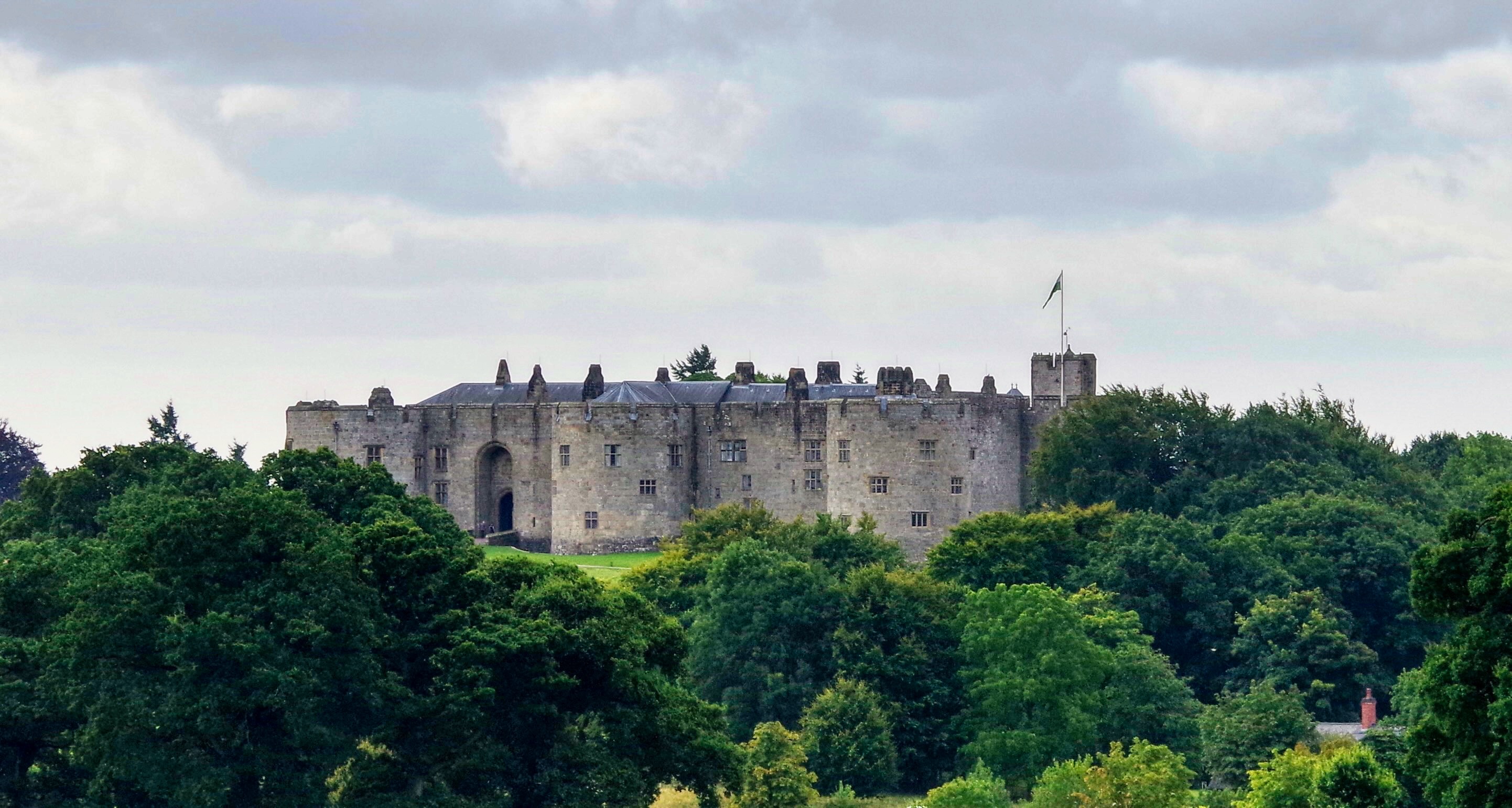
Today’s TeamChirk Castle
At the start of the day we had the choice to walk around the Castle ground on the official path or up through the grounds of Chirk Castle on the “summer route”. This route is closed in the winter for the grouse hunting season.
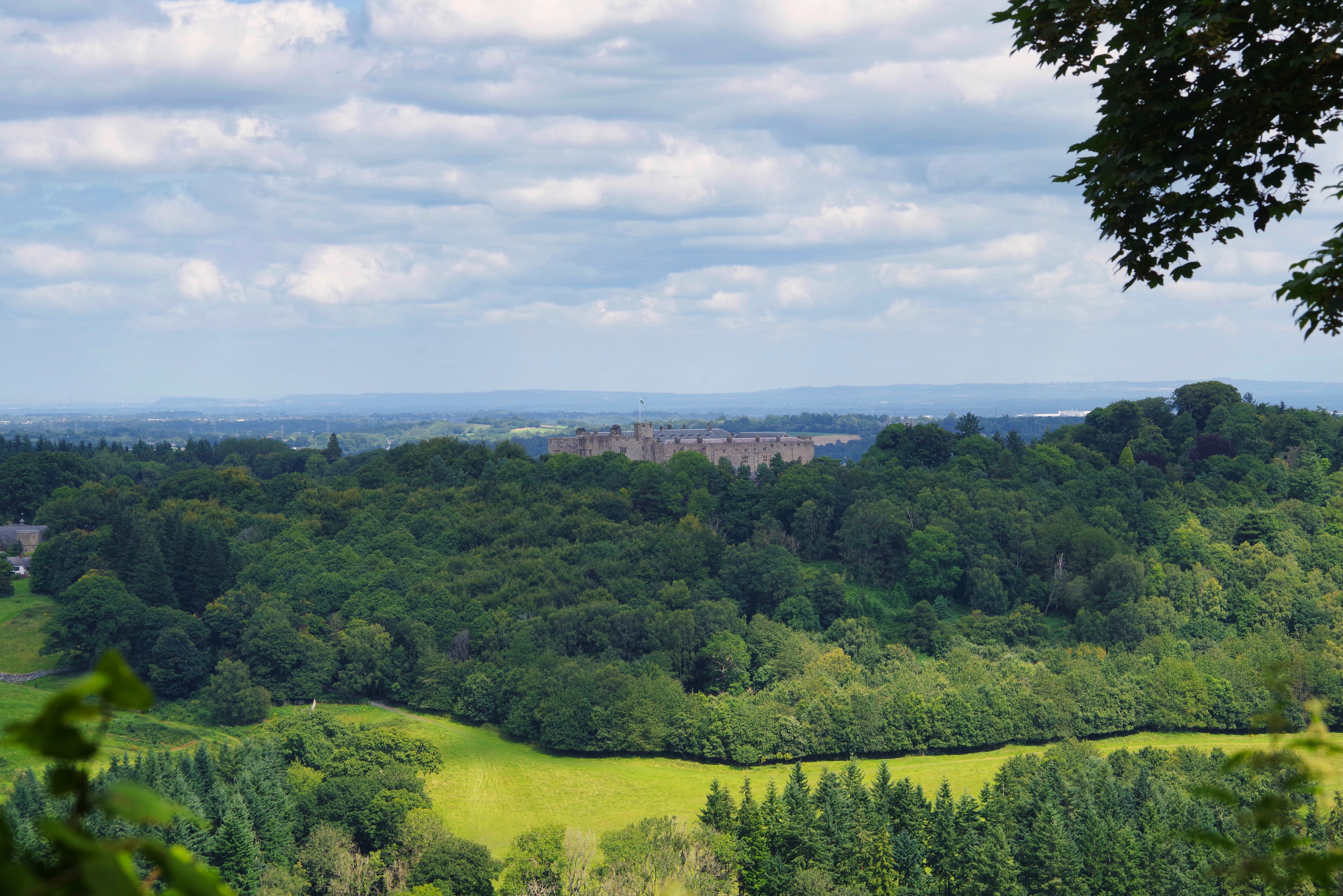
The summer route took us up to and around the Castle. It was originally built in 1310 by Edward I to lord over the (now defeated) Welsh. It passed to the Myddleton family who now maintain it more as a stately home under the care of the National Trust (the Myddletons were patients of the General Practice in Chirk when I was there).
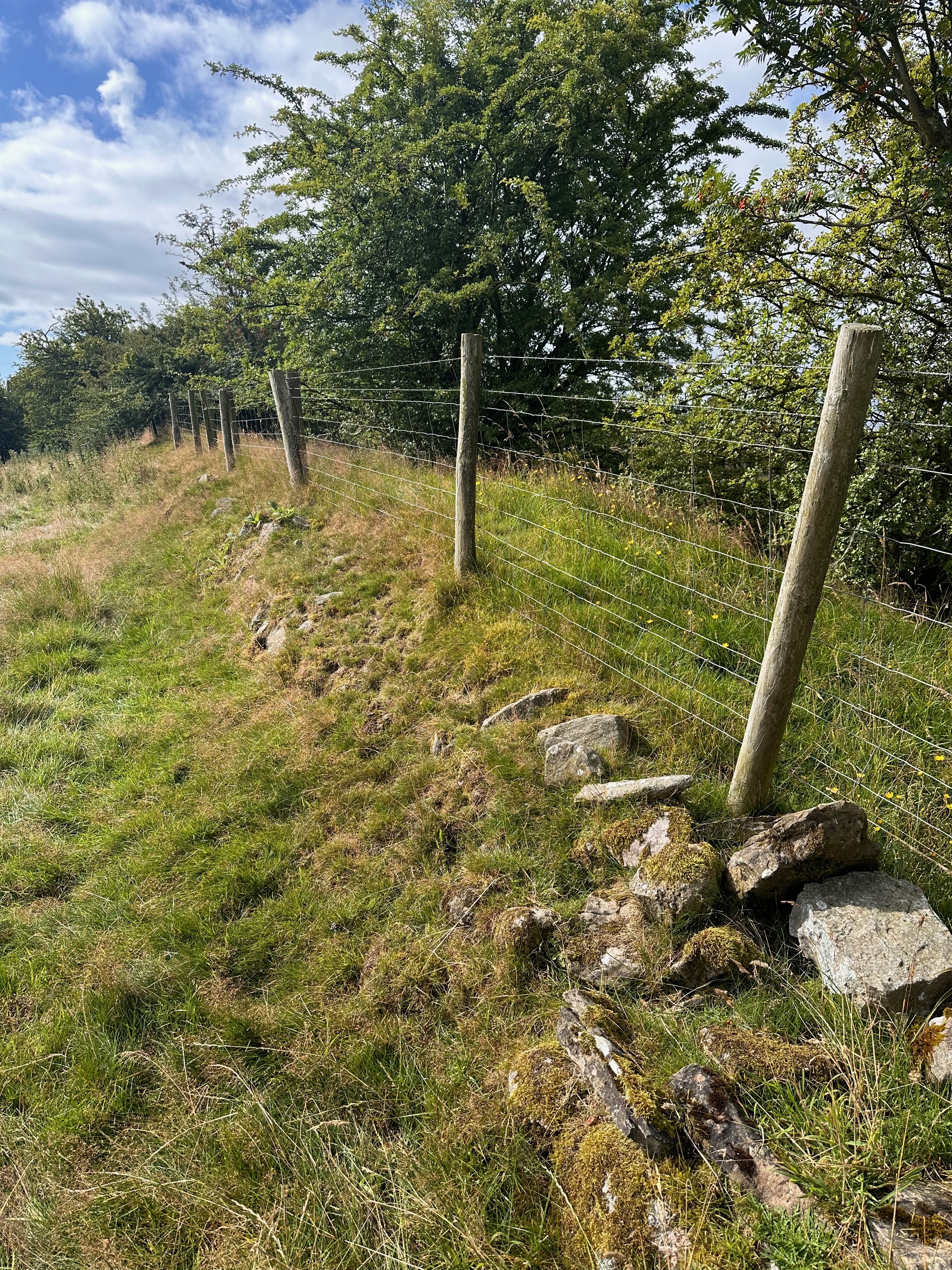
The trail took us up more of Offa’s Dyke before veering west to (re)join the “proper” Offa’s Dyke Path which descended down to the Llangollen Canal.
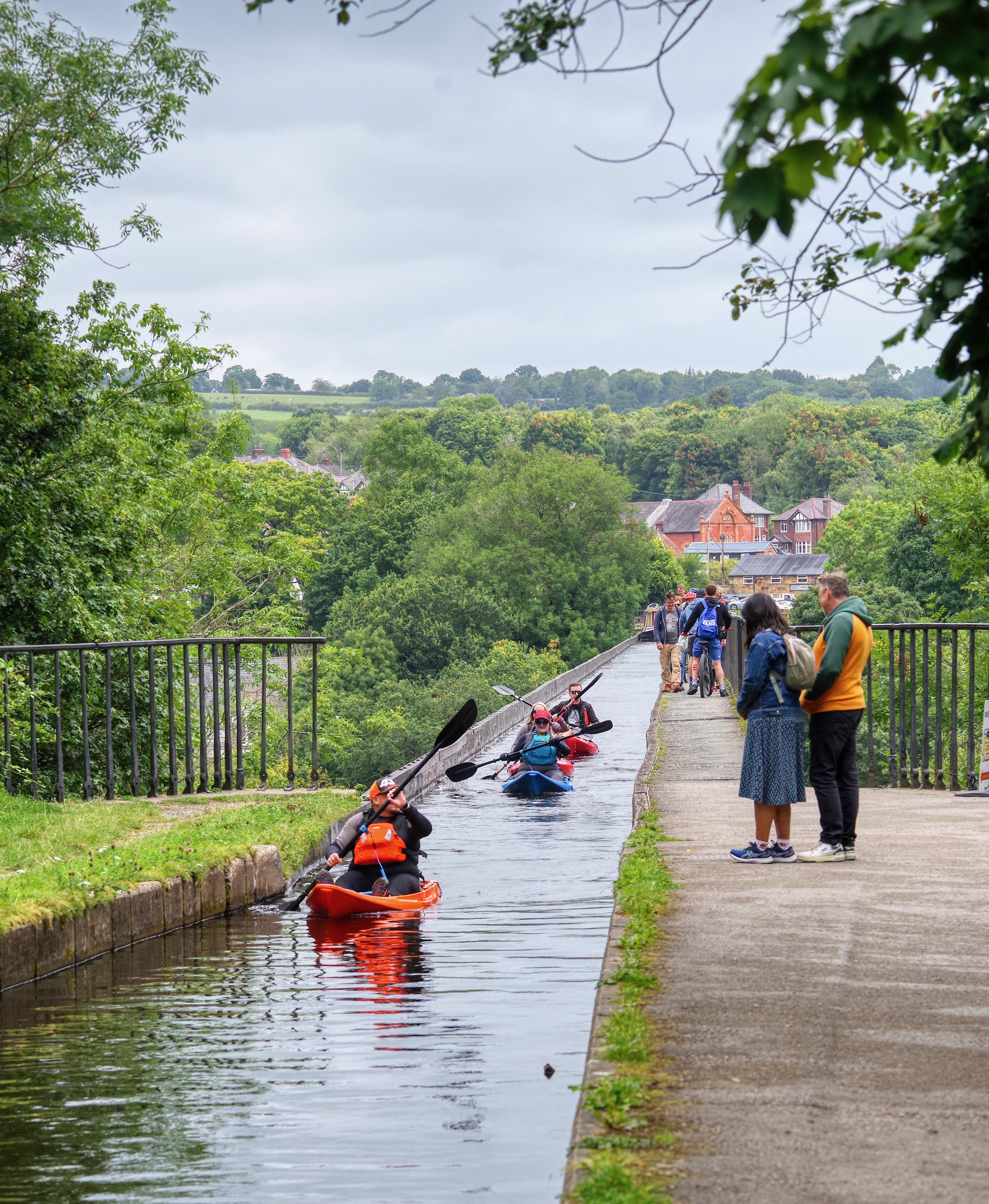
Pontcystlle AqueductAqueduct and DykeOur last contact with the Dyke
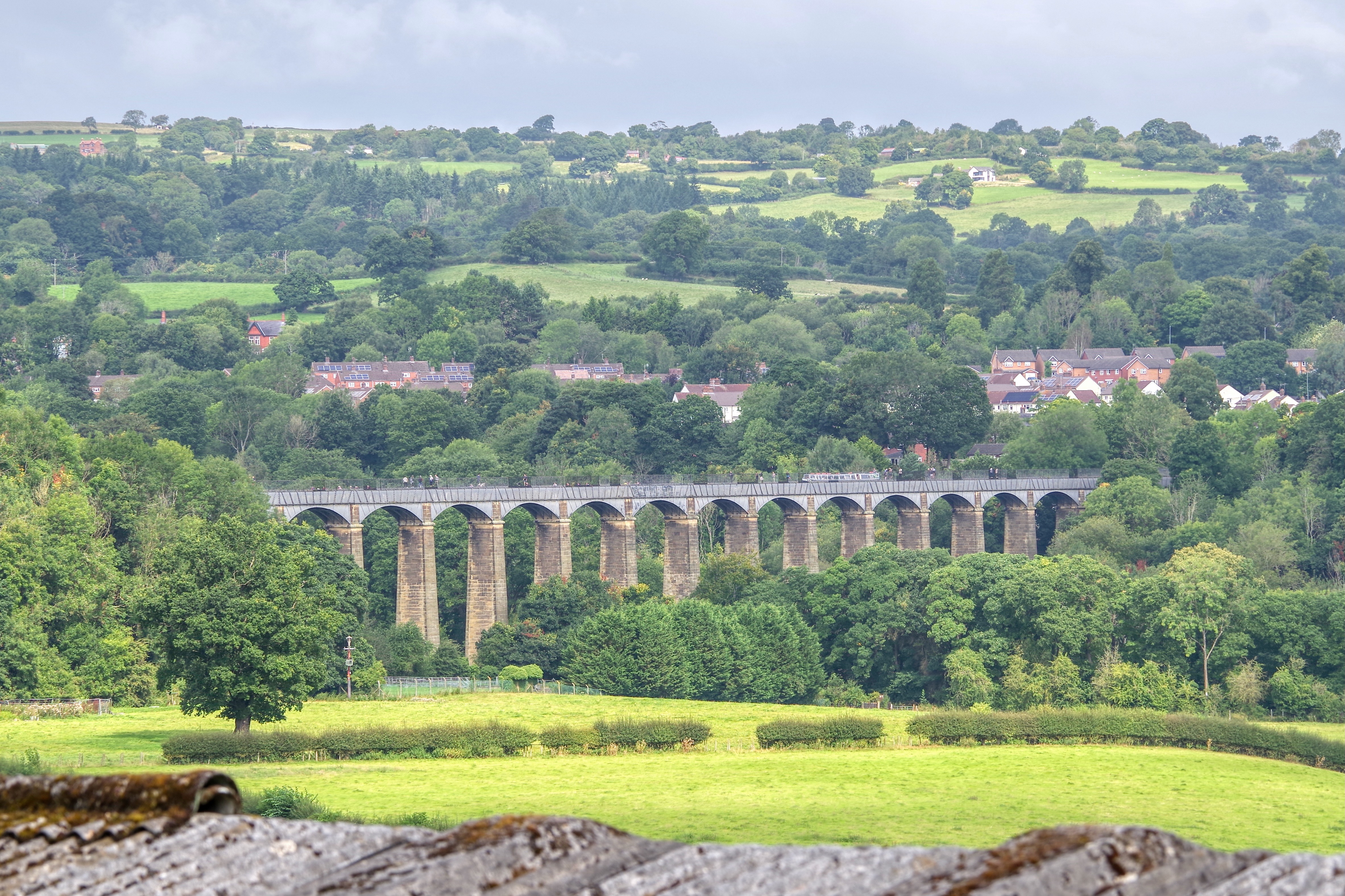
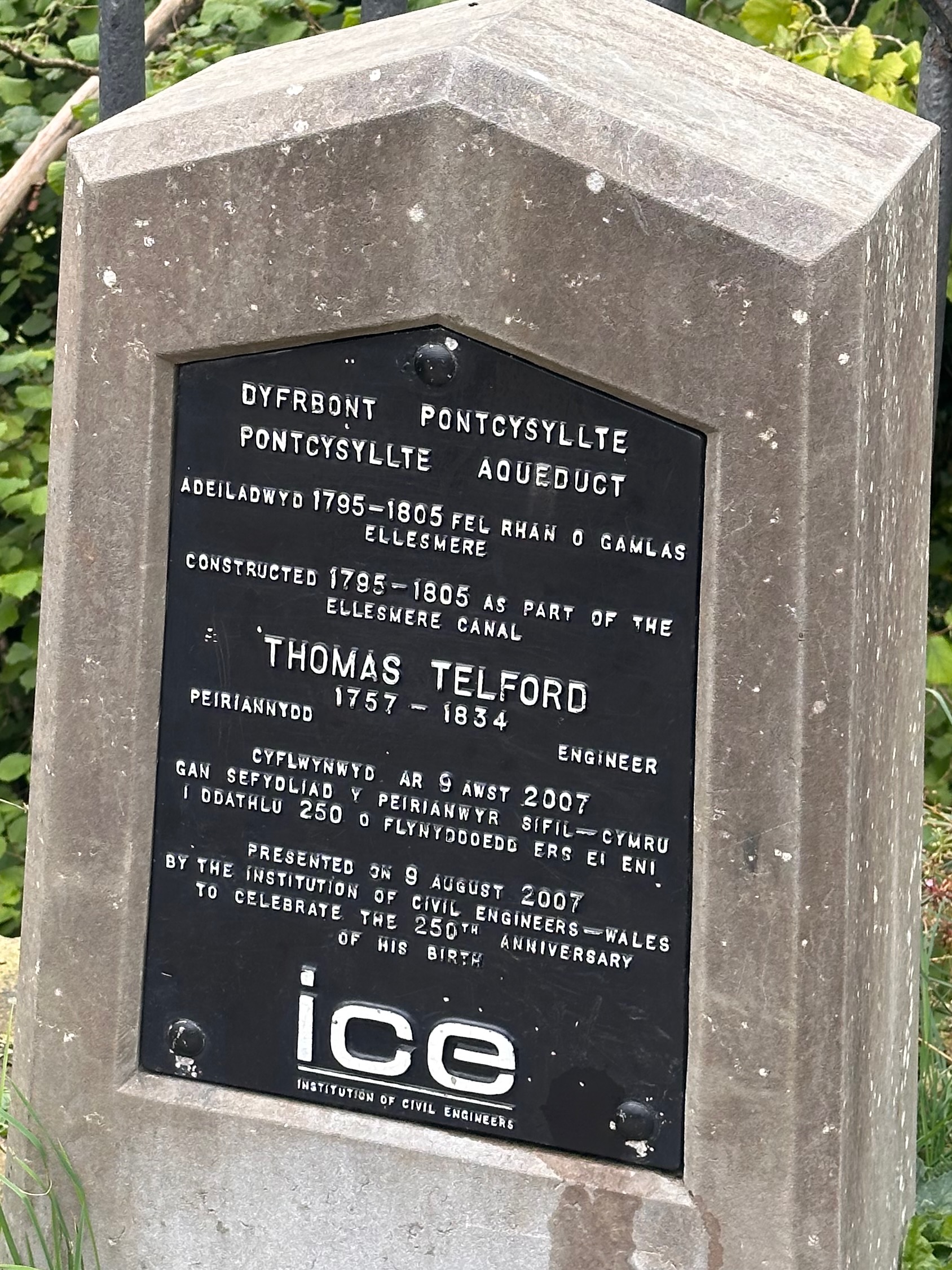
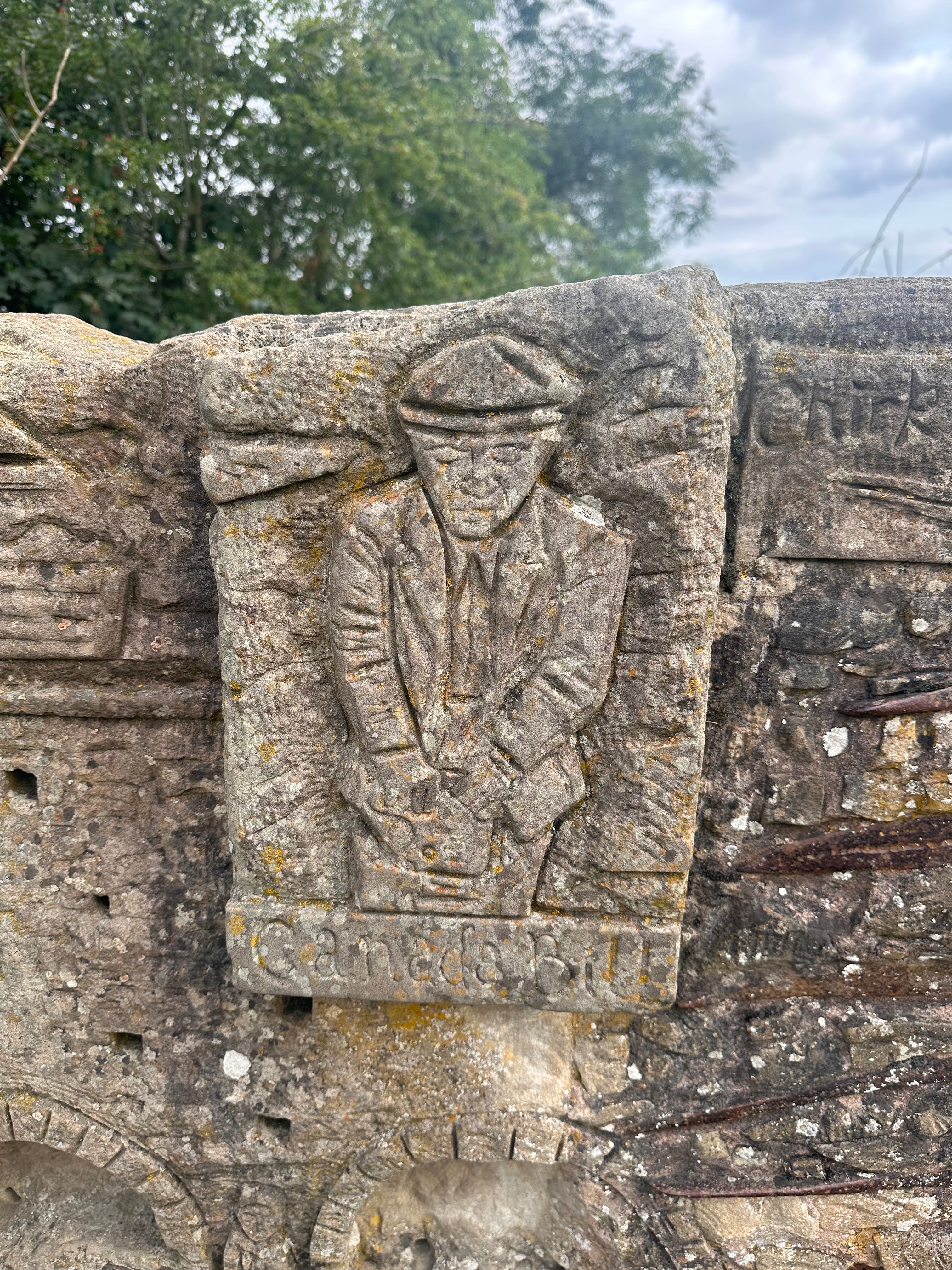
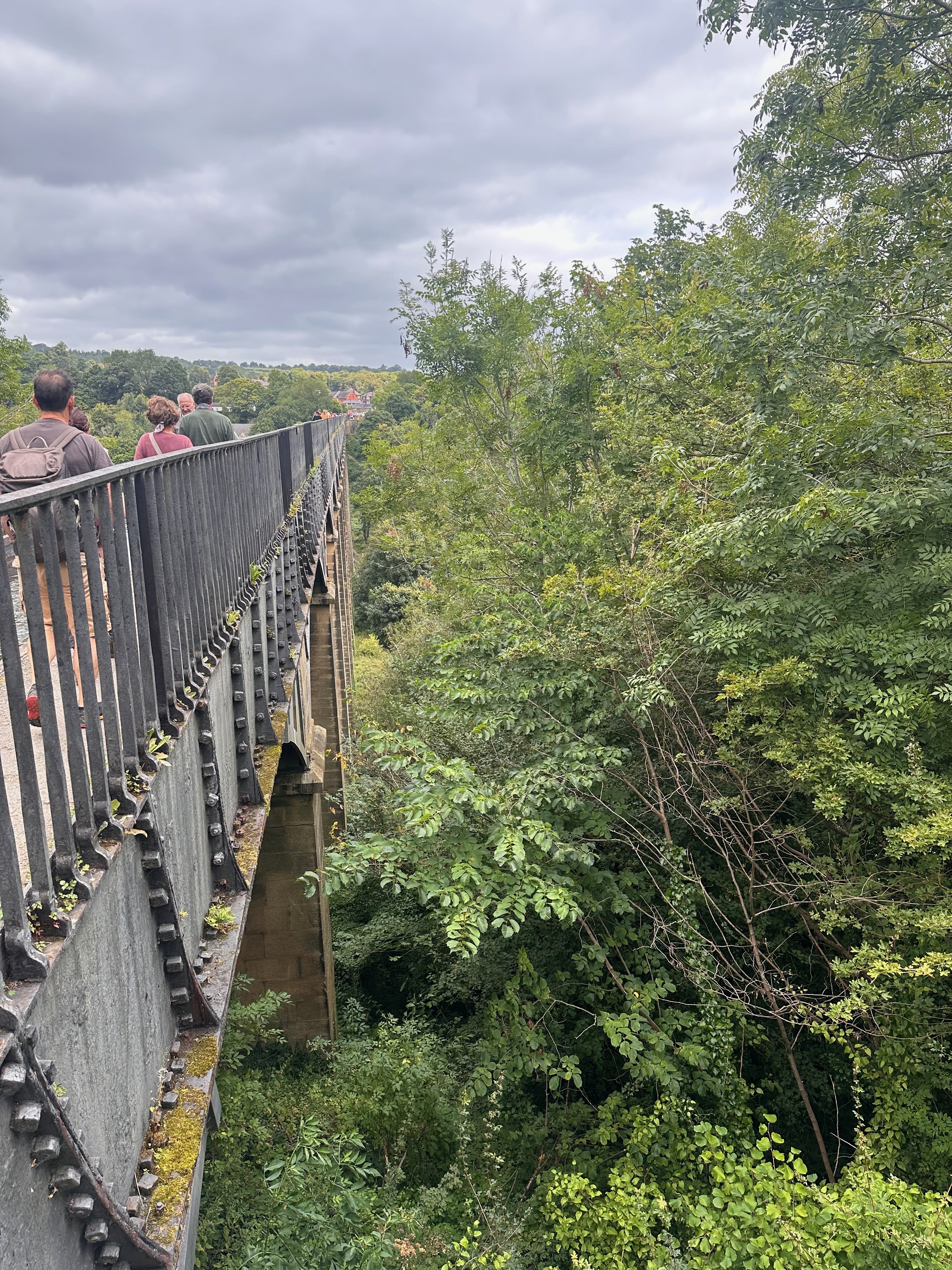
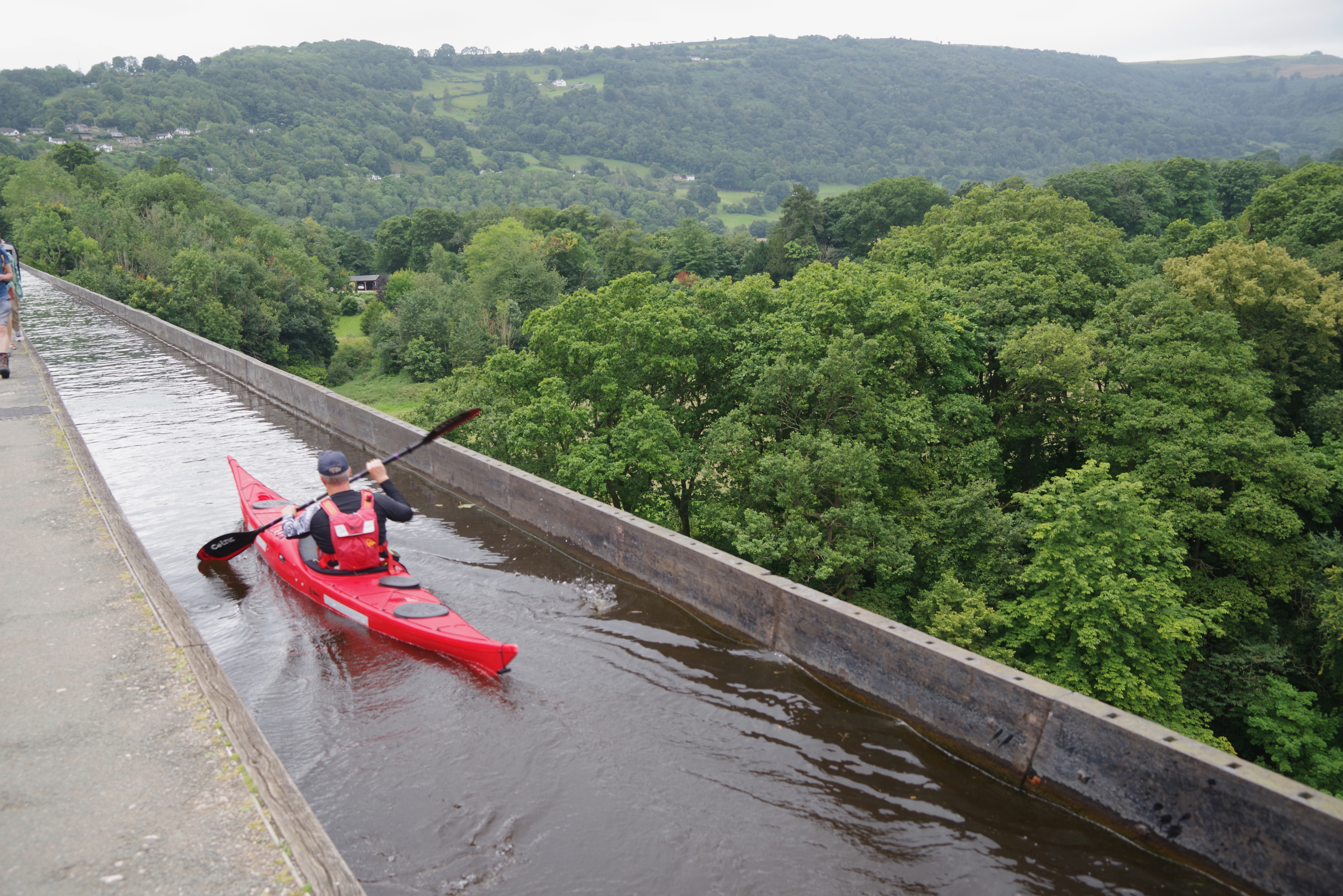
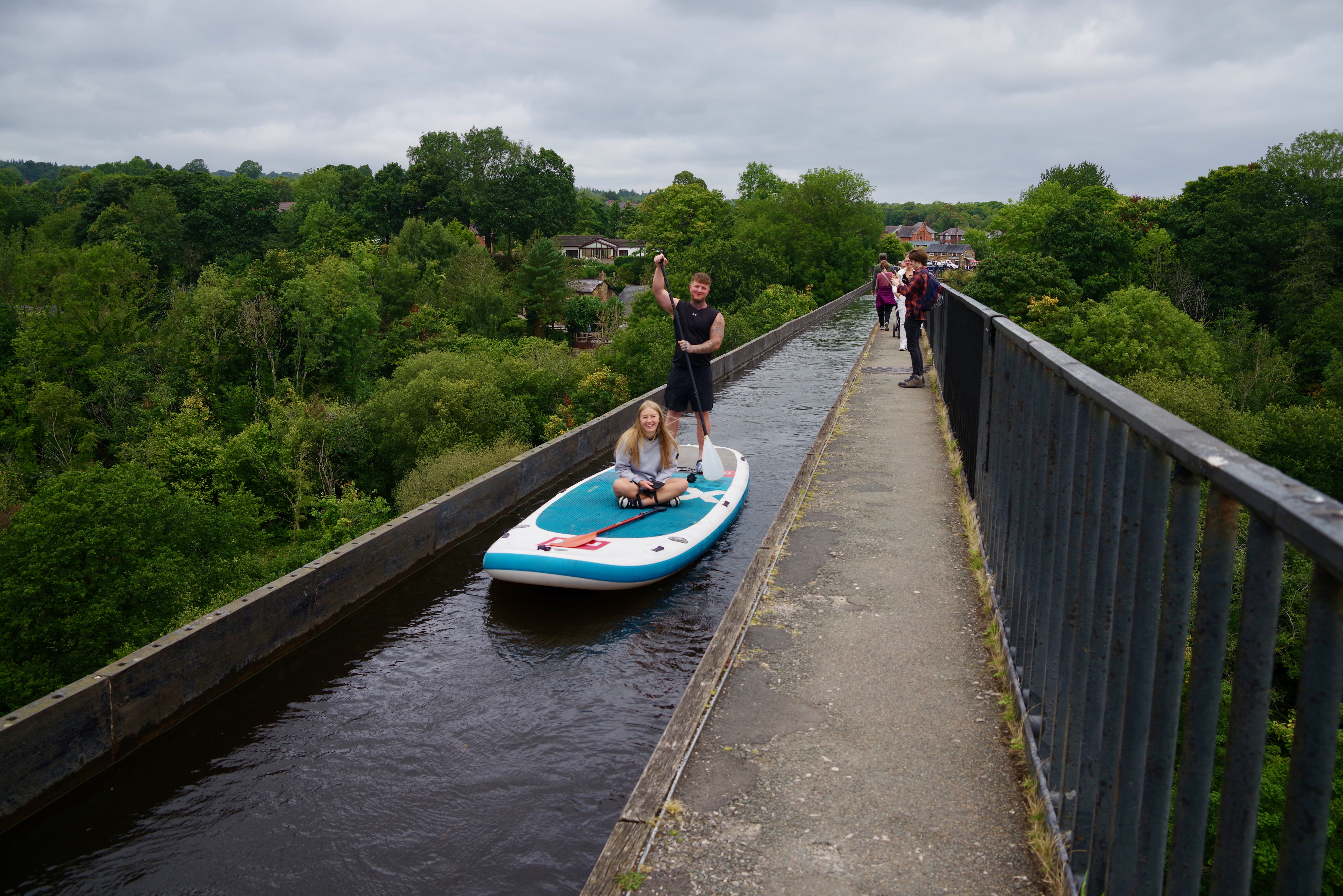
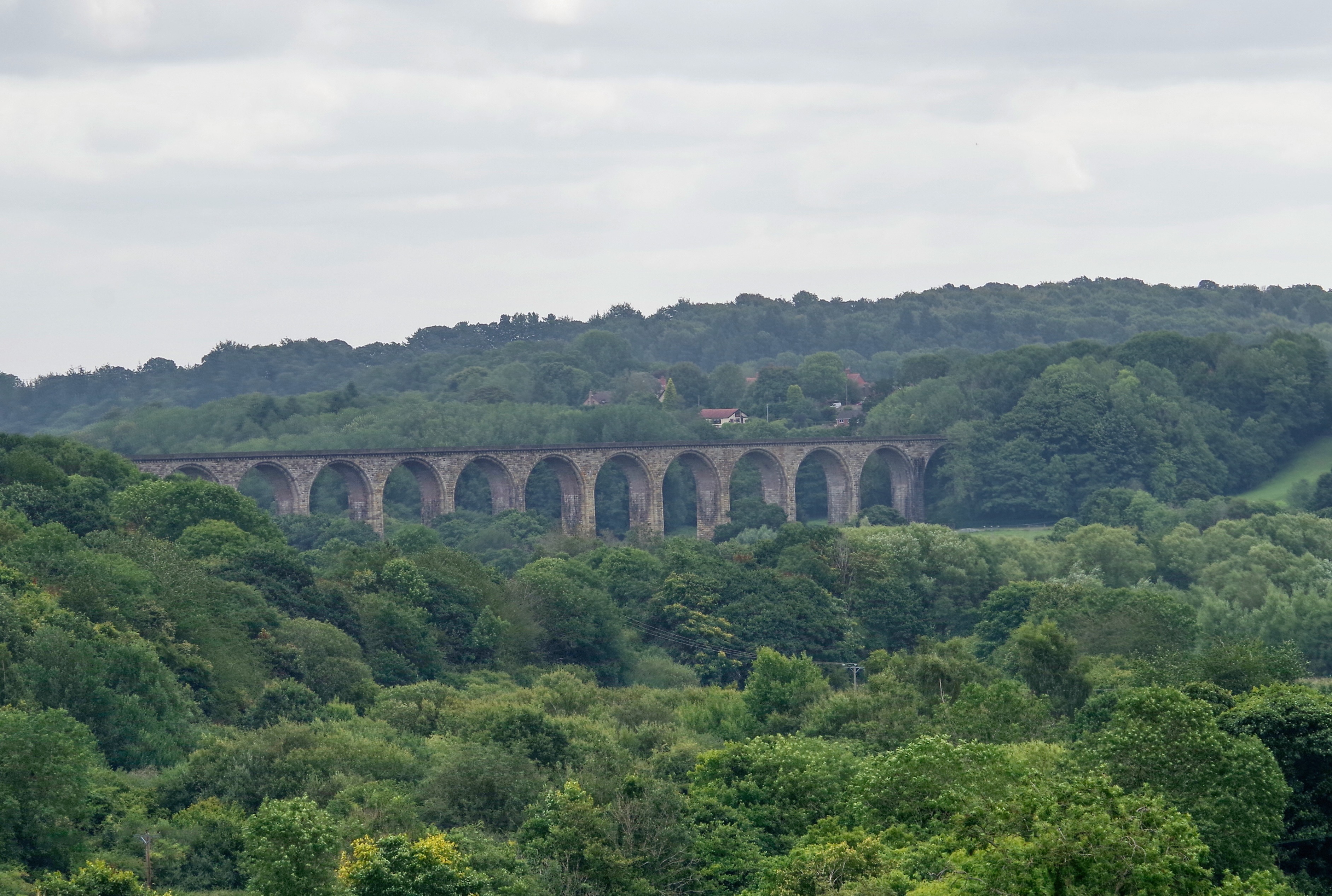
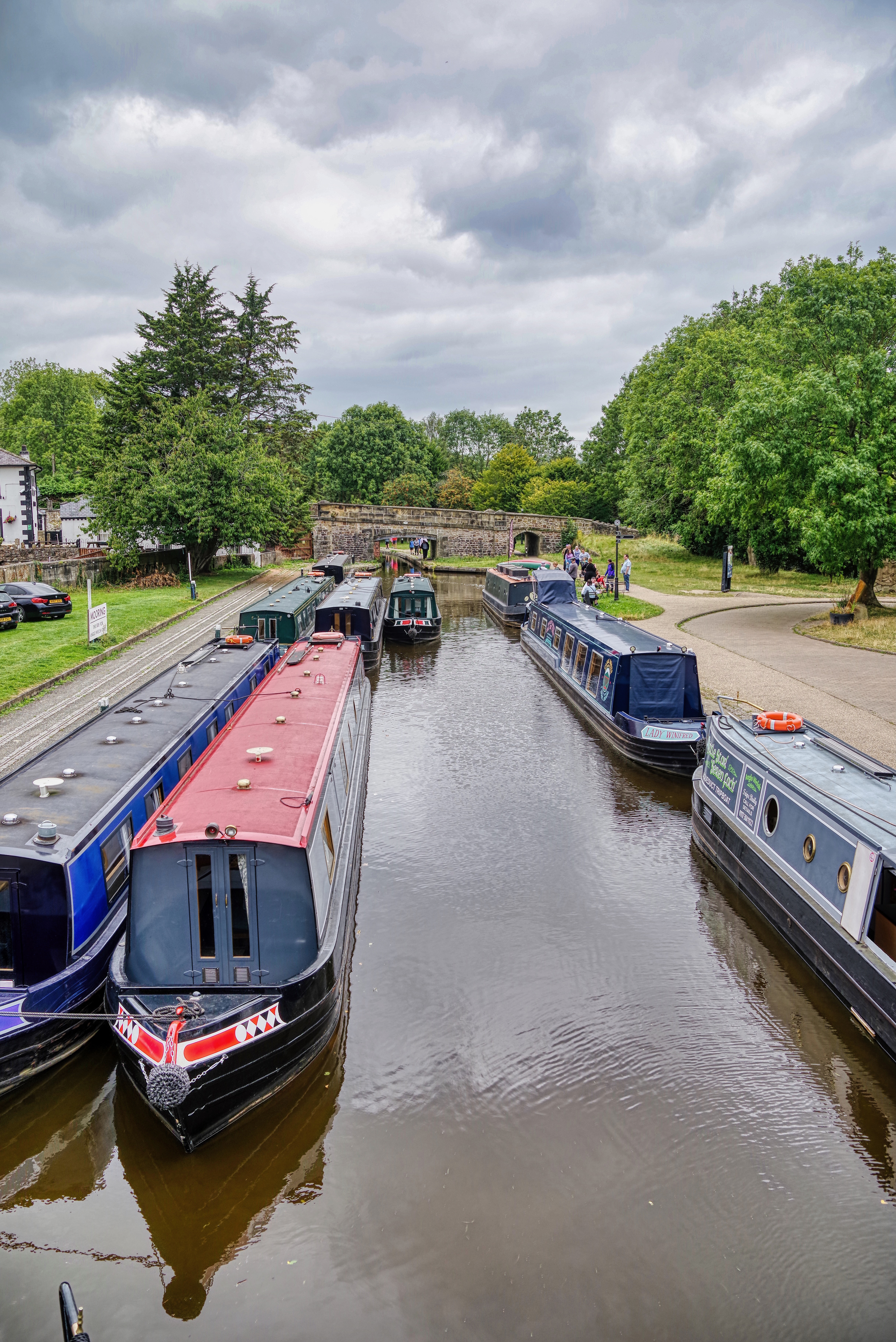
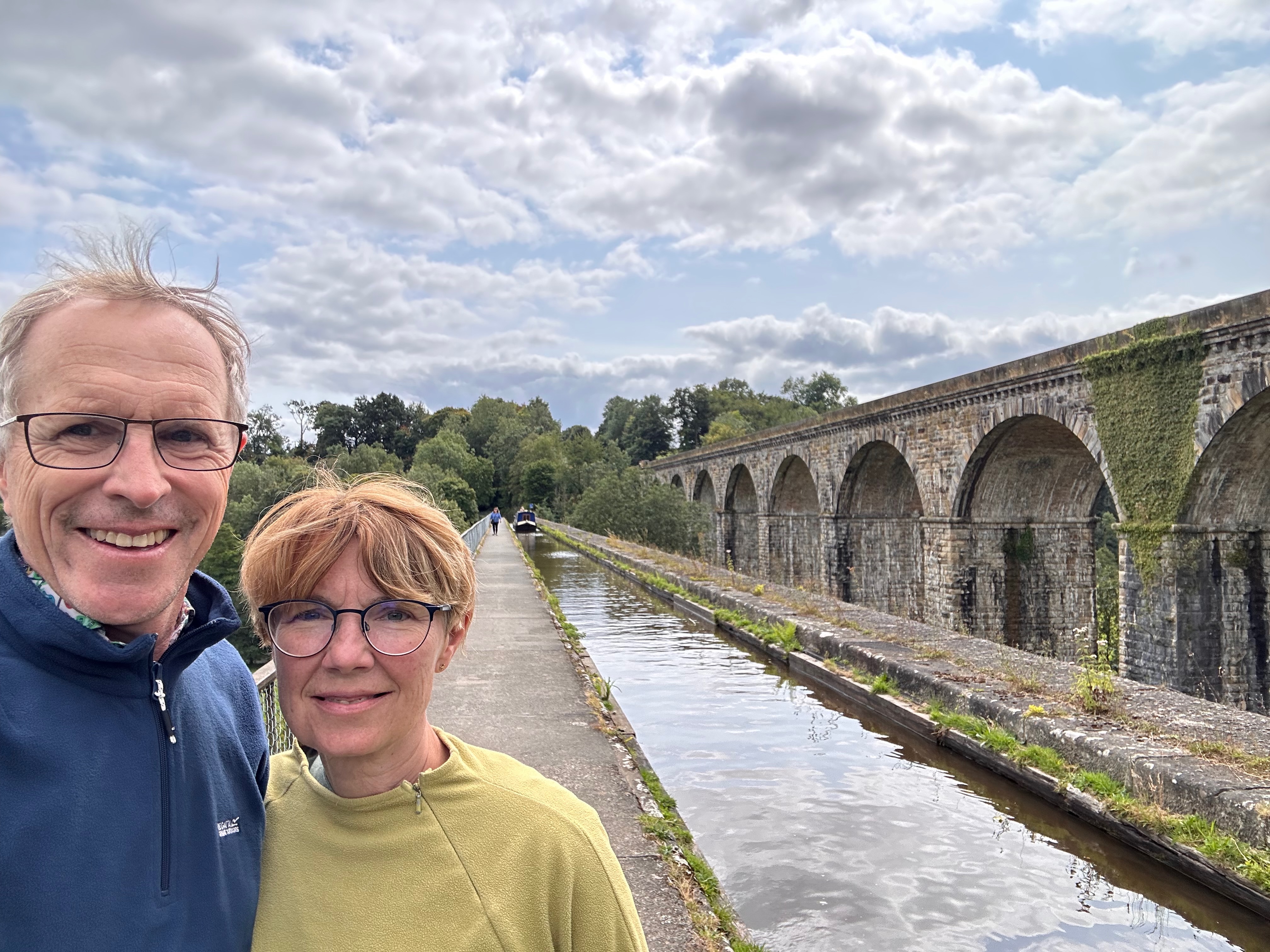
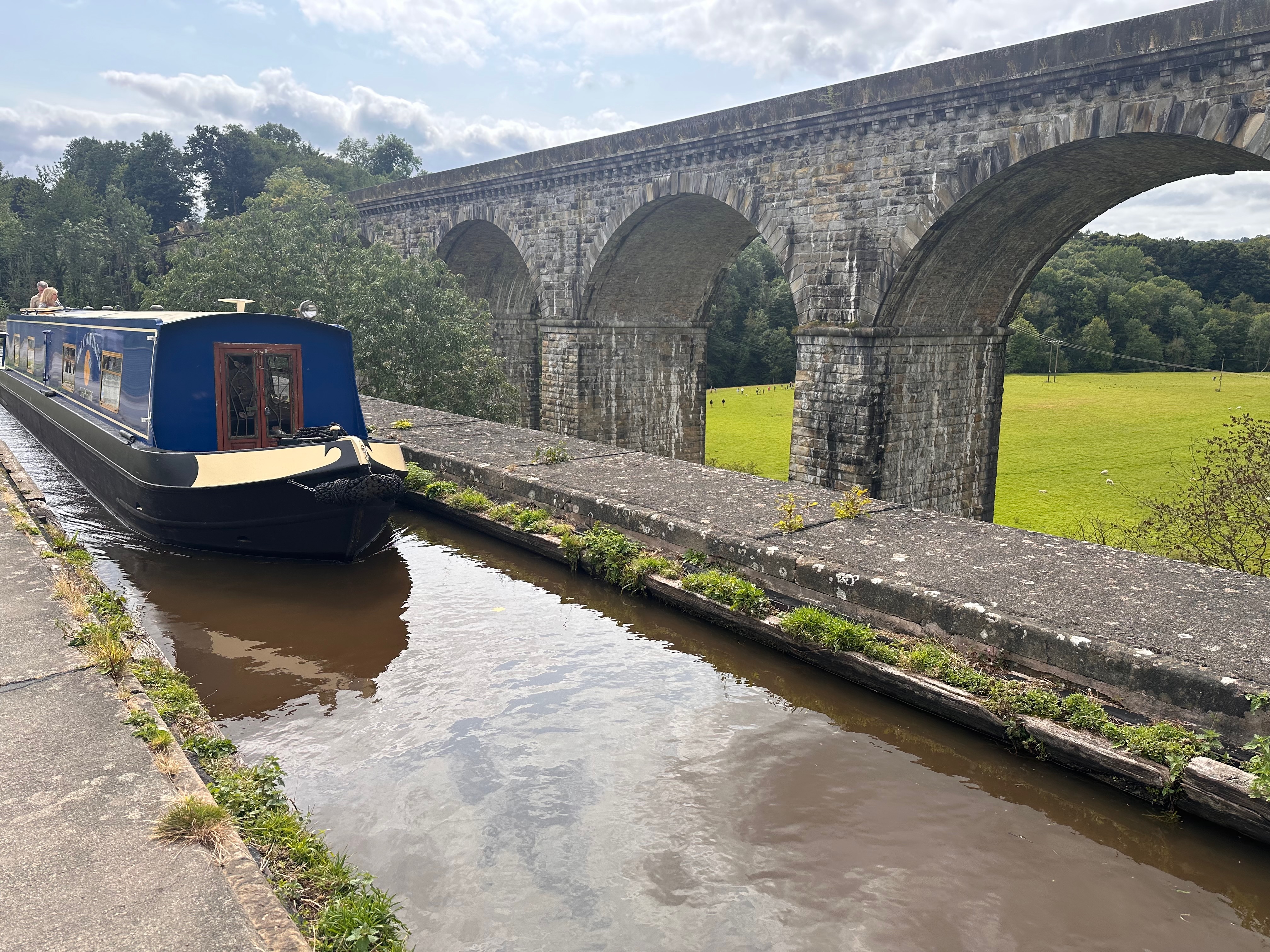
A highlight of the day was to be walking across the Pontcysyllte Aqueduct that takes the canal across the wide Dee Valley between Froncysyttle and Trevor. An engineering marvel by Thomas Telford. And a very popular tourist attraction. Again, while I had done house calls here back in the day I don’t recall ever actually walking across the aqueduct.
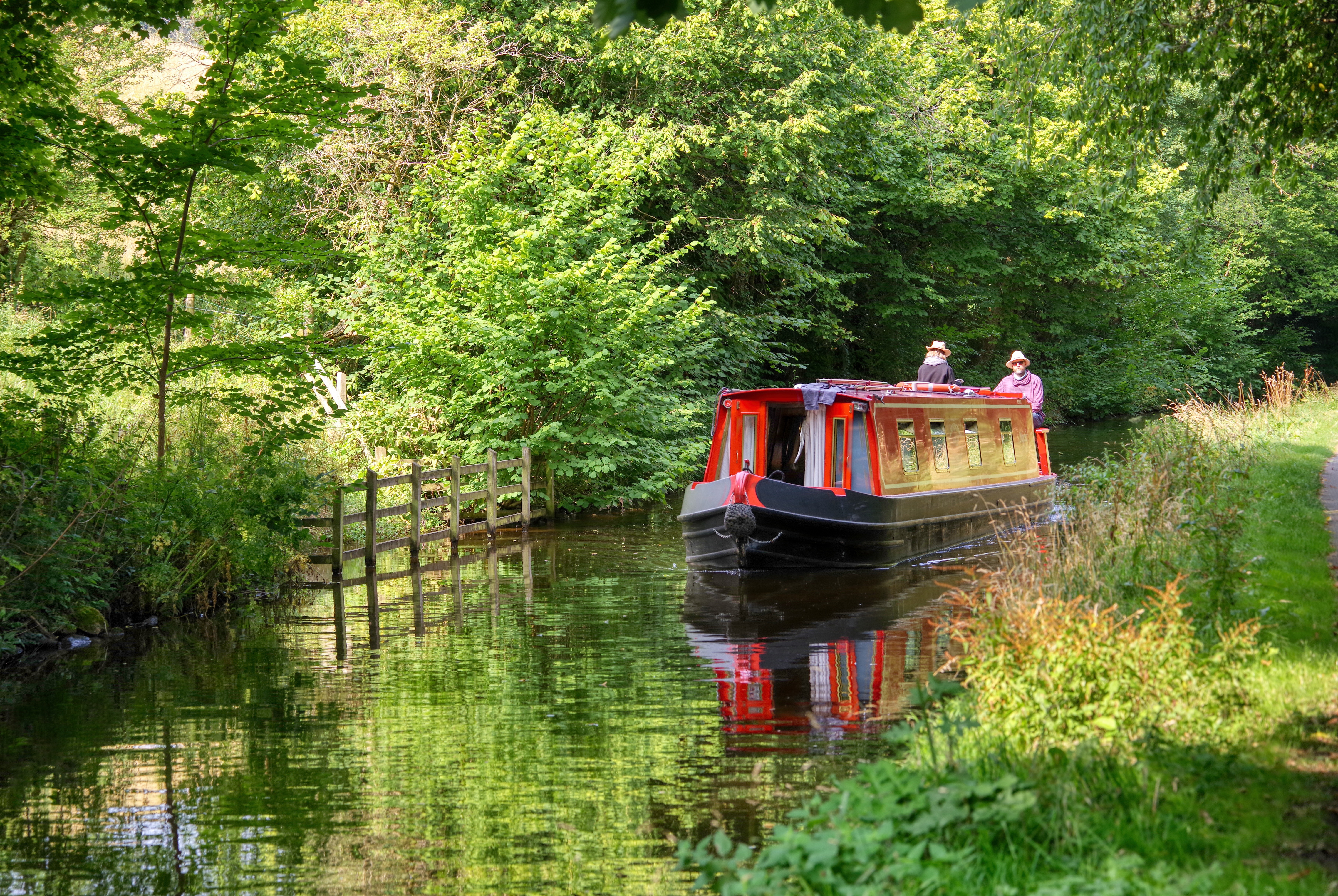
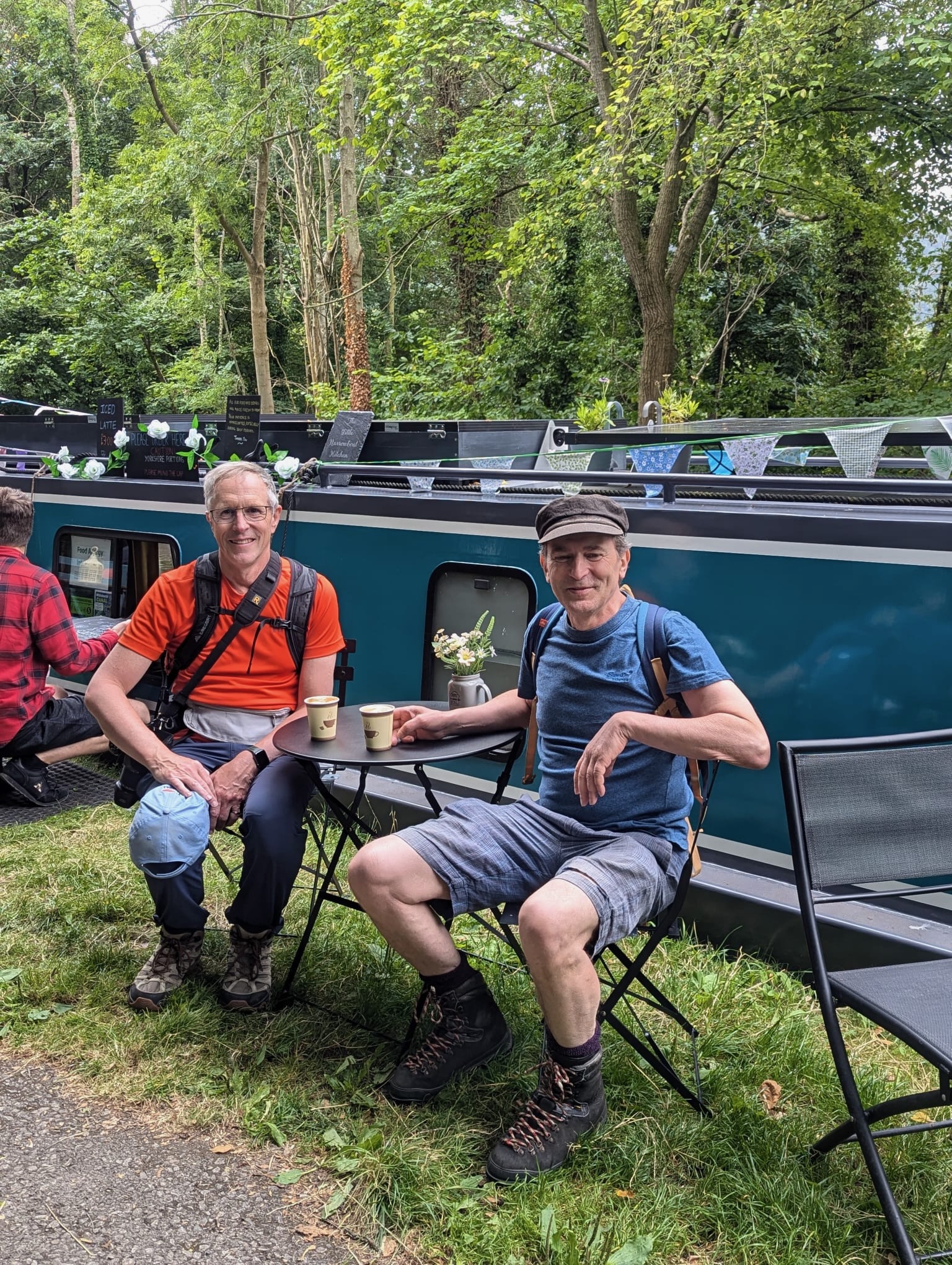
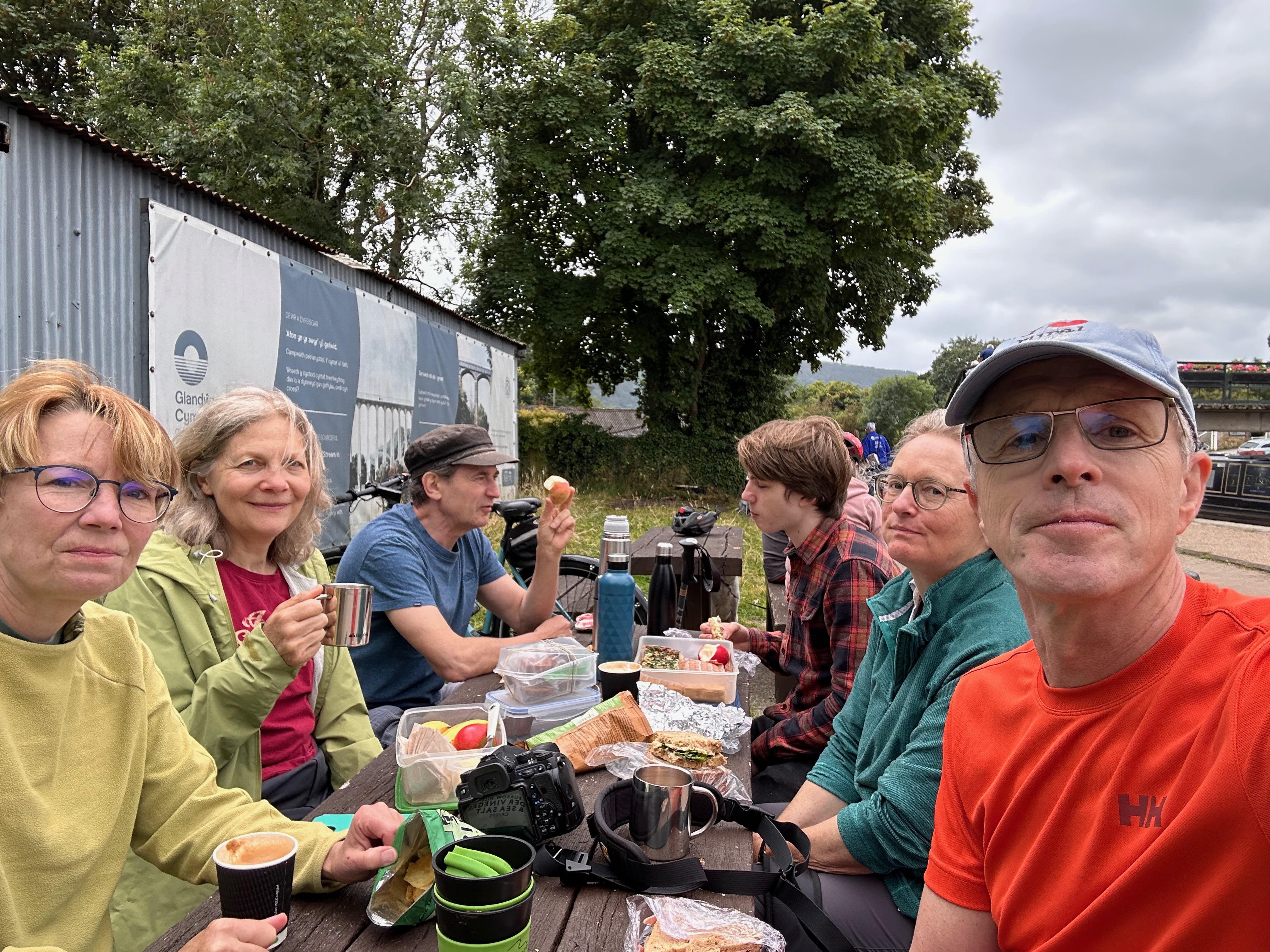
More importantly, we found a canal boat selling very good coffee.
Coffee!Canada Bill
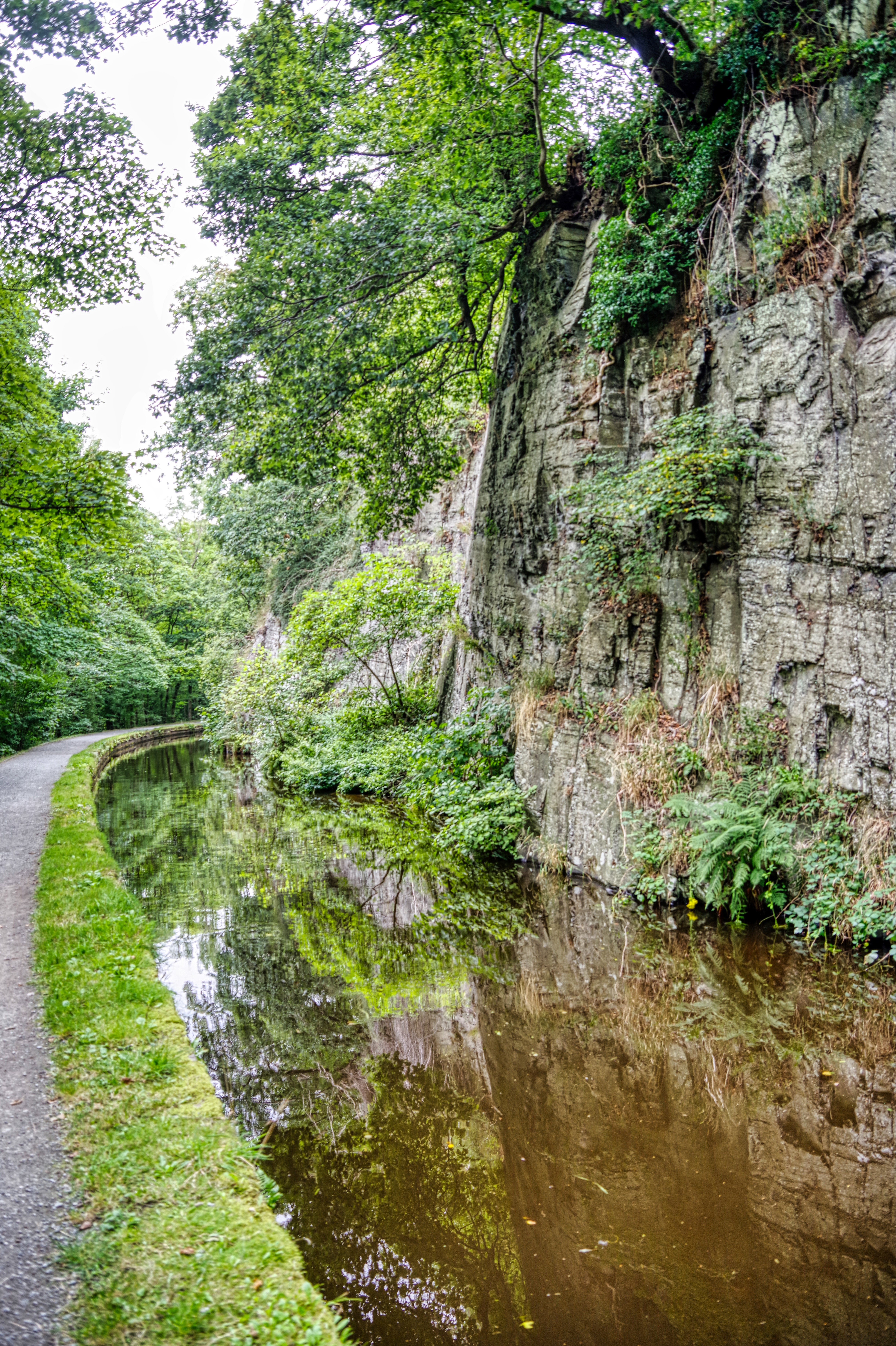
After lunch, instead of climbing up the Trevor Cliffs to follow the actual path we chose a leisurely walk alongside the canal up into Llangollen.
Castel Dinas Bran
17.36km
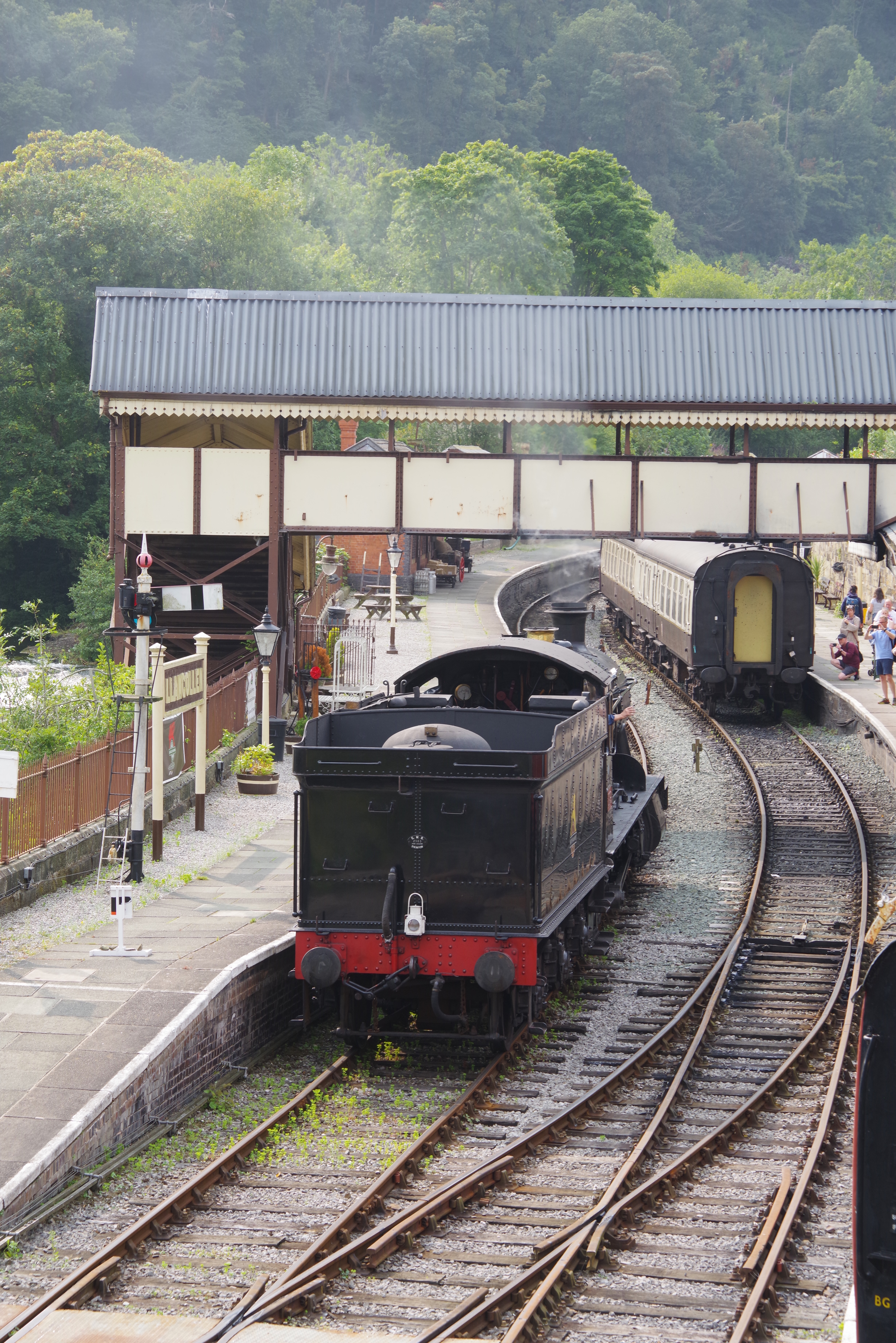
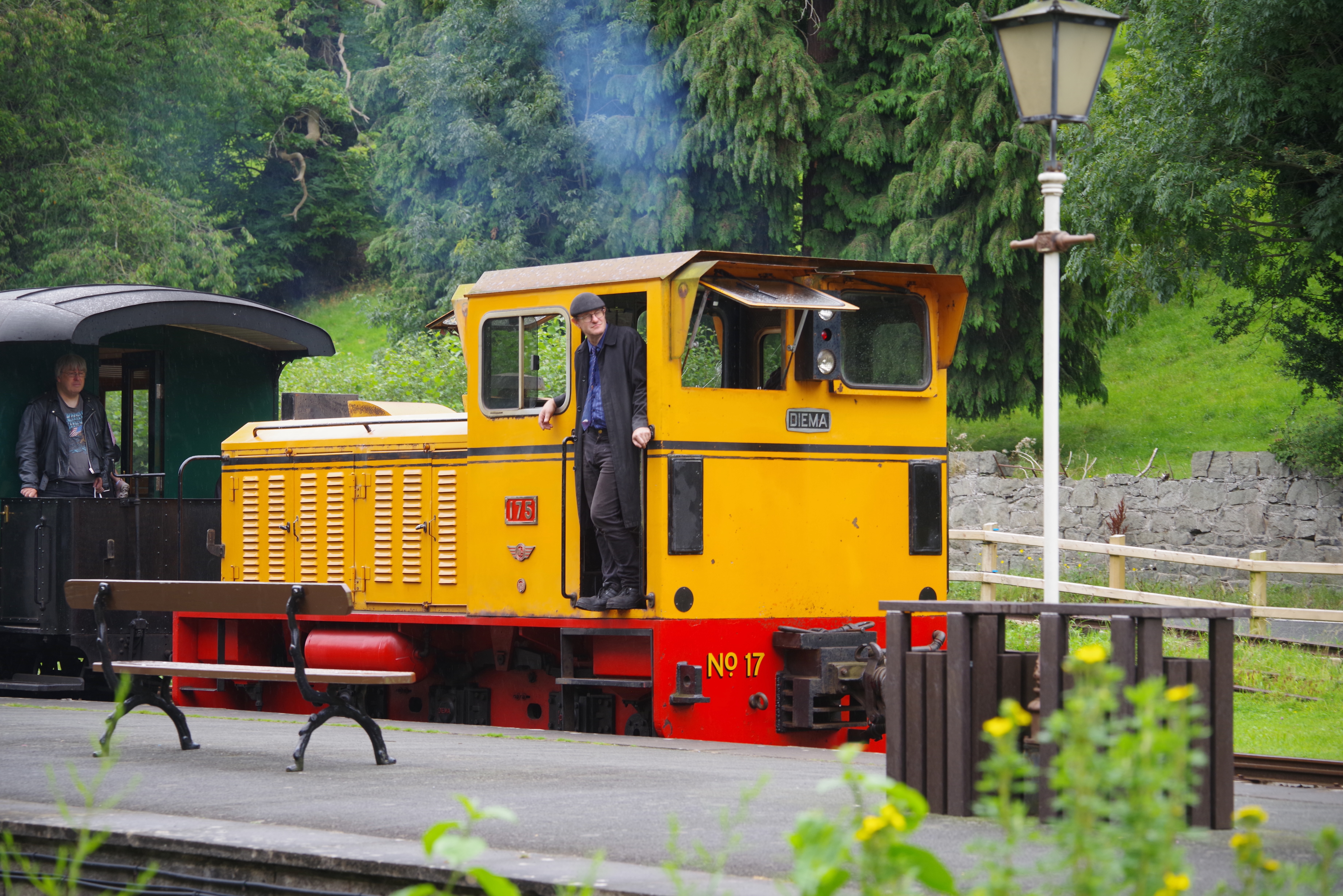
And there was a train!
That evening the Lovedays kindly picked us up and transported us to their house in Knighton for a sumptuous dinner with them and Simon and Laura Rummens. Remembering the days at Shepparton (before Lori and I had arrived in the UK)
Usually most walkers have a rest day at the next stop in Llangollen. However, as we had our connections here in Chirk (and we felt we had “done” Llangollen) we elected to have our day here.
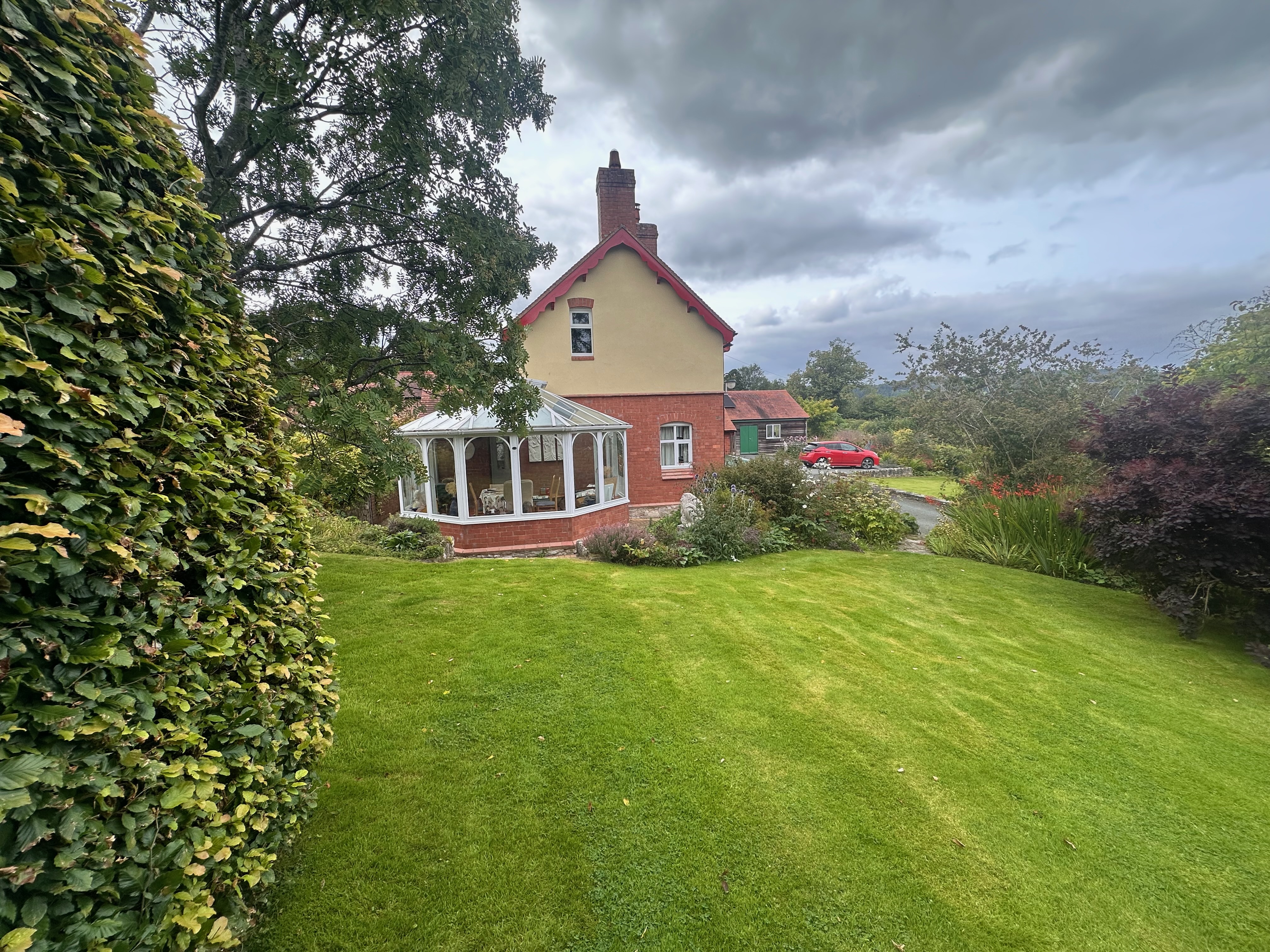
Chirk was where Paul worked as a General Practice trainee before we moved to Fort St John. Rob and Judy Greaves were two of his preceptors so it was lovely to be able to stay with them and spend time at their lovely house. And to admire their solar and battery array!
To use some different muscles we had intended to head into Chirk proper for a swim but messed up the time. So we instead enjoyed a coffee and walked back to Rob and Judy’s house along a different public path.
Again, curiously, I think this was the first time we walked the full length of the aqueduct.
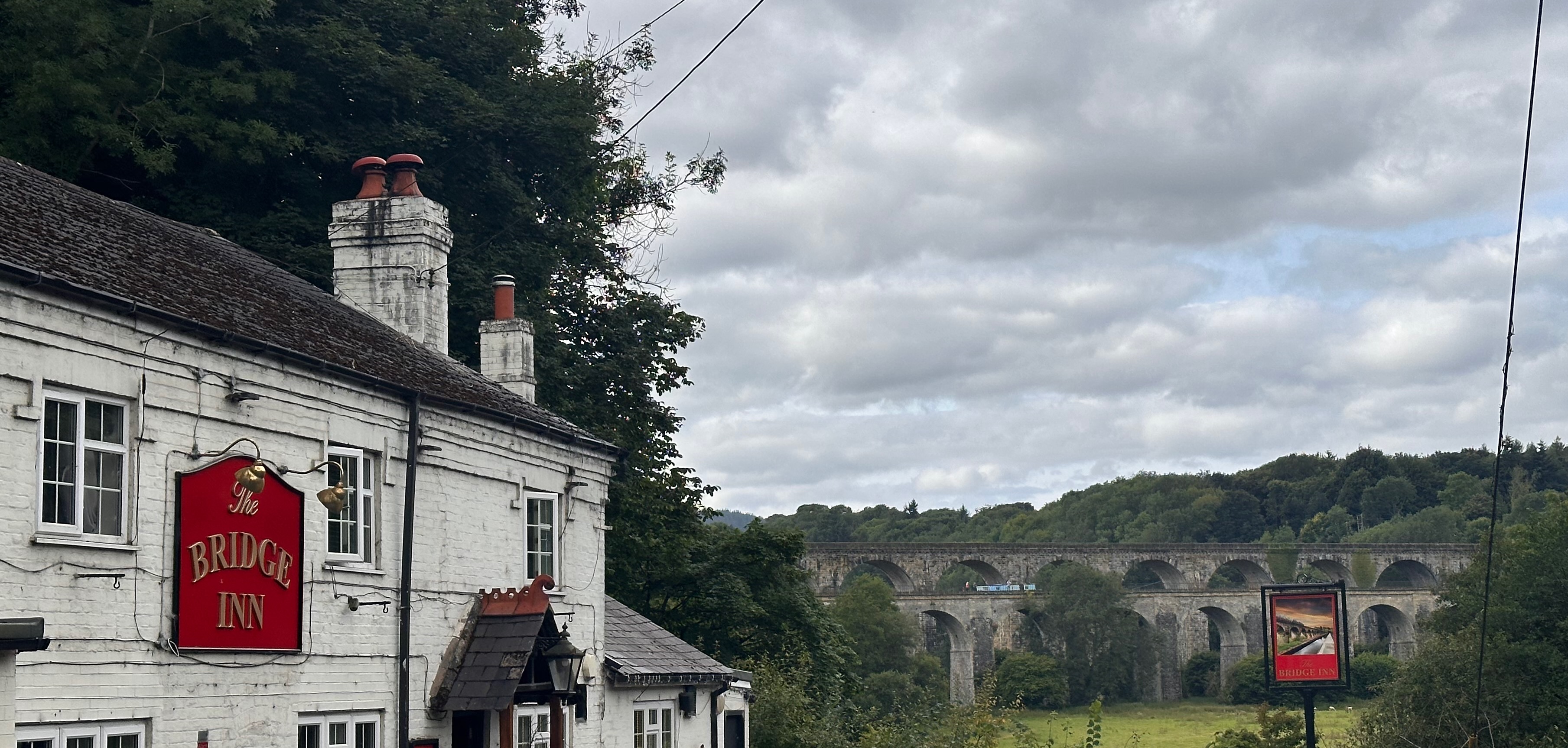
The Last Pub in EnglandRob & Judy’s
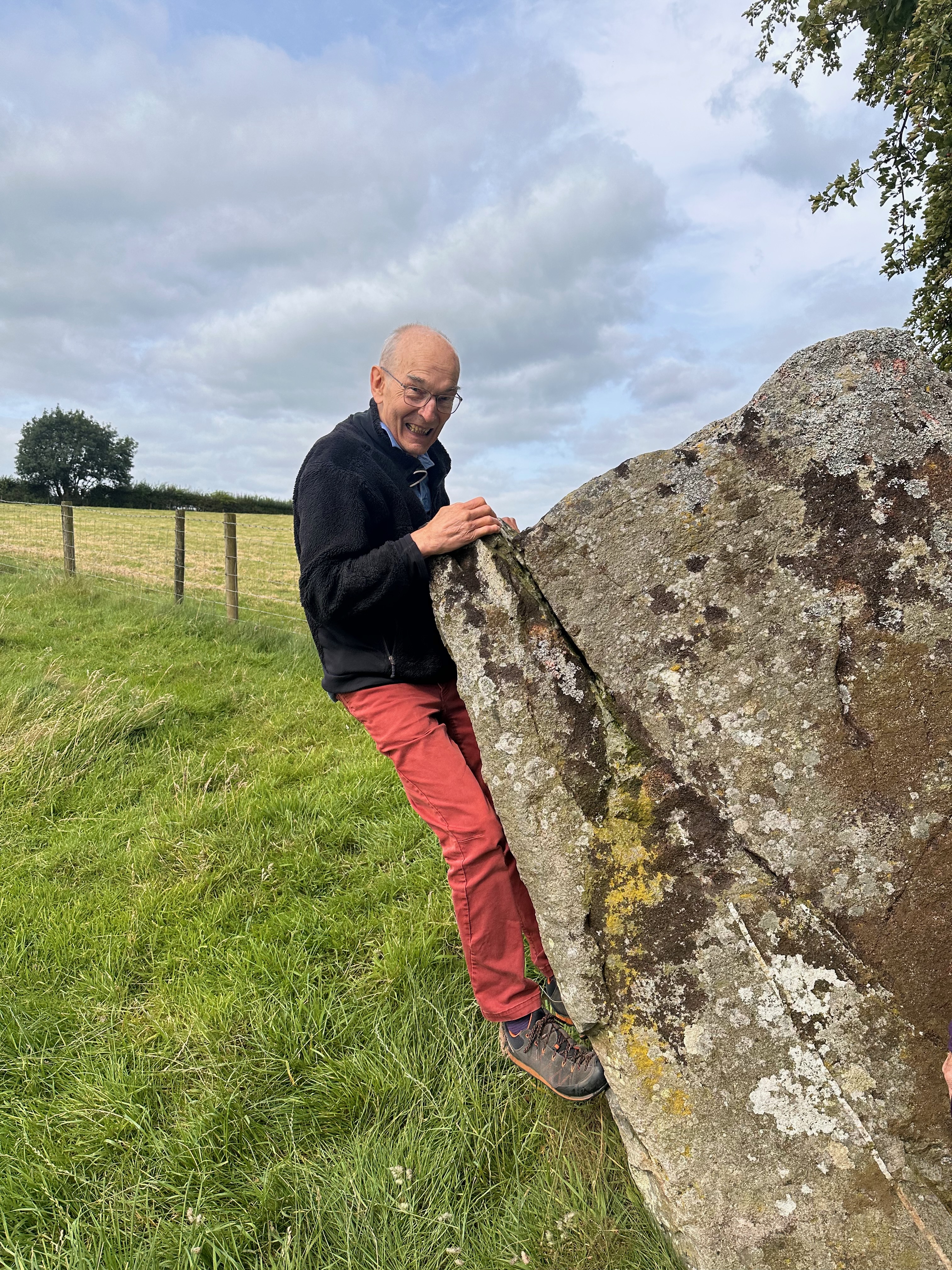
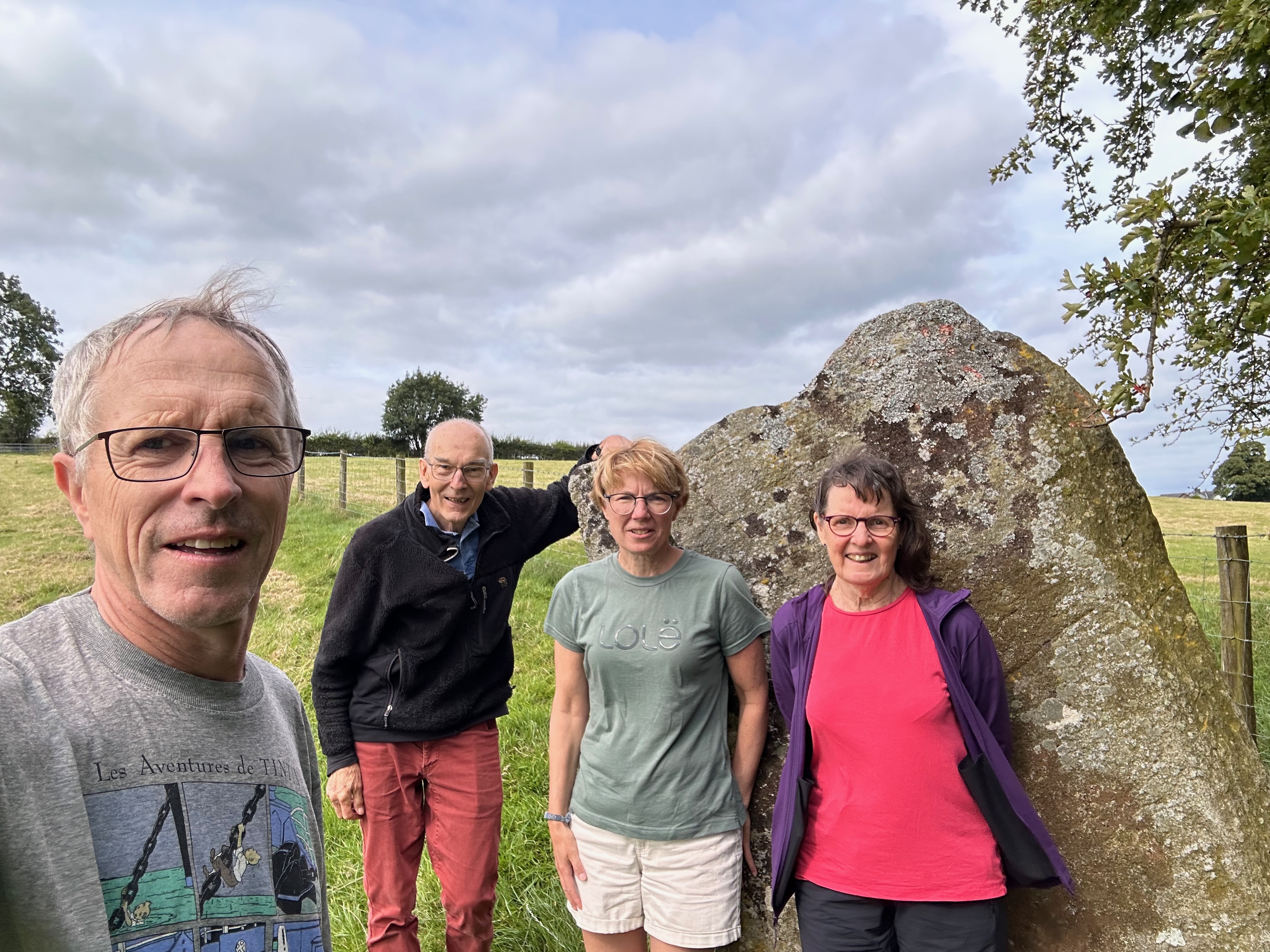
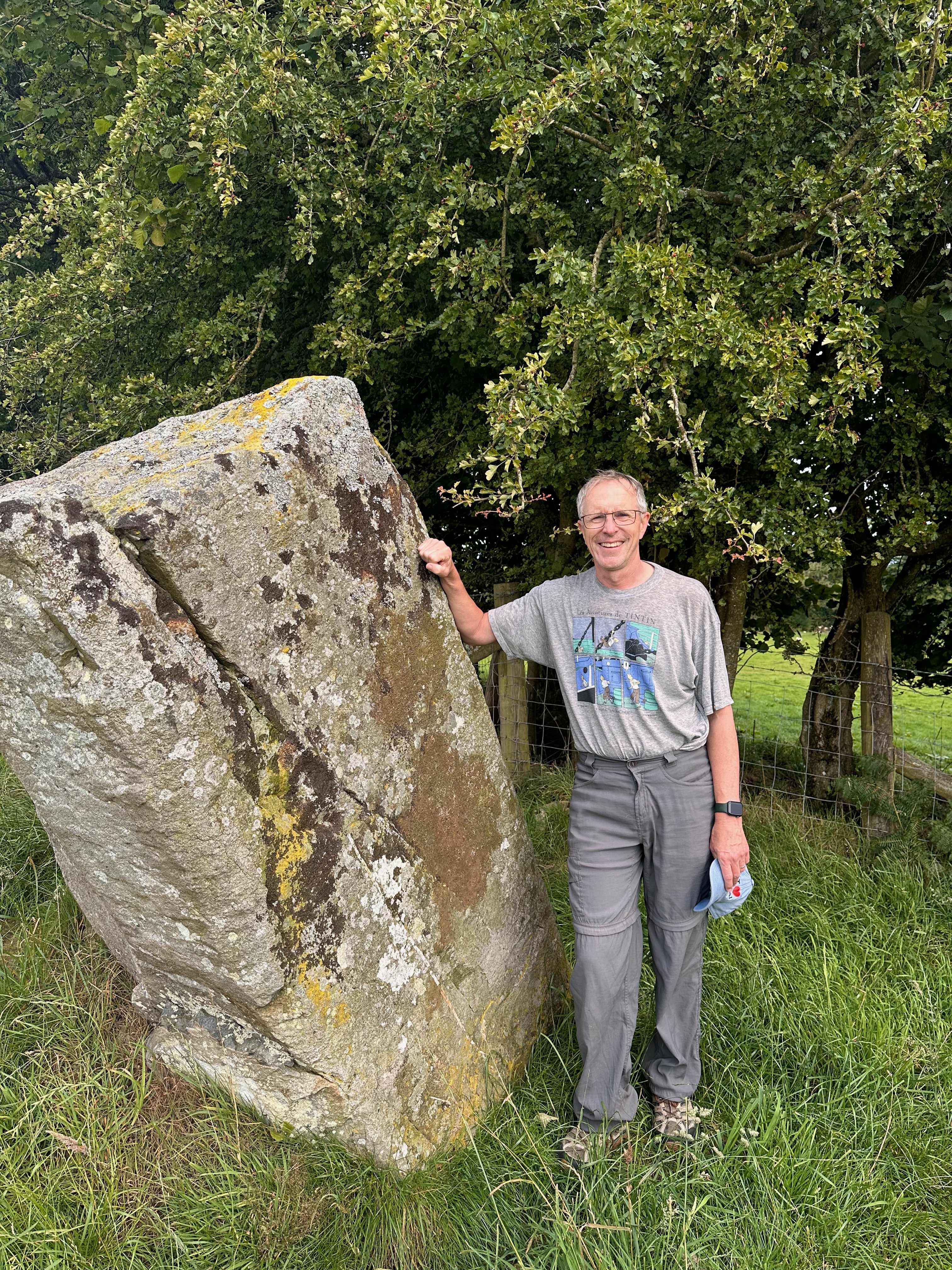
In the afternoon Robert, sensing my bitter disappointment at not seeing the standing stone ( and possibly indulging his own curiosity to see it) took us back to visit it.
I was impressed. I think Lori was impressed with her decision to not double back.
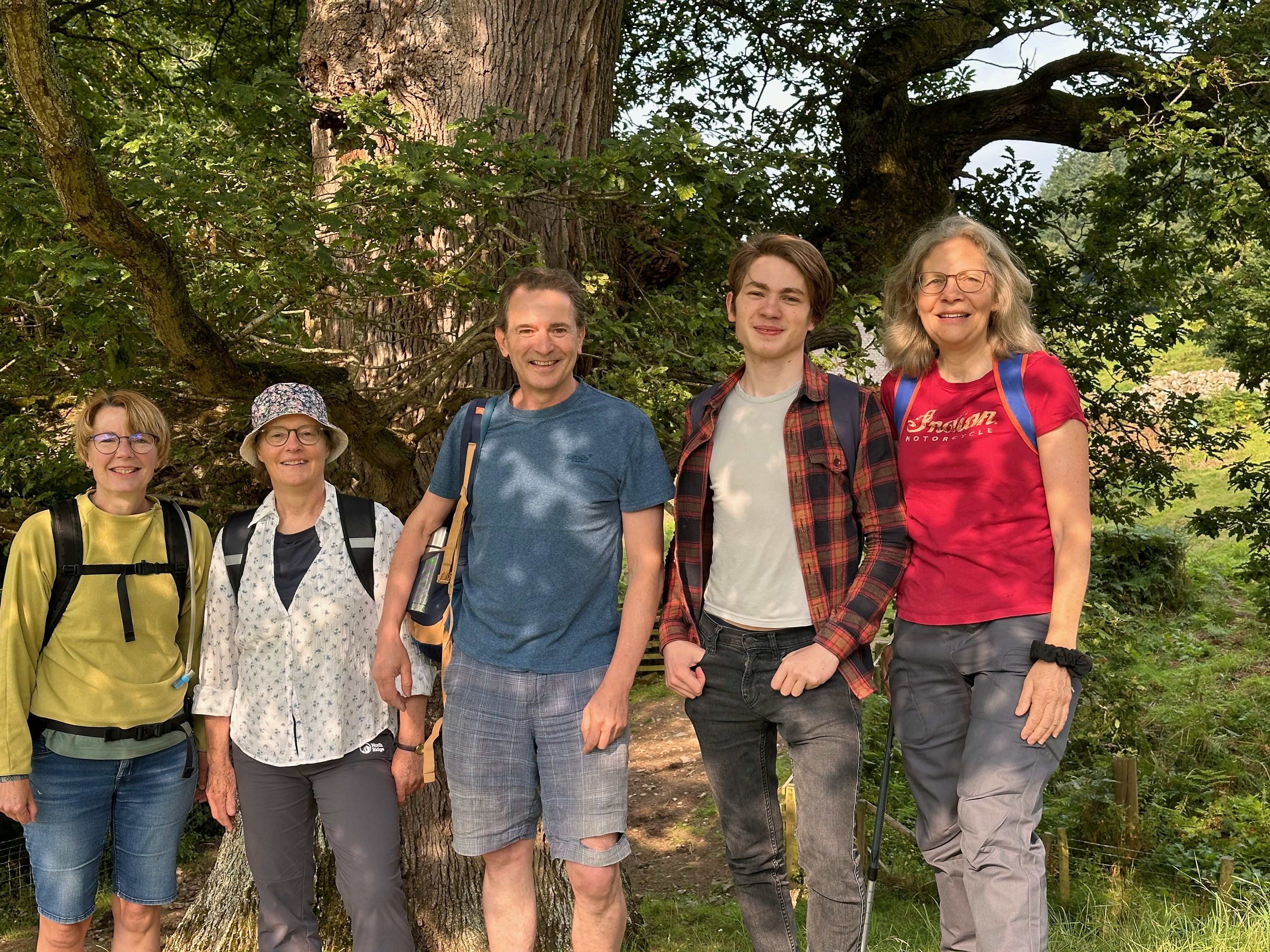
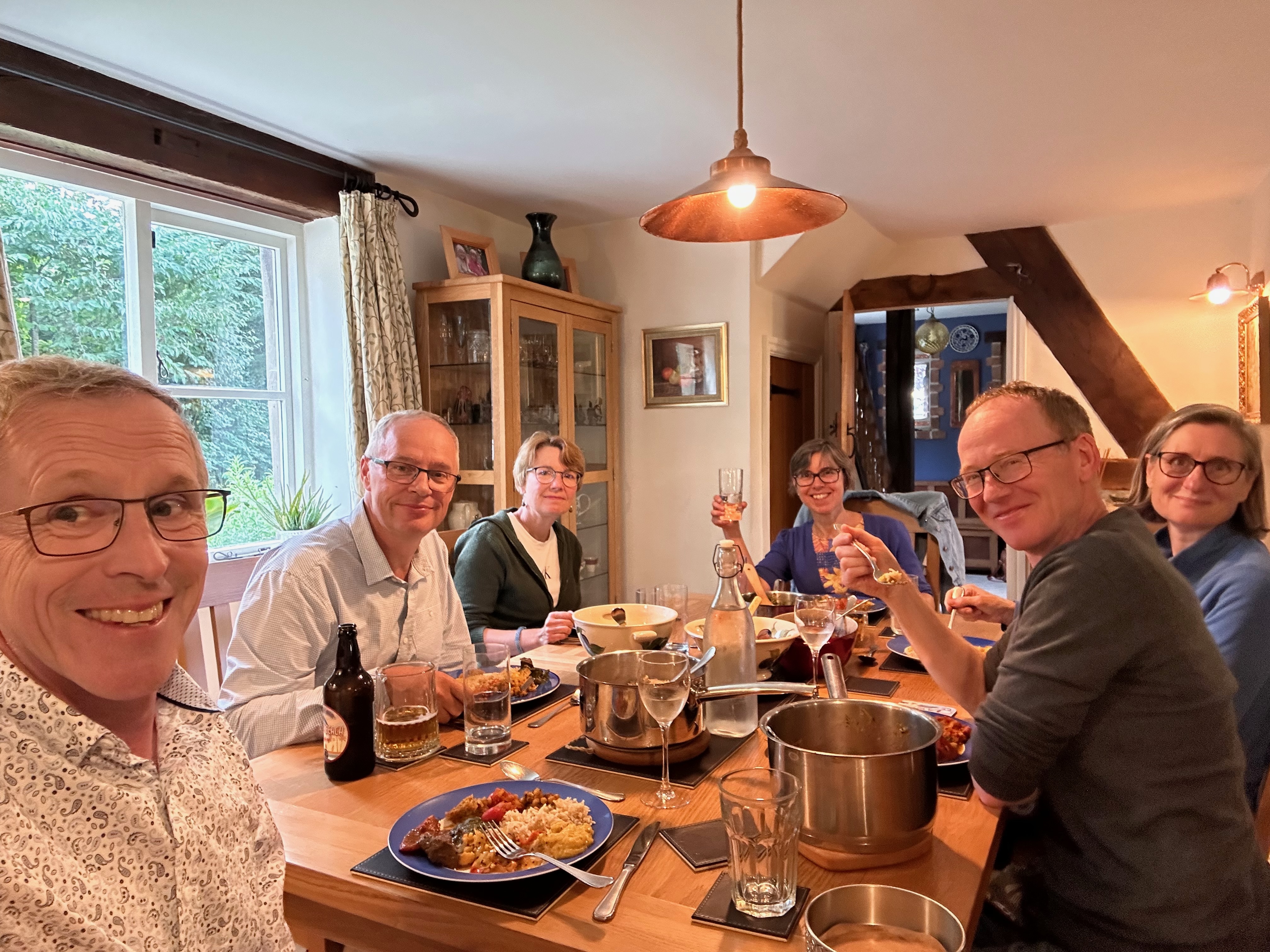
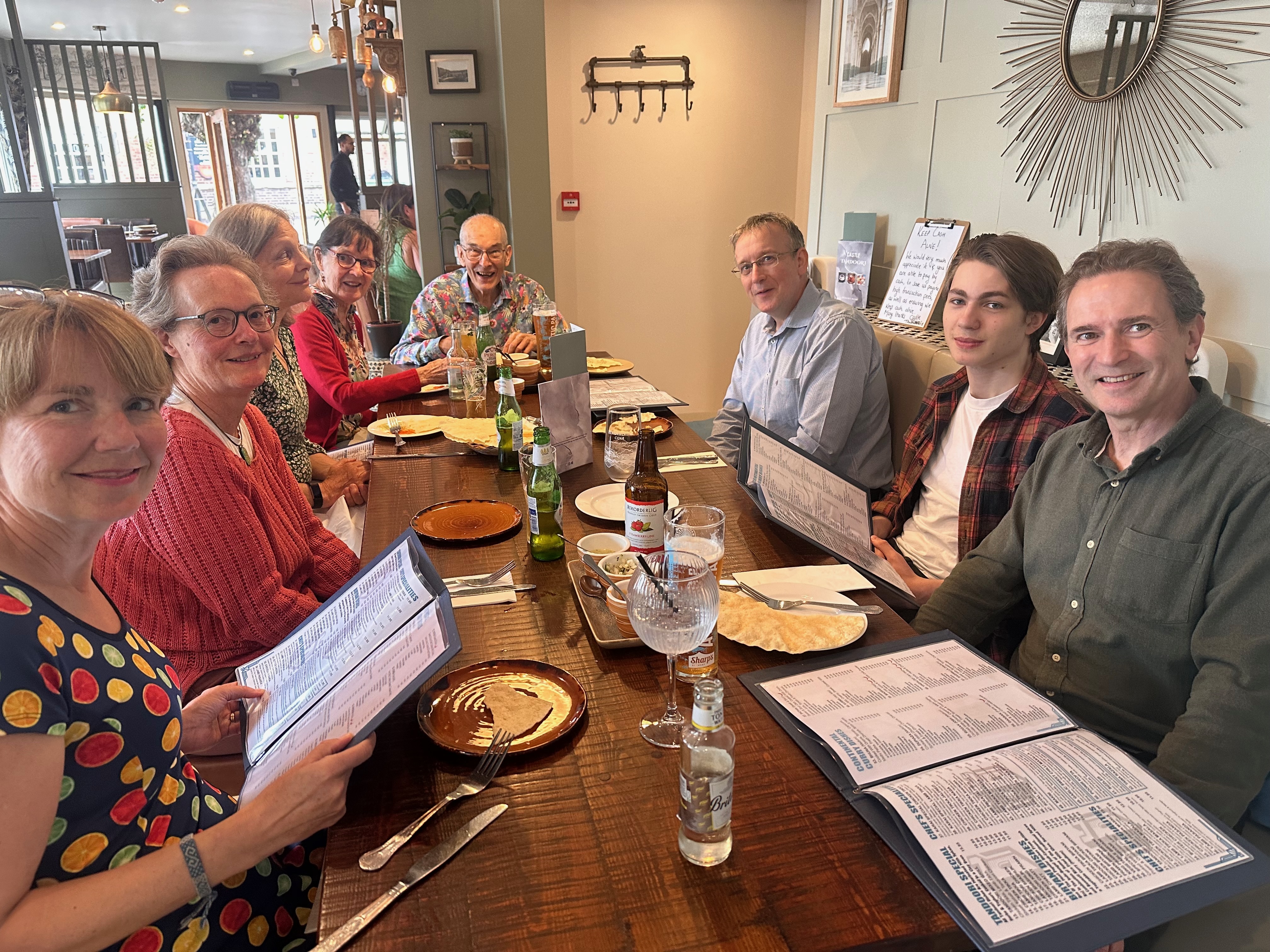
The relaxing day was rounded off with an enjoyable group dinner with several of Lori’s former work colleagues at the local Indian Restaurant. Kerry, Paul and Jude had come down from Manchester, Anne Hendrie up from Oswestry and even Steve Winter (who Lori had not seen for 30 years) joined us. He fortuitously lived so close by such that we would be walking past his house on the trail.
Dressed for DinnerDinner
Our departure point the following day was to be just up the Ceriog Valley at Castle Mill. It is the one place that the Welsh defeated the English in Battle when Owain Glendwr defeated Henry II’s forces in 1165
After another scrumptious breakfast and loaded up with our generous lunch we once again set off. Today we would be doing the section up to Chirk. Today would also be the day that we would spend the most distance walking either on or beside the actual dyke.
In the forestIf there is a (rare) seat: use itAside the Dyke
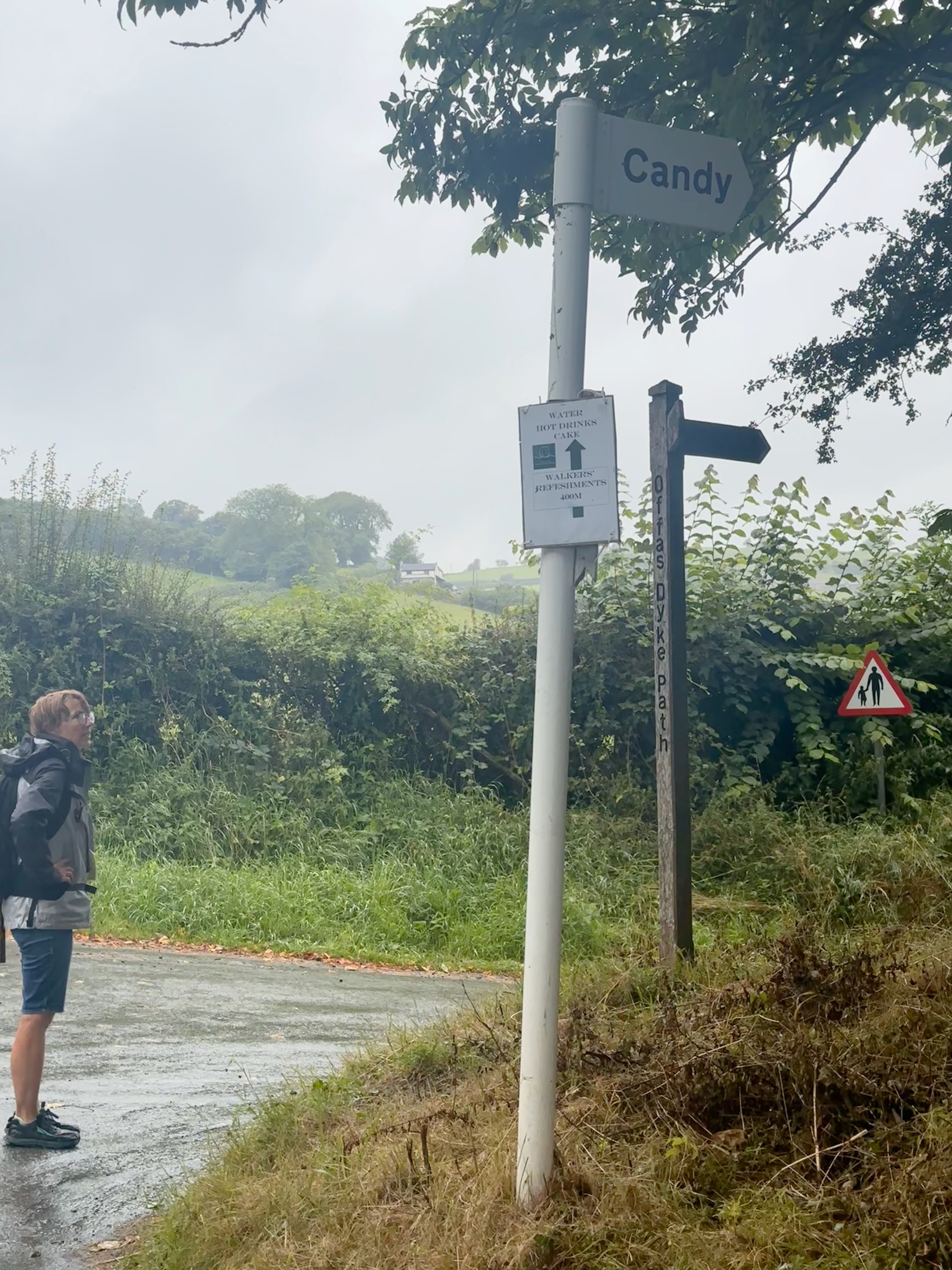
The day started beautifully as we climbed up through the delightful Candy Woods back to the dyke and then walked at times along side, at times on top and at times cutting through it as we made our way to Racecourse Common, the site of an abandoned racecourse.
Atop the DykeAt the RacecourseMore of the DykeMore DykeMore DykeMore forest
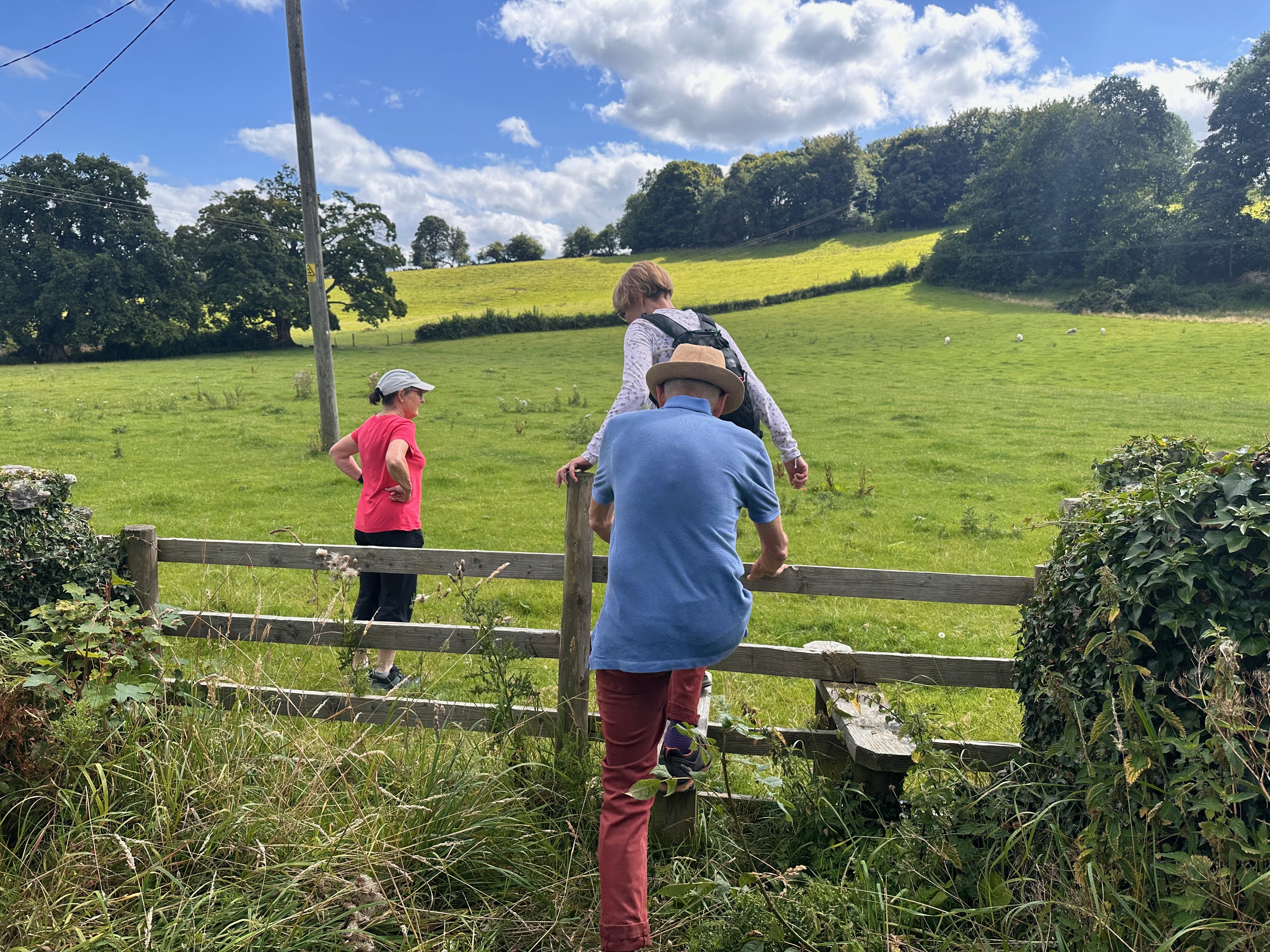
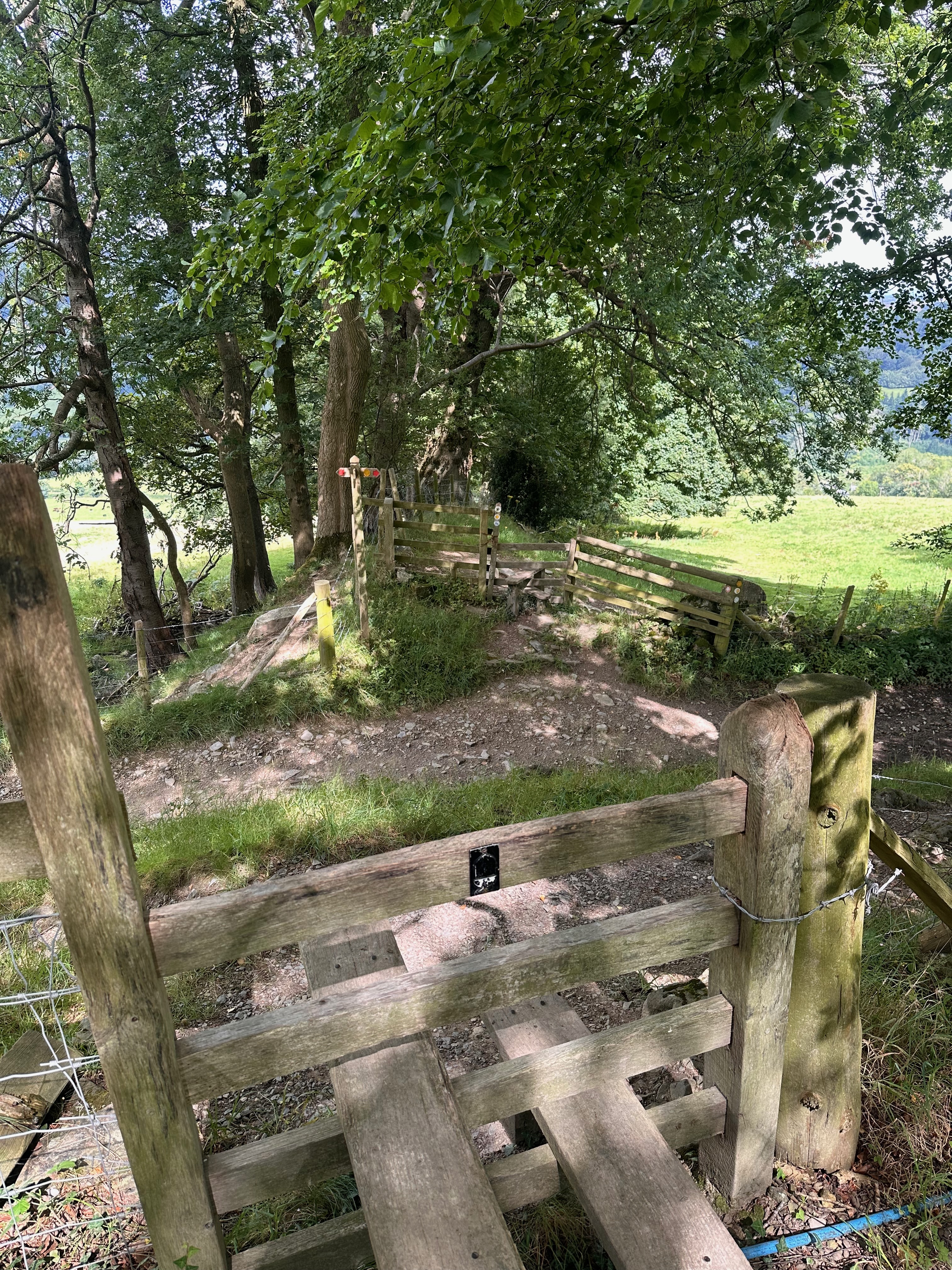
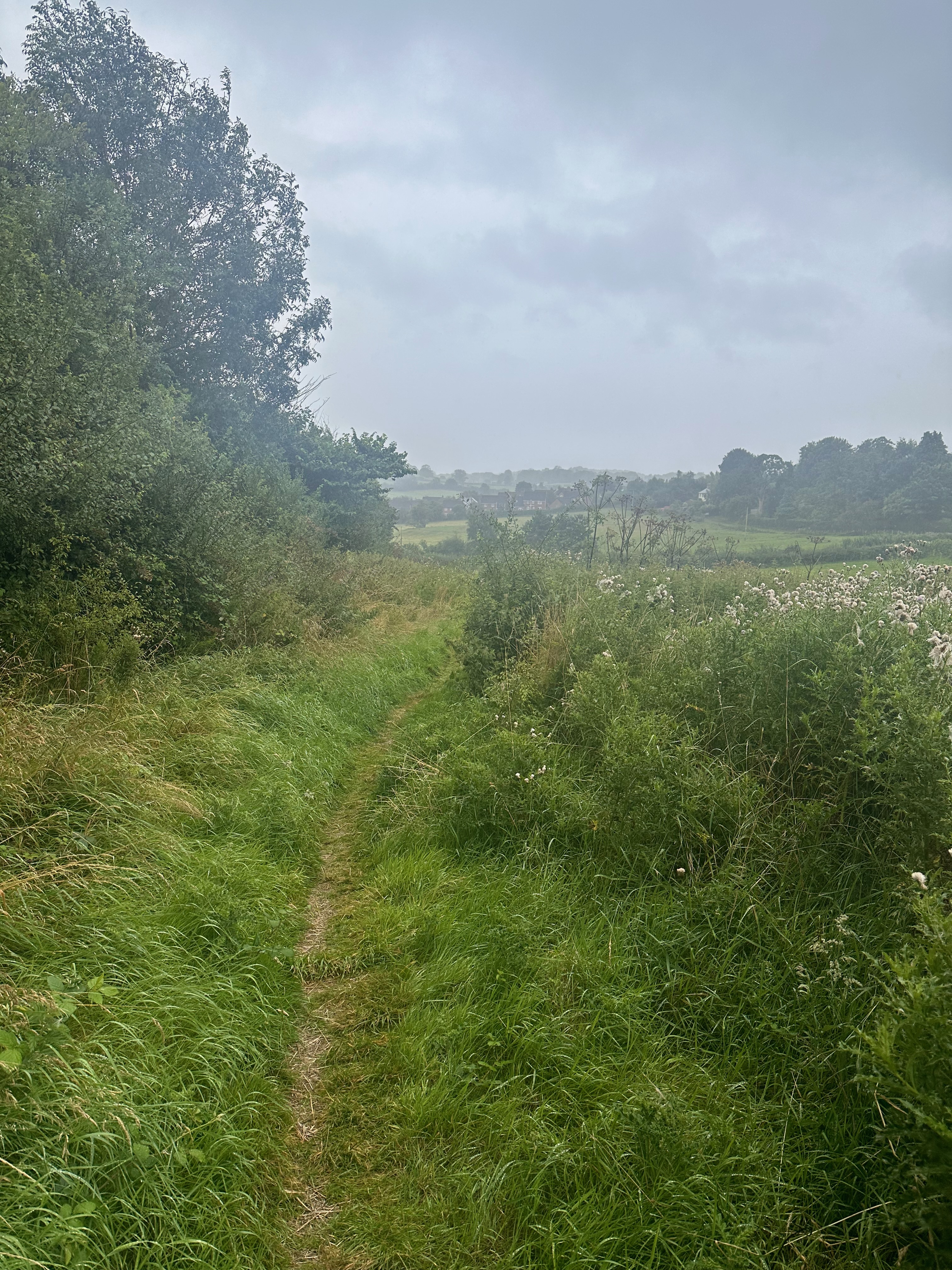
There were the customary (and frequent) farmer’s fields to walk through (and styles to climb over) after the racecourse and, owing to yesterday’s rain, wet (and sometimes muddy) feet ensued.
We were very glad we were not like other walkers who were pressing onto Chirk yesterday as it would have made for a very unhappy and soggy afternoon.
In the environs of Selattyn I had been hoping to make a short detour to Shropshire’s largest standing stone. However I had not noticed we had missed the detour until we had progressed quite a ways past it. And Lori was giving me a “We’re not doubling back” look.
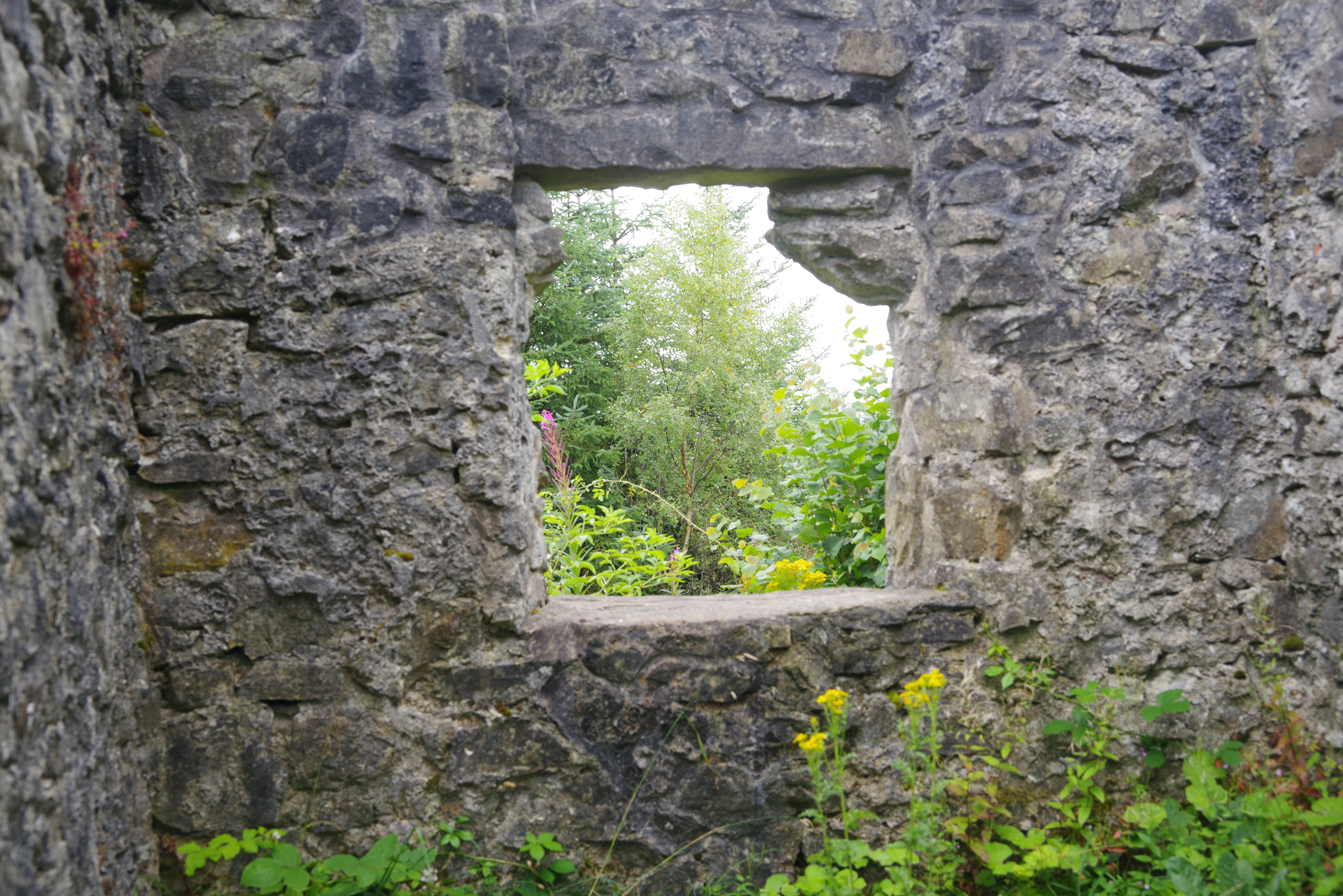
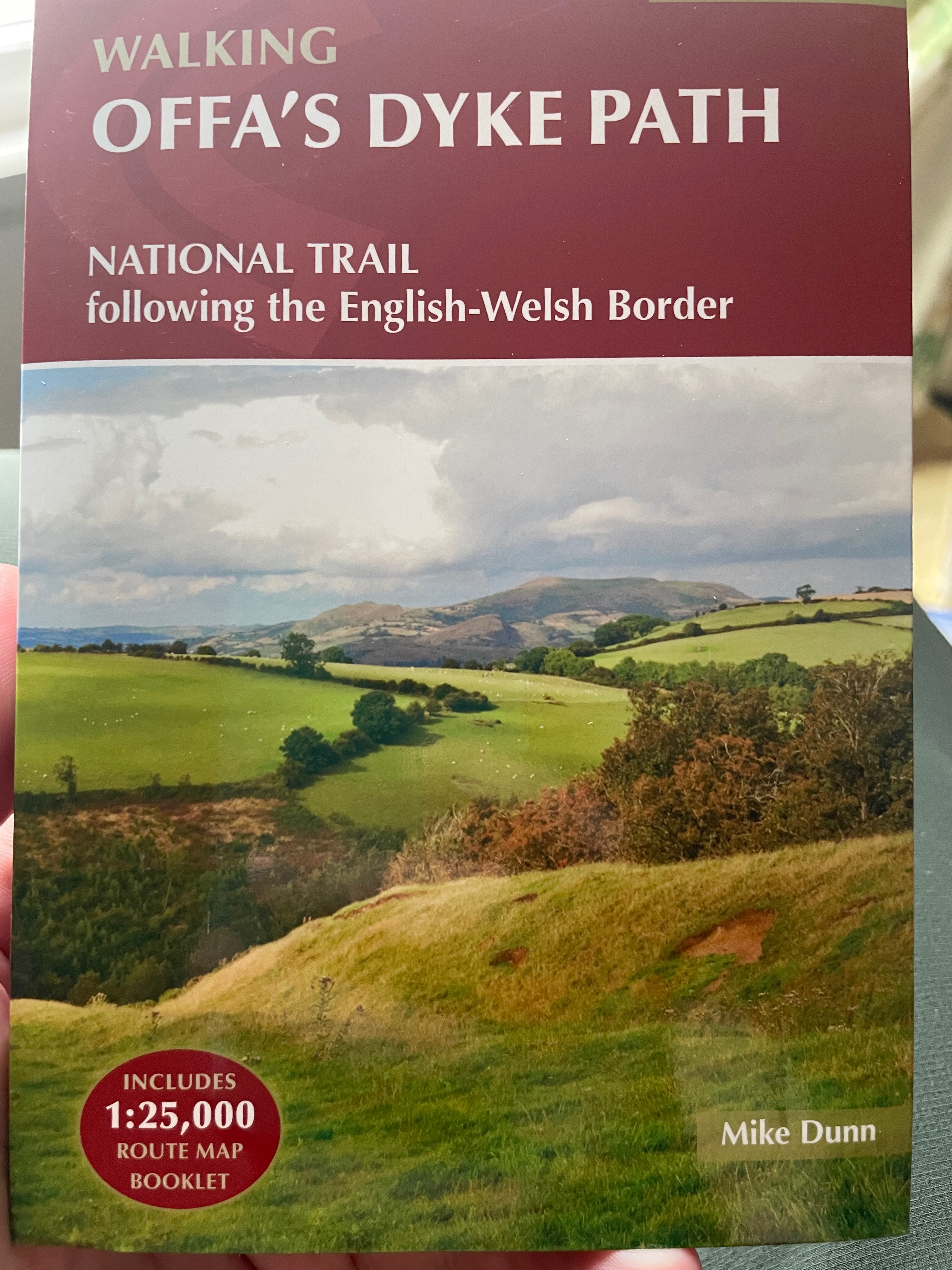
Instead we took a different detour to the thoroughly disappointing ruin of the Selattyn tower. The book said, “erected inside a Bronze Age ring cairn in Victorian times but collapsed in the early 20th century and has recently been restored”
Restored doing a lot of heavy lifting in that sentence.
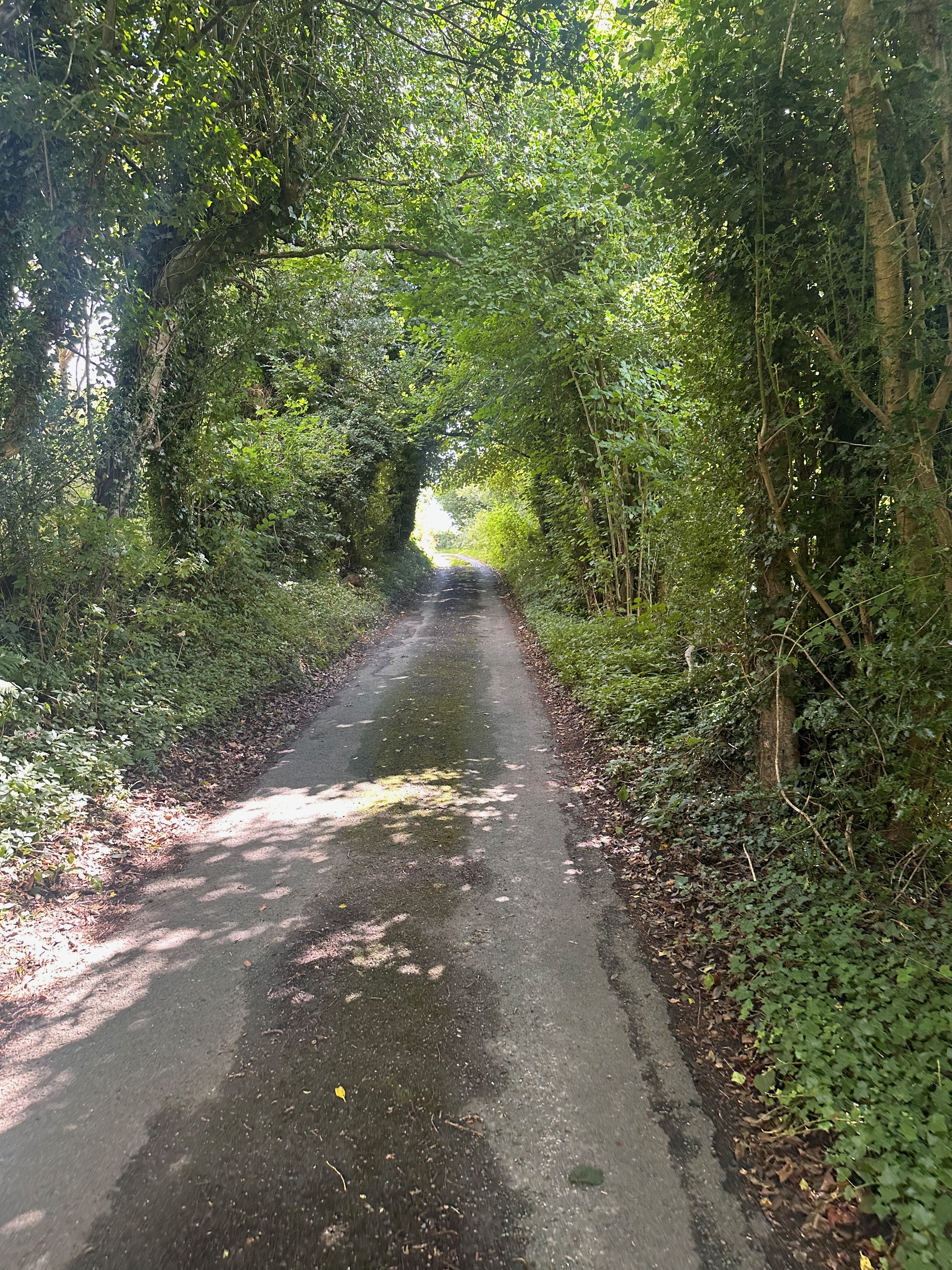
Thus doubly unsatisfied (and with wetter feet) we doubled back and continued on down into Craignant. Here we were greeted with the unfortunate information that a section of the path here was closed for repair of a culvert. This meant a long and at times dangerous detour up a narrow road. Normally a stroll along a Welsh country lane would be quite pleasing but when one has to almost leap into the bushes to avoid vehicles careering down the narrow road, not so.
“Restored”Not impressedAn unwelcome detour
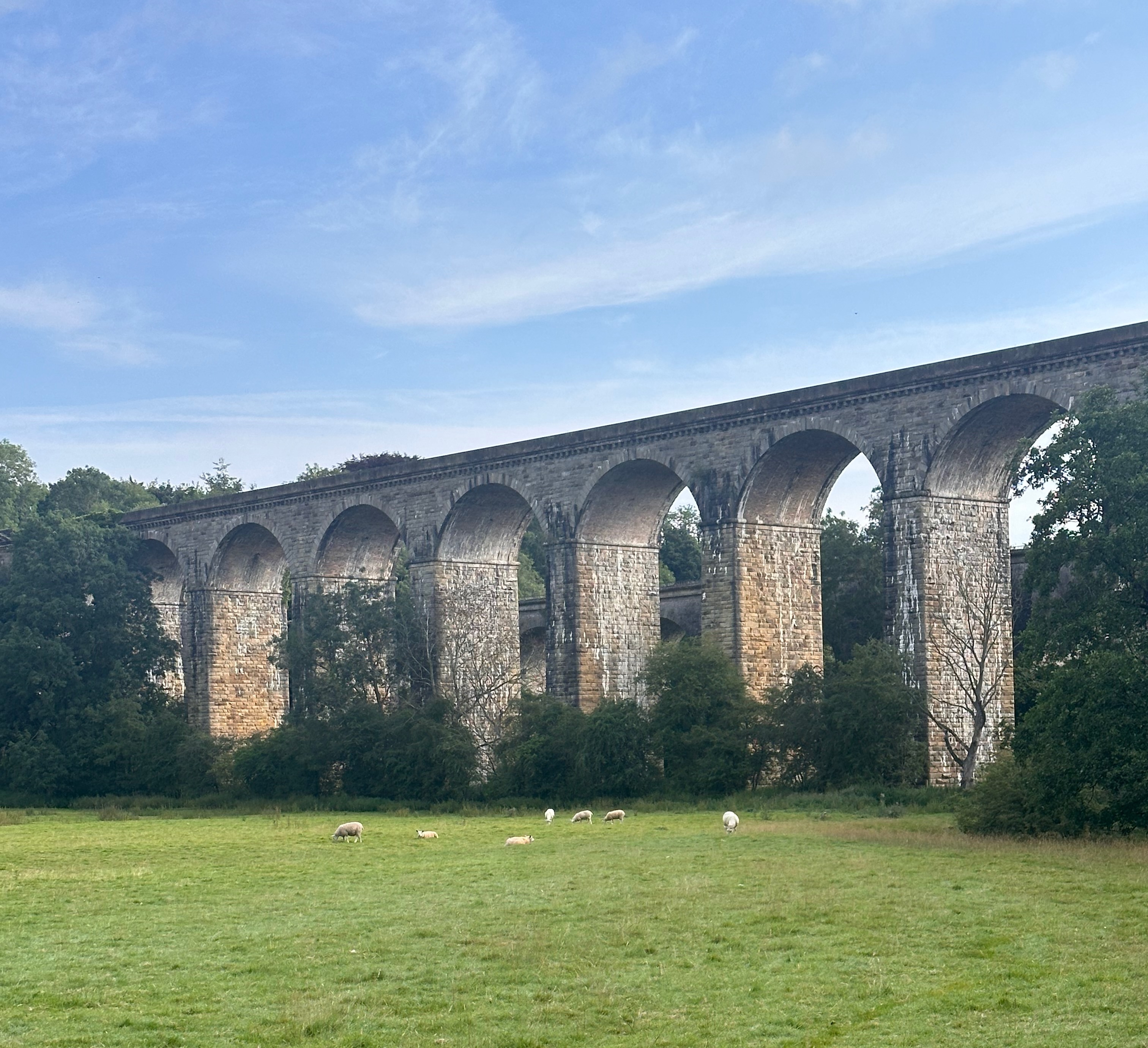
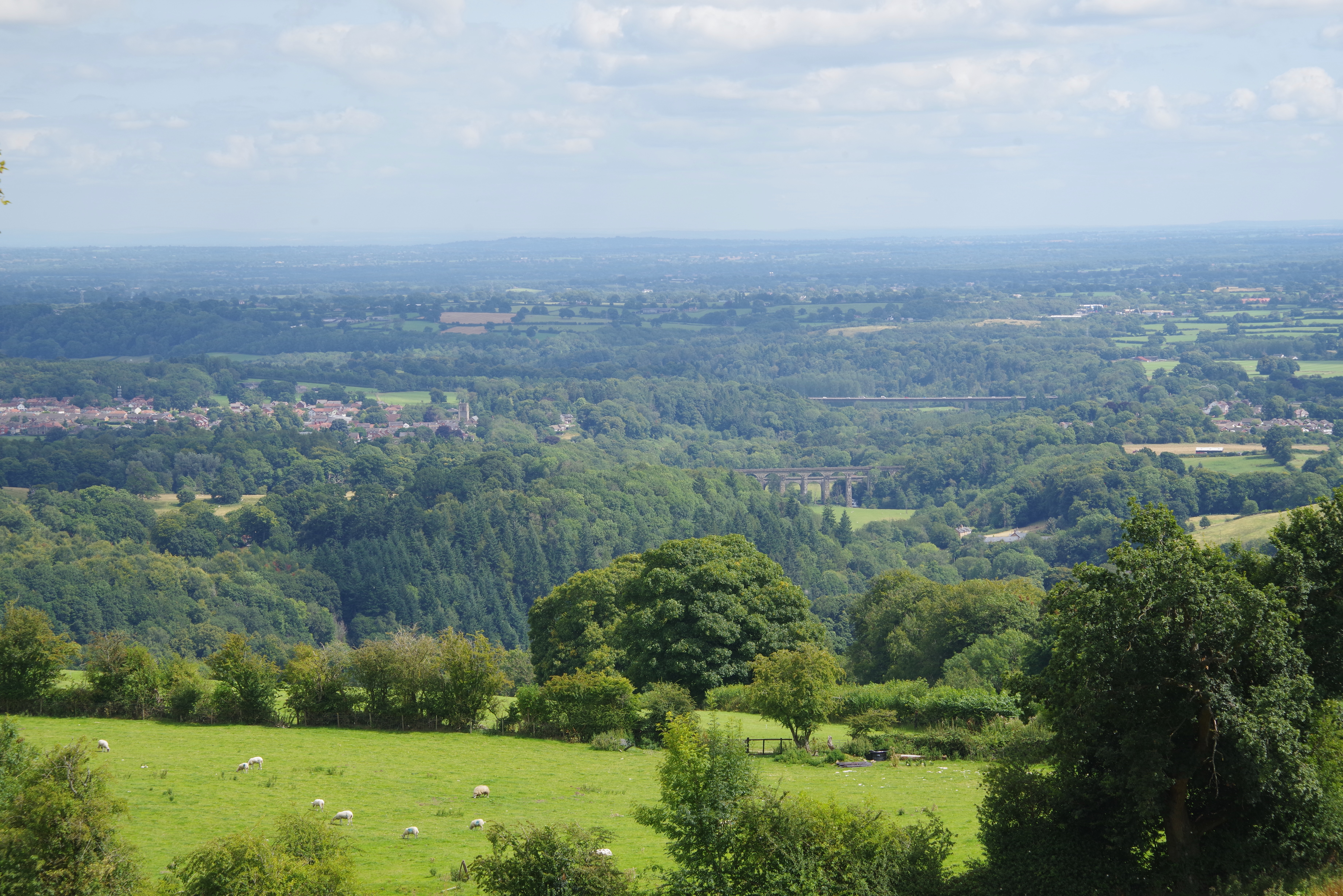
We were very glad to eventually rejoin the trail and the dyke. Thus reunited we crested the hill to spy Chirk castle ahead (surprisingly below us) as well as the aqueduct and viaduct in the distance. Here Rob and Judy Greaves had walked up to meet us and thus together we descended to their place at Bronygarth to remove our wet and muddy shoes and enjoy some warming tea.
The unwelcome detourChirkMore styles and more fieldsStyles on the DykeOne of the many views of Chirk Castle
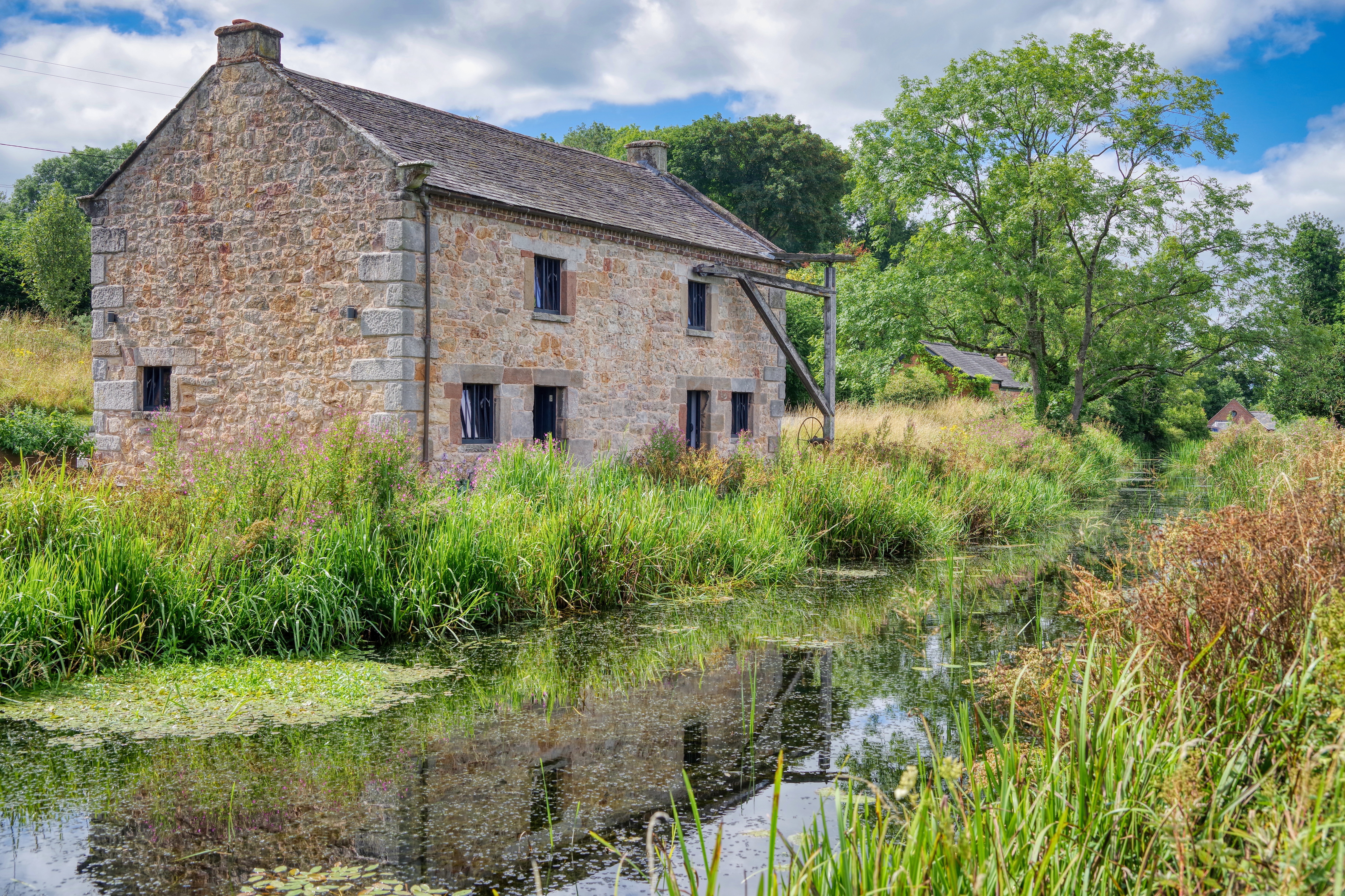
After we had arrived at the Bradford Arms I (Paul) went out for a bit more of a wander. Across the canal was an historical site, one of the raisons d’etre for the Canal. The Hoffman Kiln. It was built to process the limestone brought down from the hill above for processing into lime for fertilizer which would then be transported along the canal. That it was so well preserved was amazing. Also amazing that we lived so close to it for two years and never knew about it. Equally amazing was that I could walk inside the huge structure.
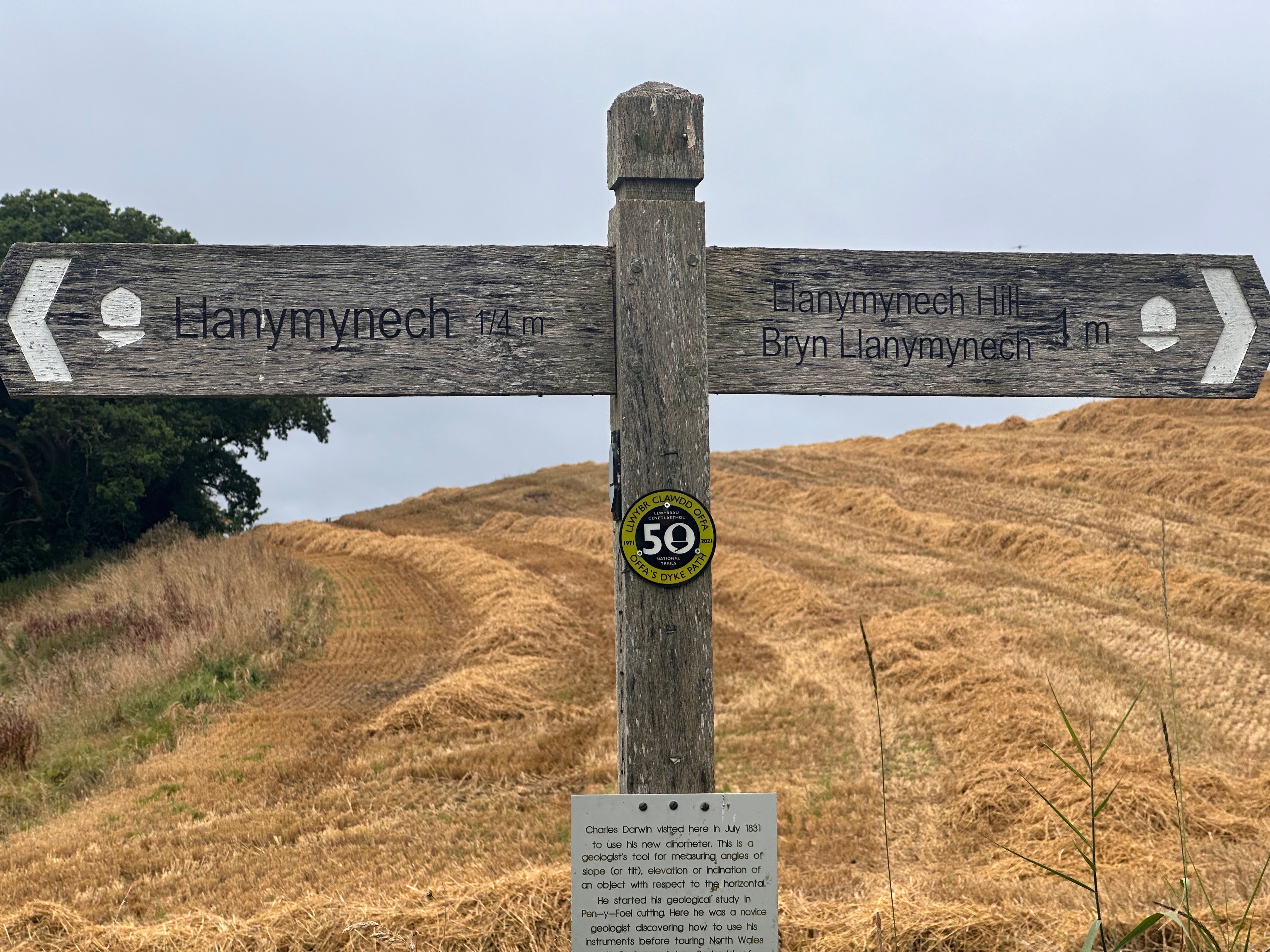
Today David and Fiona Loveday as well as Anne Hendrie were going to join us to talk the section to Trefnon and then we were continuing on to our accommodation at The Old Mill. We started by climbing up Pen-y-feol lane were Darwin first cut his scientific teeth (apparently he got his calculations wrong) before climbing up the old lime mine tramway to the path skirting around the Asterly rocks. We were provided broad views of the Severn valley and where we had walked yesterday.
As we climbed up to the summit of Moelydd we understood why the distant hills were dotted with power generating windmills.
We sheltered in the lee of some rocks to have lunch (again the lack of seating along the path was noticeable)
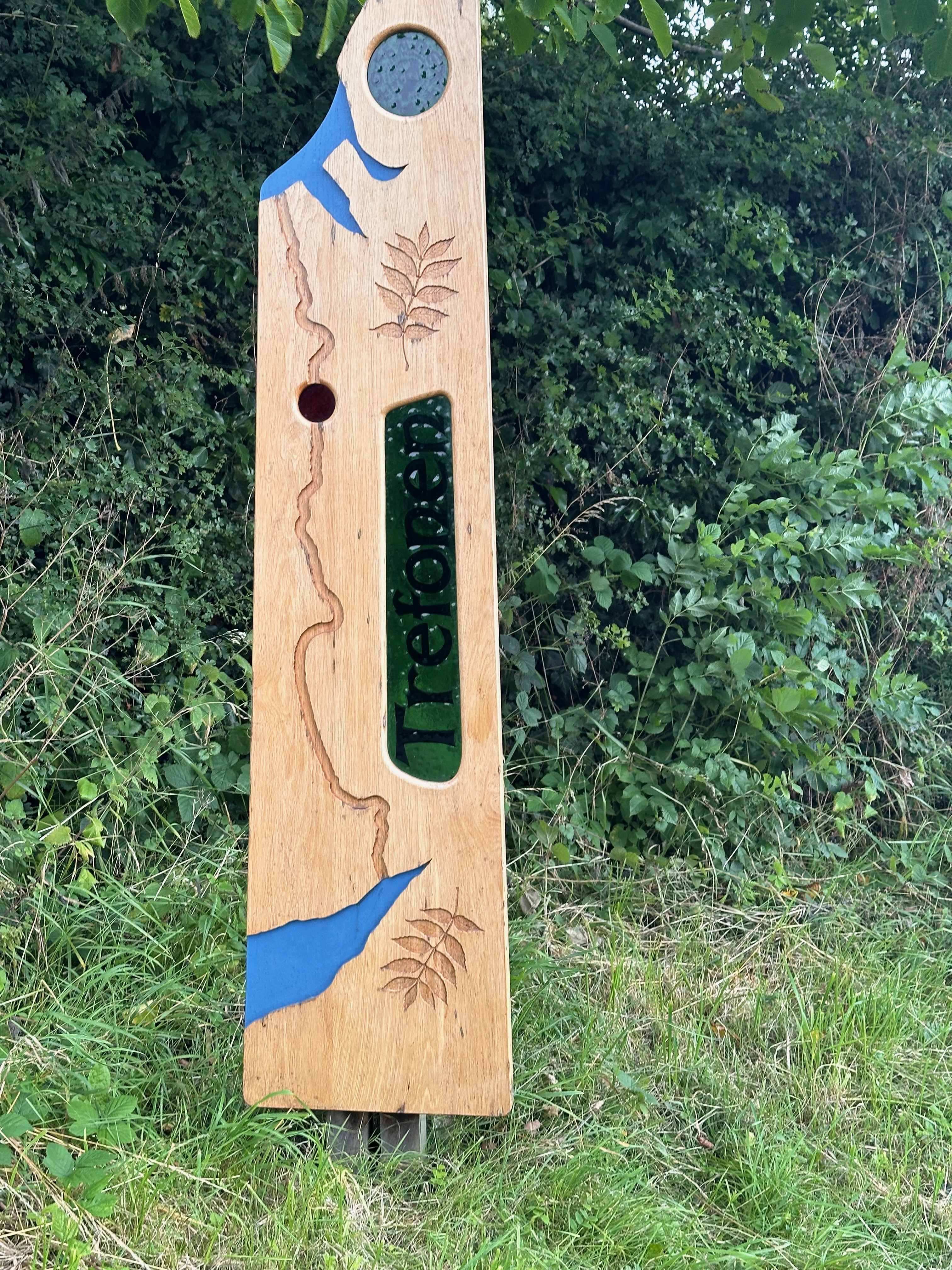
Arrival in Trefonen afforded the opportunity to buy some ice cream from the local store before our walking companions departed and the rain arrived.
This section is often combined with the following section up to Chirk as one long day. As the rain descended we were very glad to be not doing so. Our damp descent down into Candy was our first time walking on the actual dyke. To be honest our attention was more focused on arriving at our accommodation where they kindly let us in early to dry off and enjoy tea by the fire.
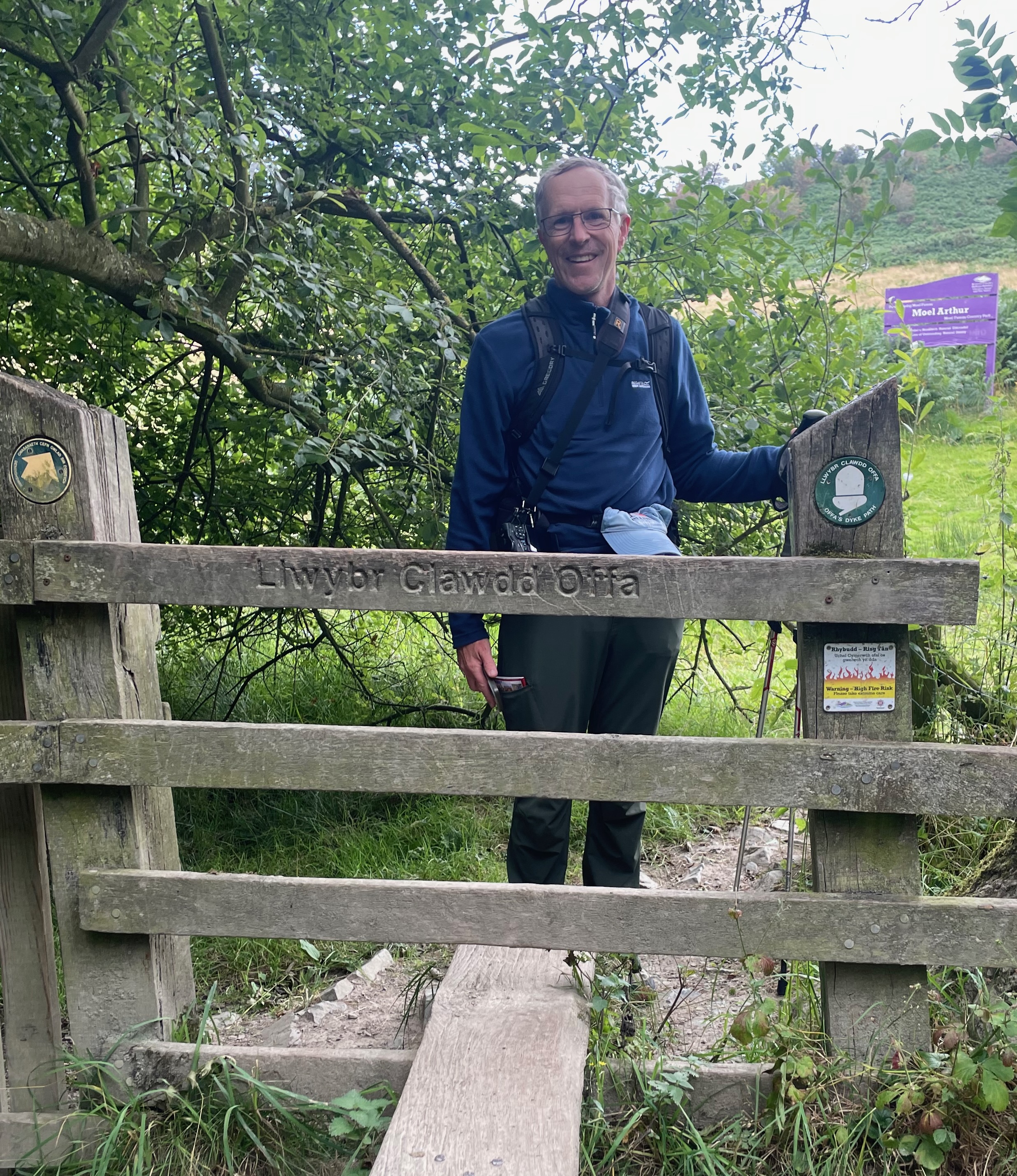
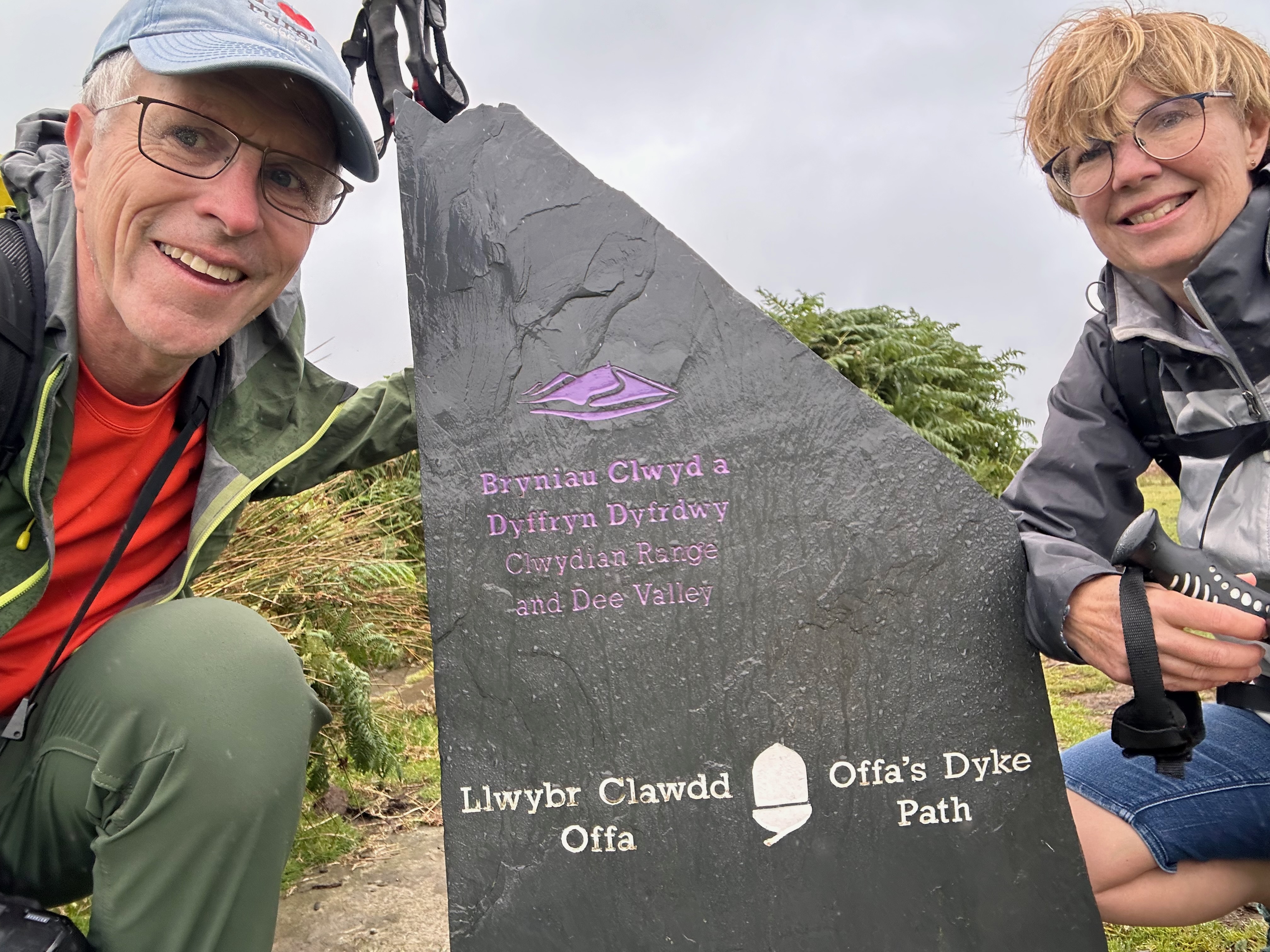
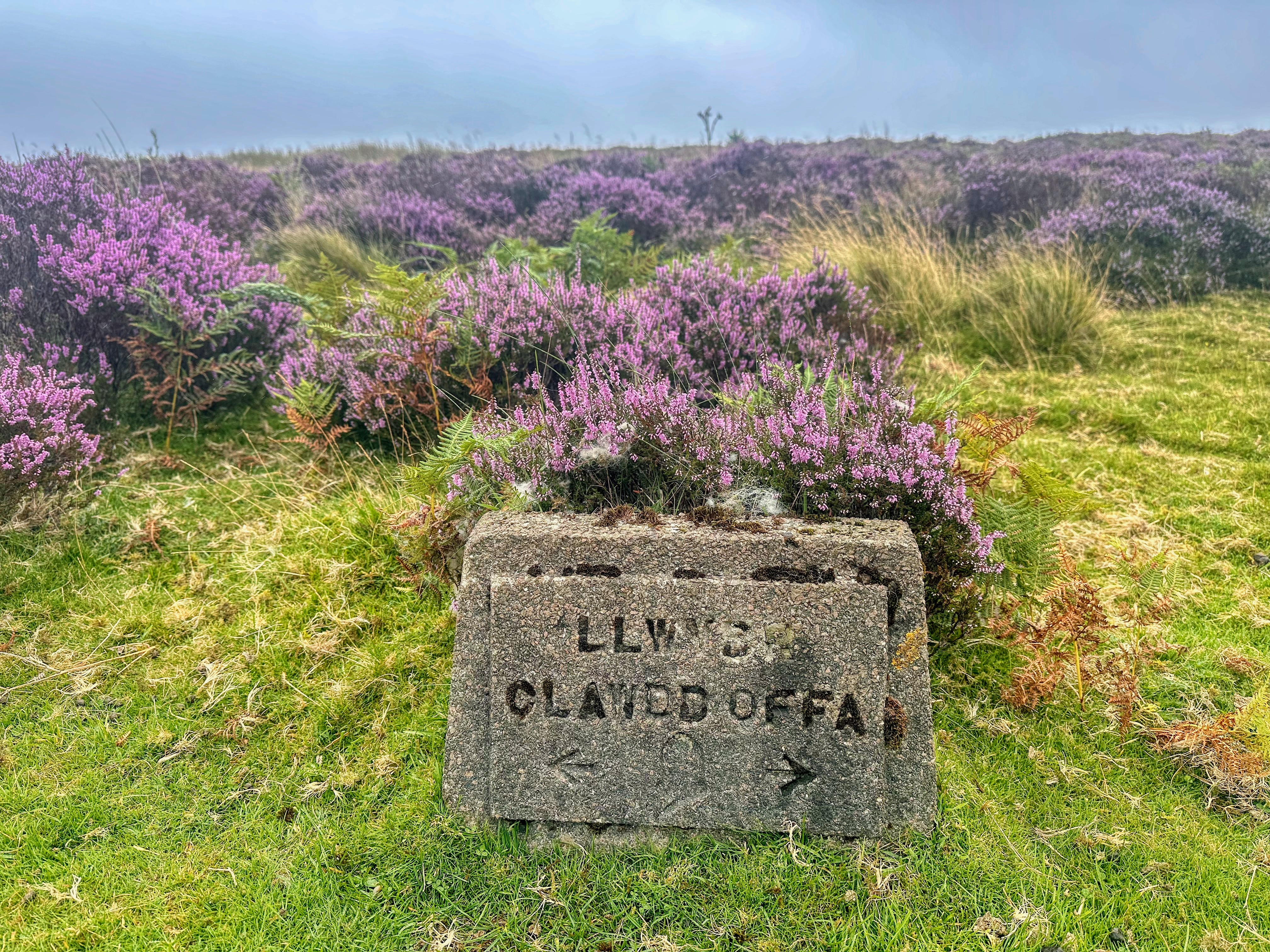
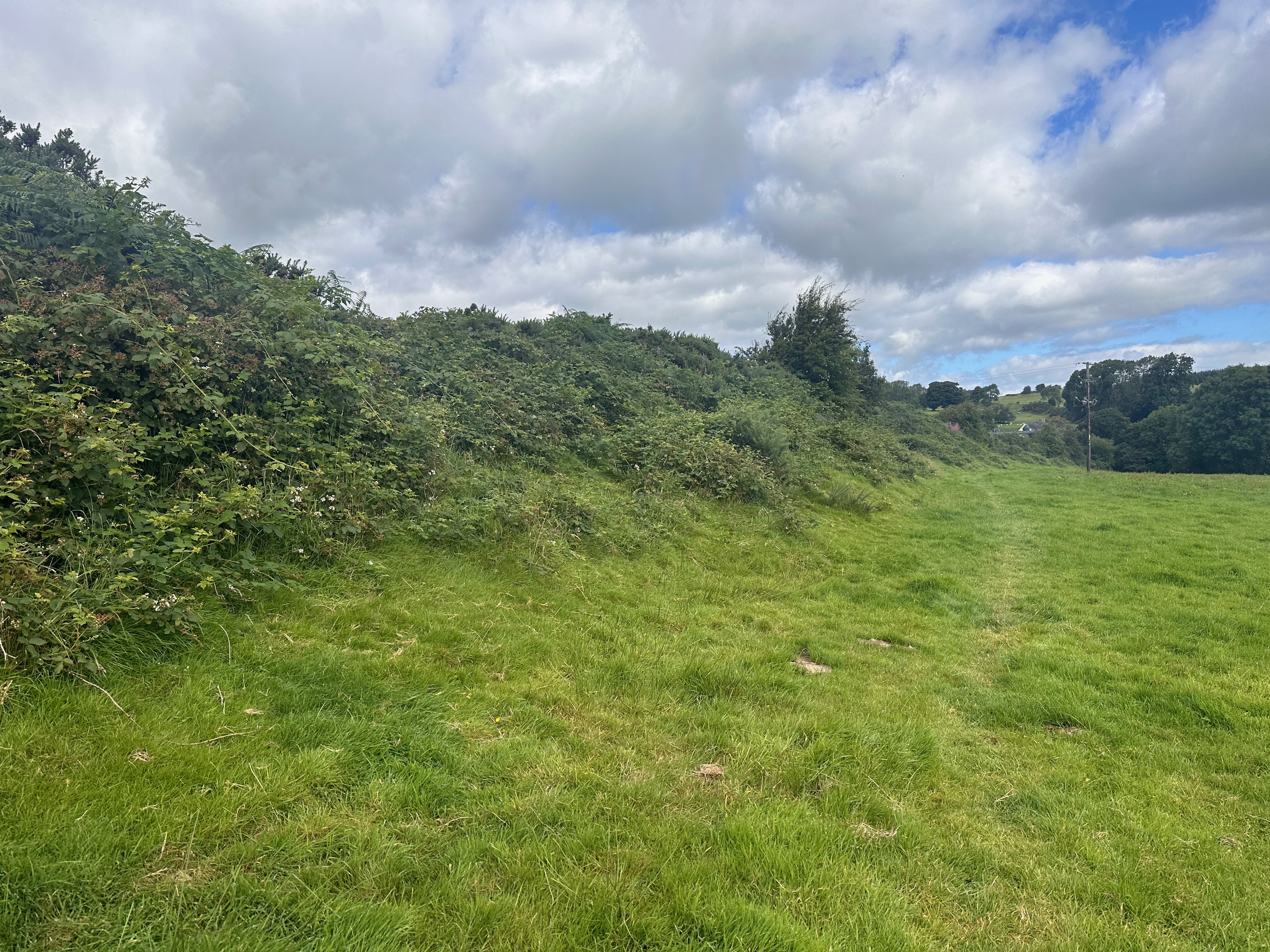
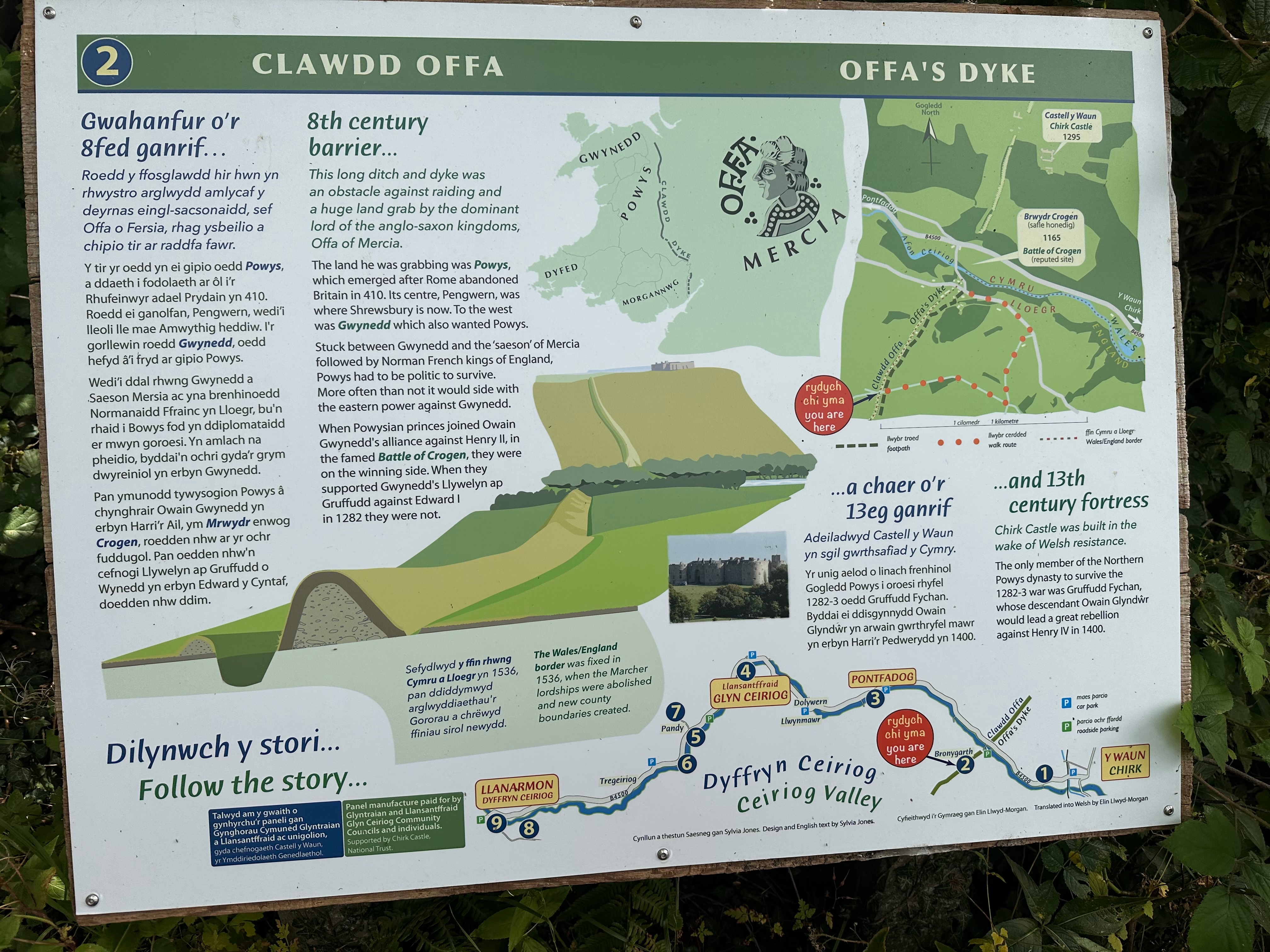
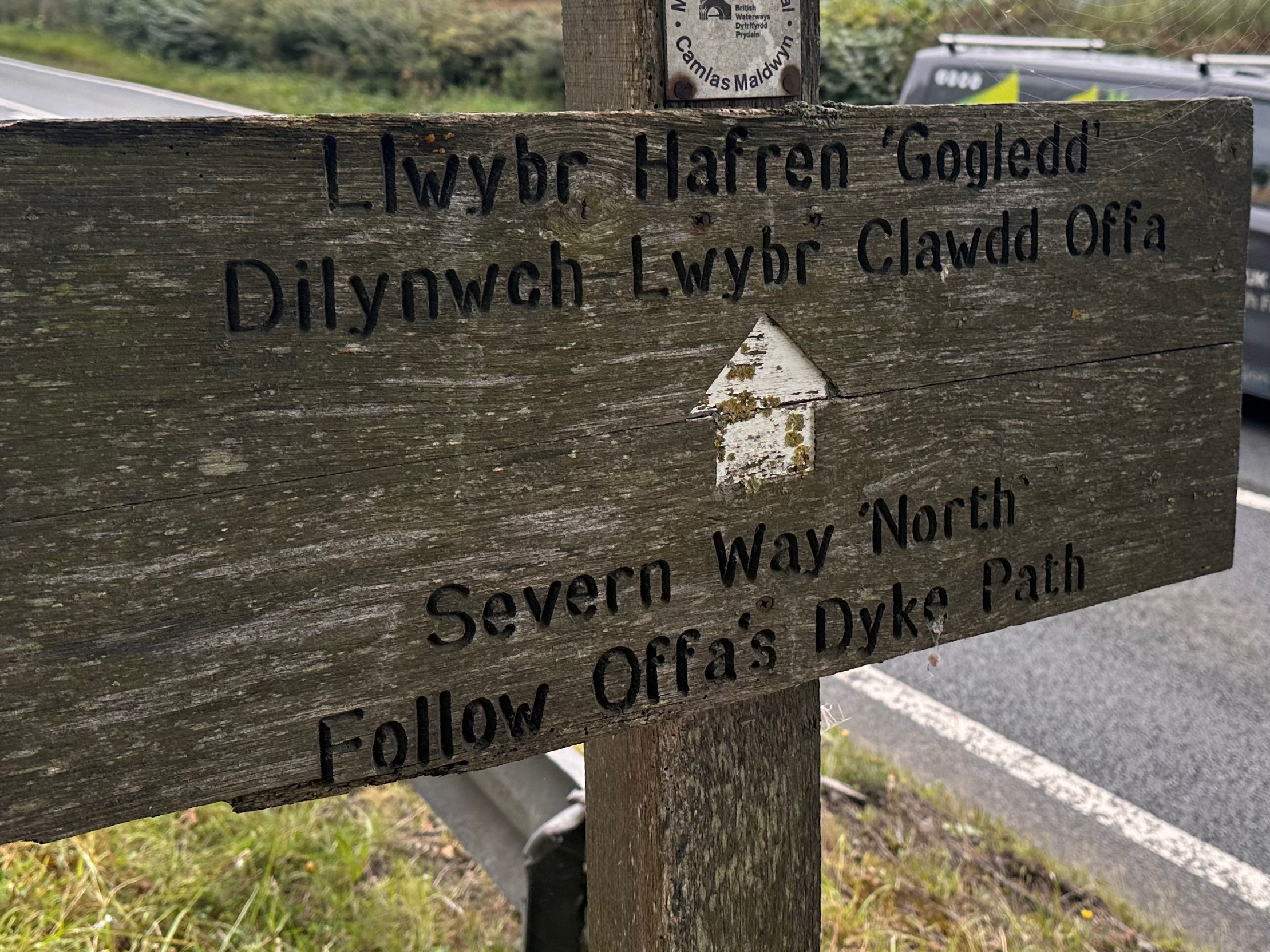
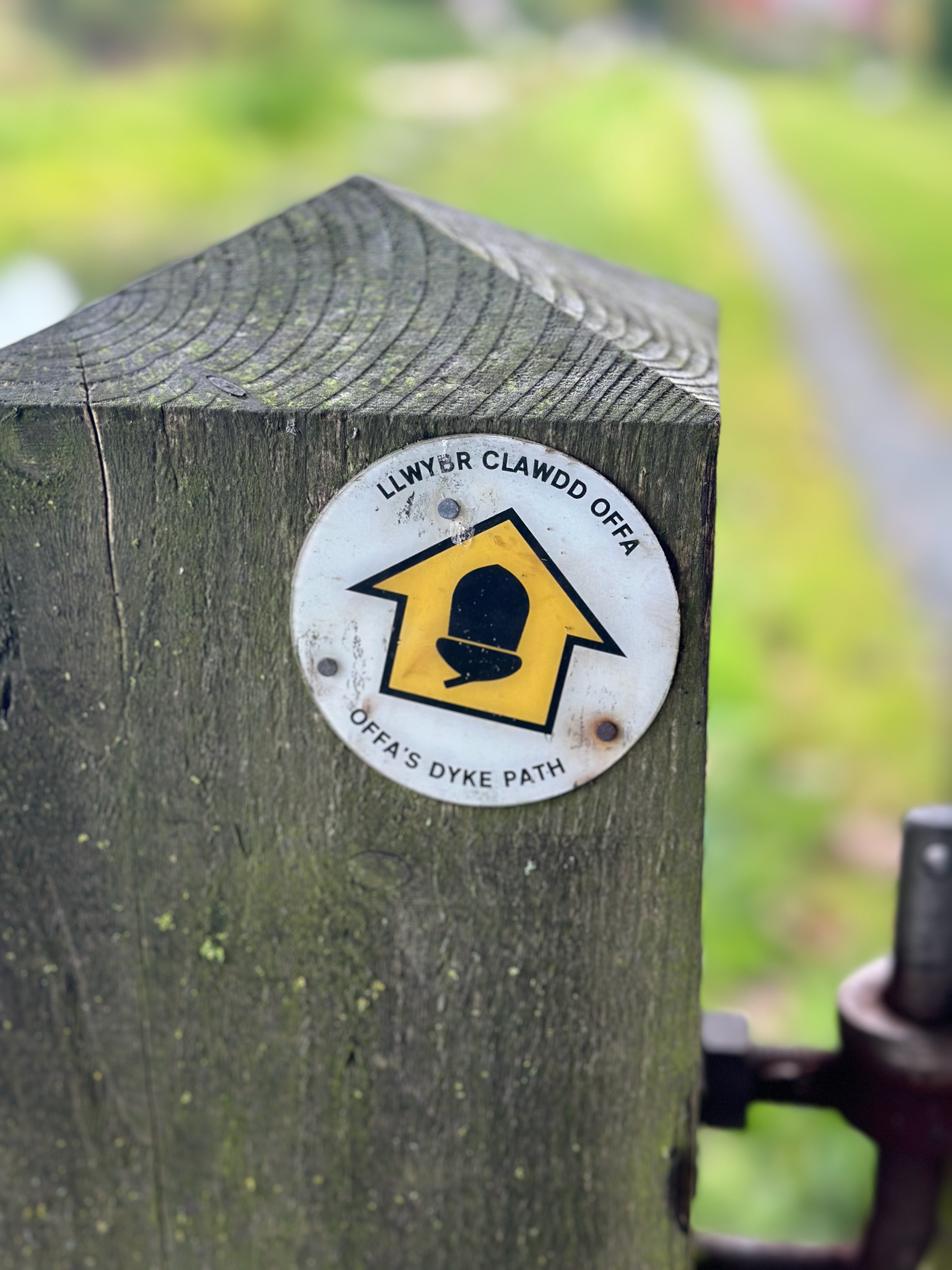
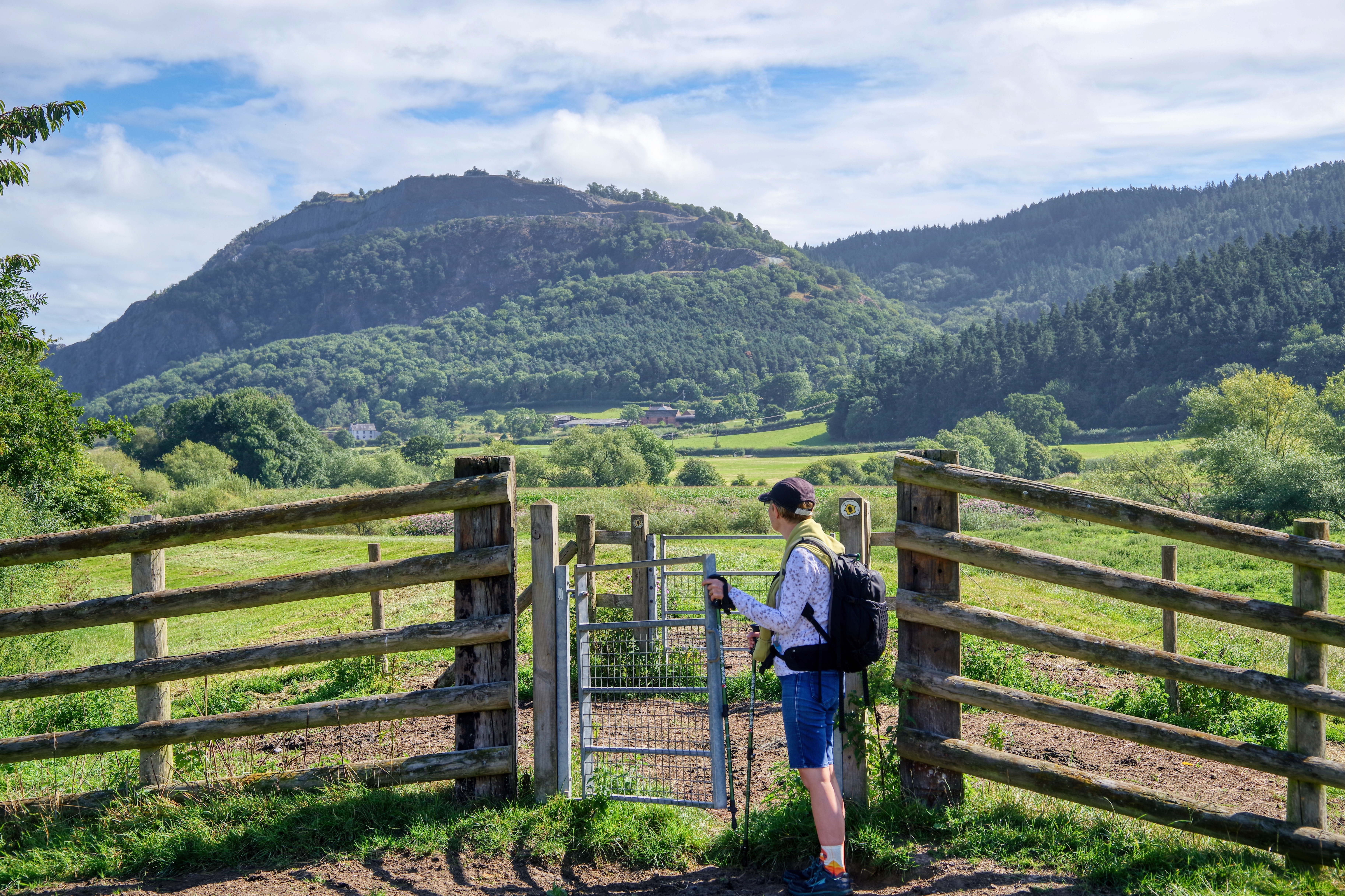
The Offa’s Dyke path travels the length of the Welsh-England border from Chepstow to Prestatyn. Parts of it follow the actual Offa’s Dyke built by, well, King Offa in the 8th century to separate Wales from his kingdom of Mercia. Whether it was defensive or whether it was purely “this is mine that is yours” is unknown.
The full length of the trail is 285km. We were only doing the 111km from Buttington to Prestatyn.
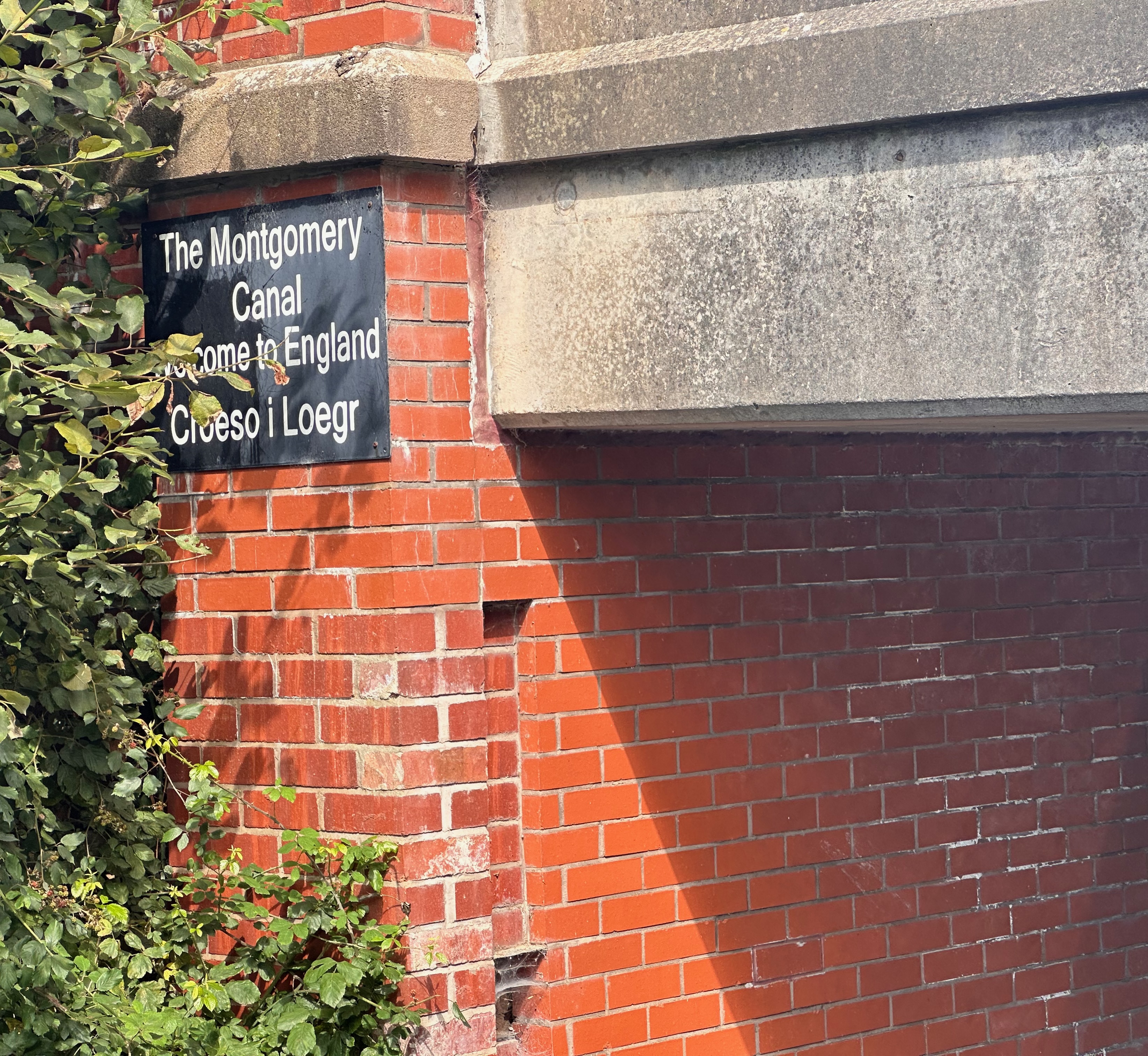
After the first of our many very generous breakfasts, and armed with our equally generous packed lunch, we took the advice of yesterday’s cabbie and had our host drop us at the Montomgery Canal which was slightly west of the official start of this section of the trail in Buttington. Thus we avoided walking through the (perpetually) wet farmer’s fields at the start of this section of the trail.
An inspired recommendation as walking along the canal was a beautiful way to start.
It appeared we even had a local dignitary there to send us off.
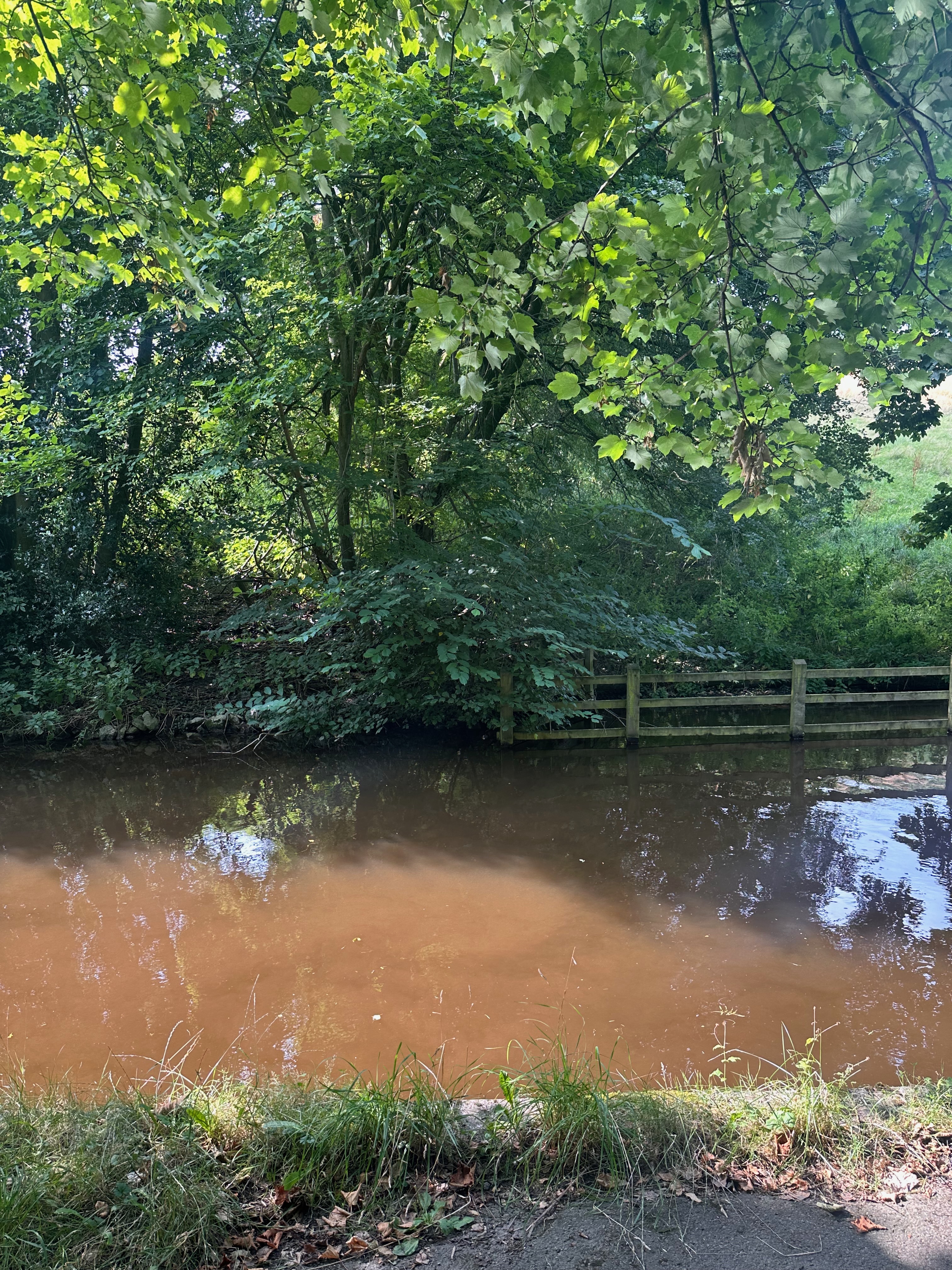
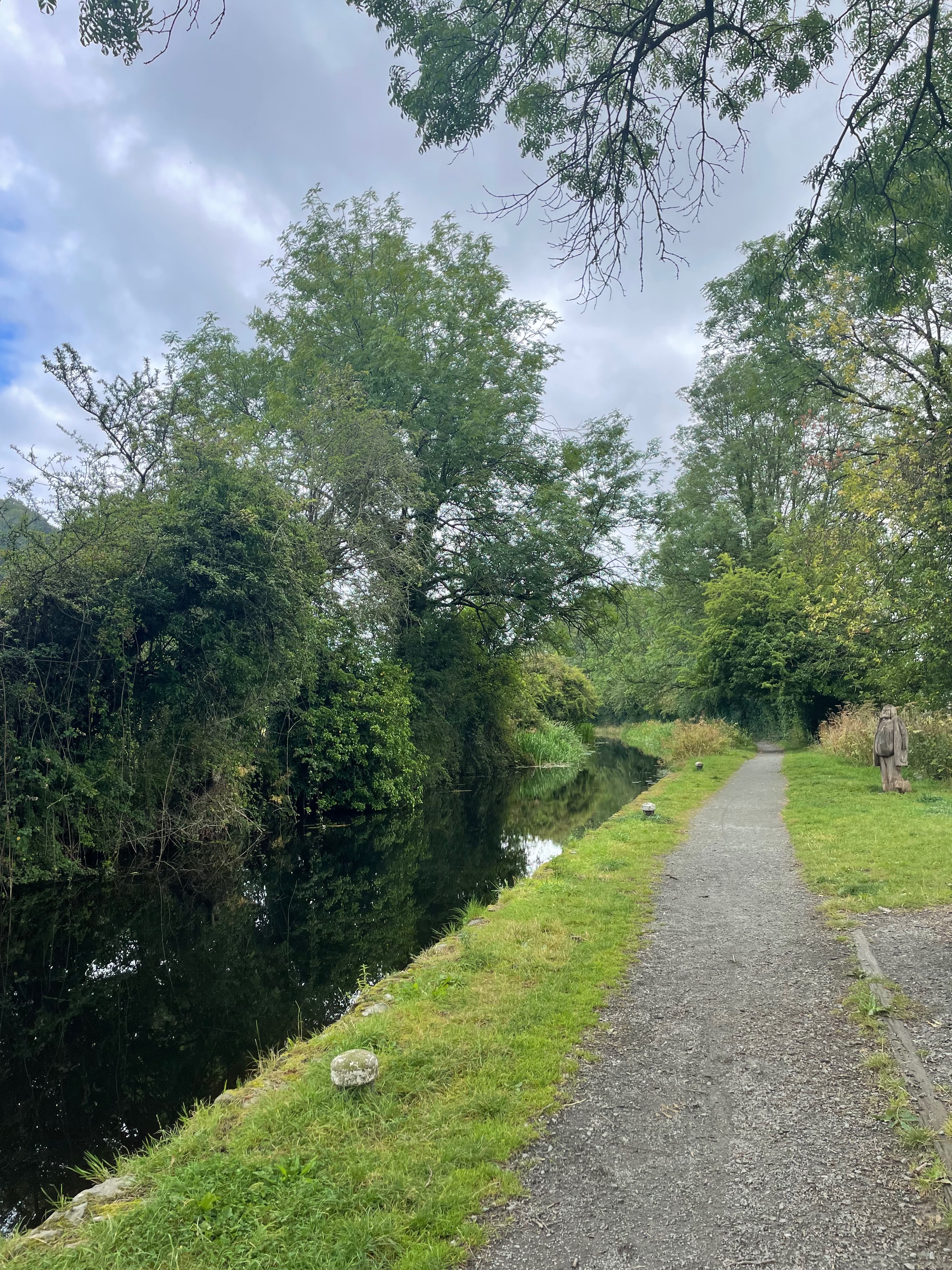
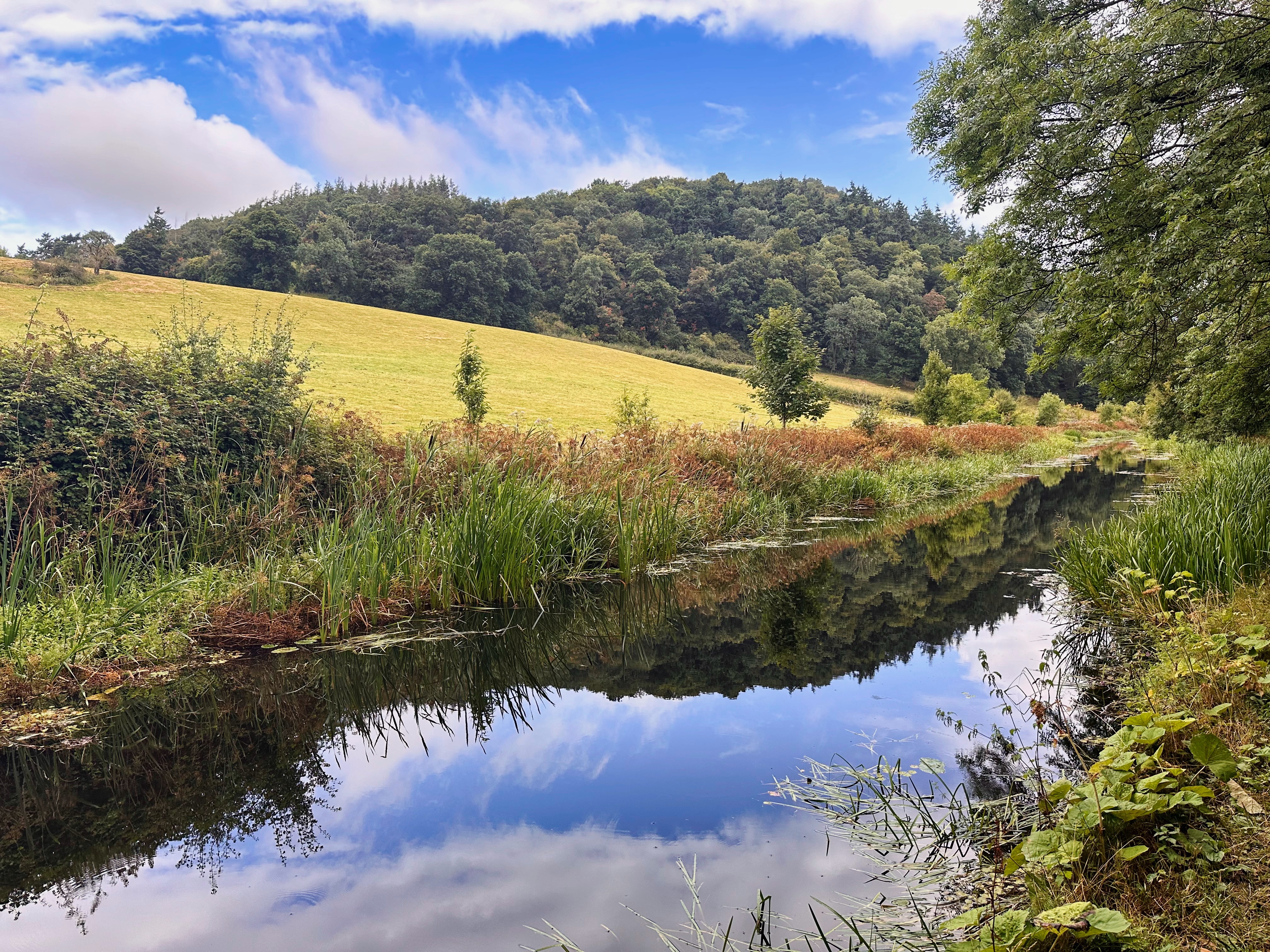
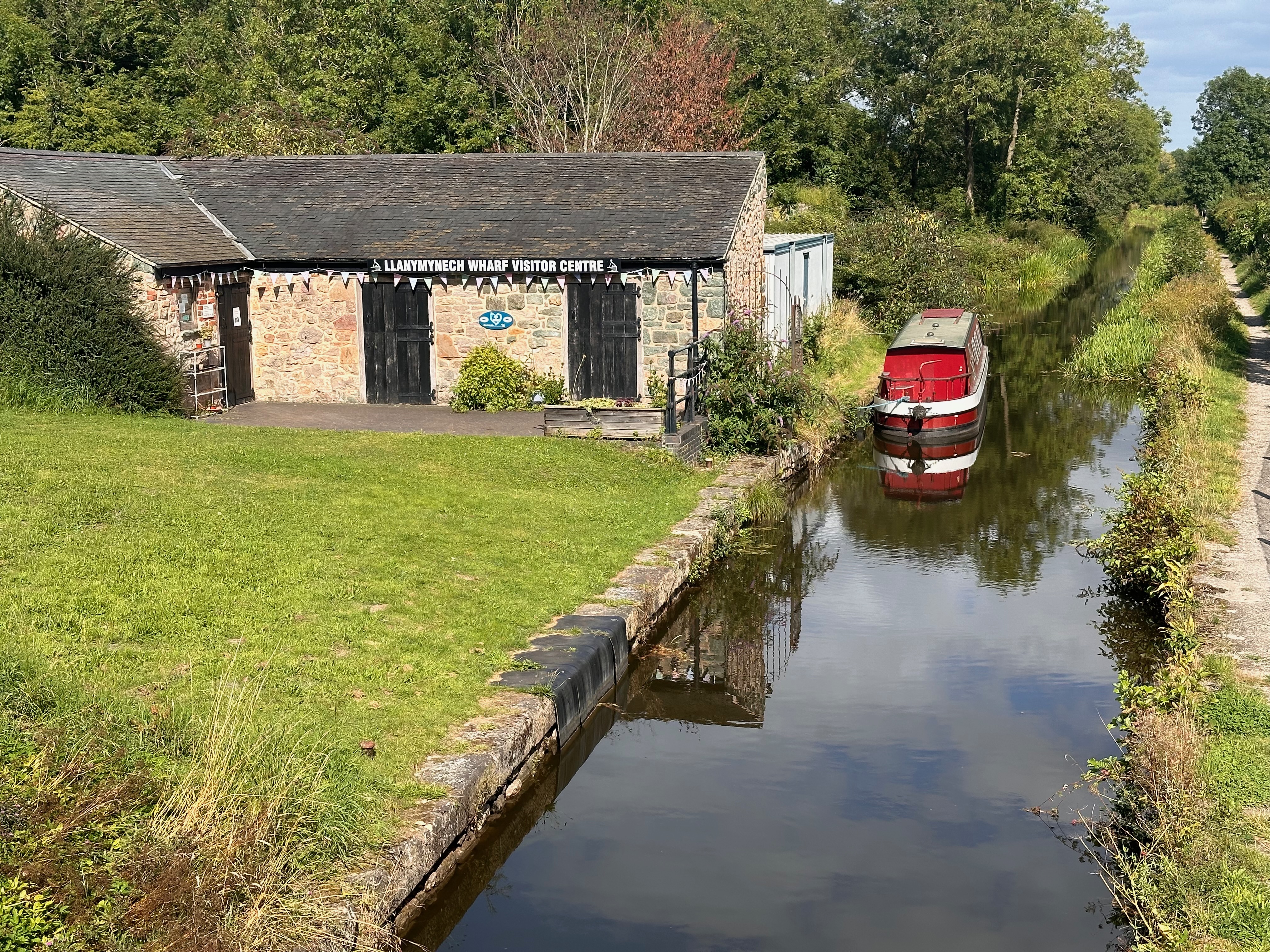
The Montgomery Canal (the “Monty”) was originally built to transport lime to the Llangollen Canal to be used as fertilizer. It was officially abandoned in 1944 and slowly attempts have been made to rehabilitate sections. It is allegedly a canoe/kayak route (as we saw several portage signs) however parts would require some serious weed whacking.
The path left the canal to continue along the Tirymynach Embankment which had been built to (at times unsuccessfully) hold back the floodwaters of the river Severn (which continues northeast to Shrewsbury before turning back south to end up at the Bristol Chanel)
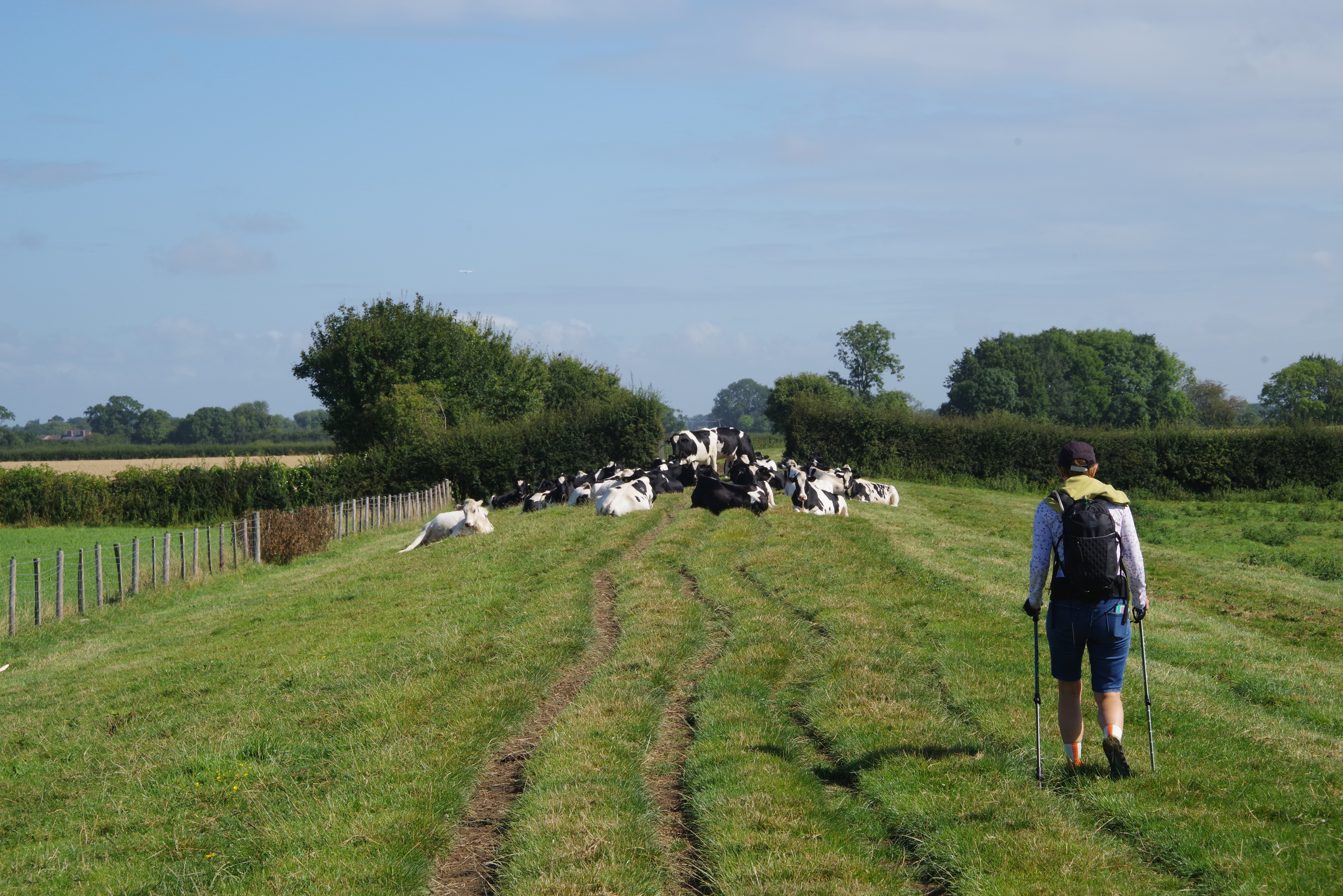
On the embankment we had some peculiar obstacles to negotiate.
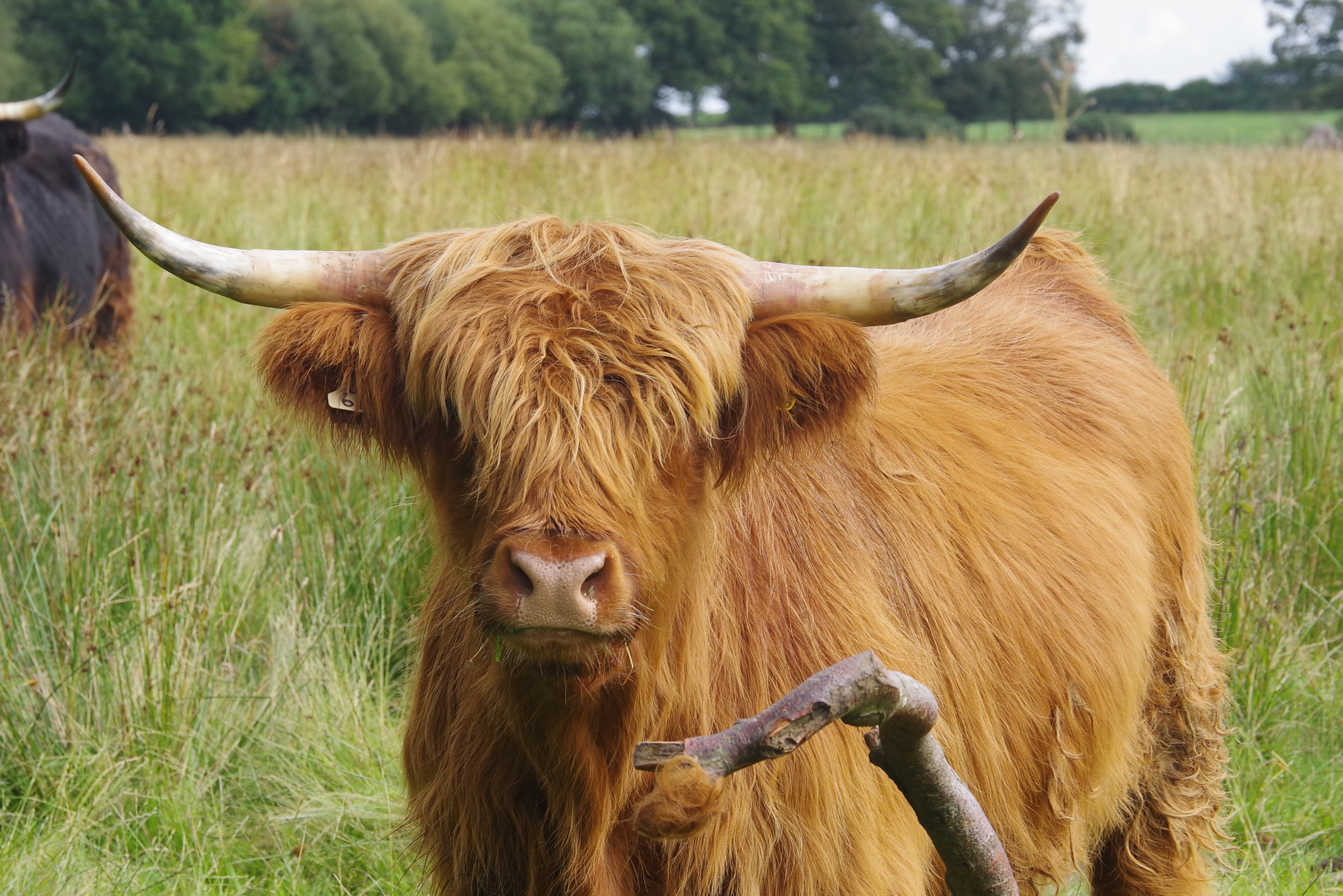
Childs play for a Hereford Princess.
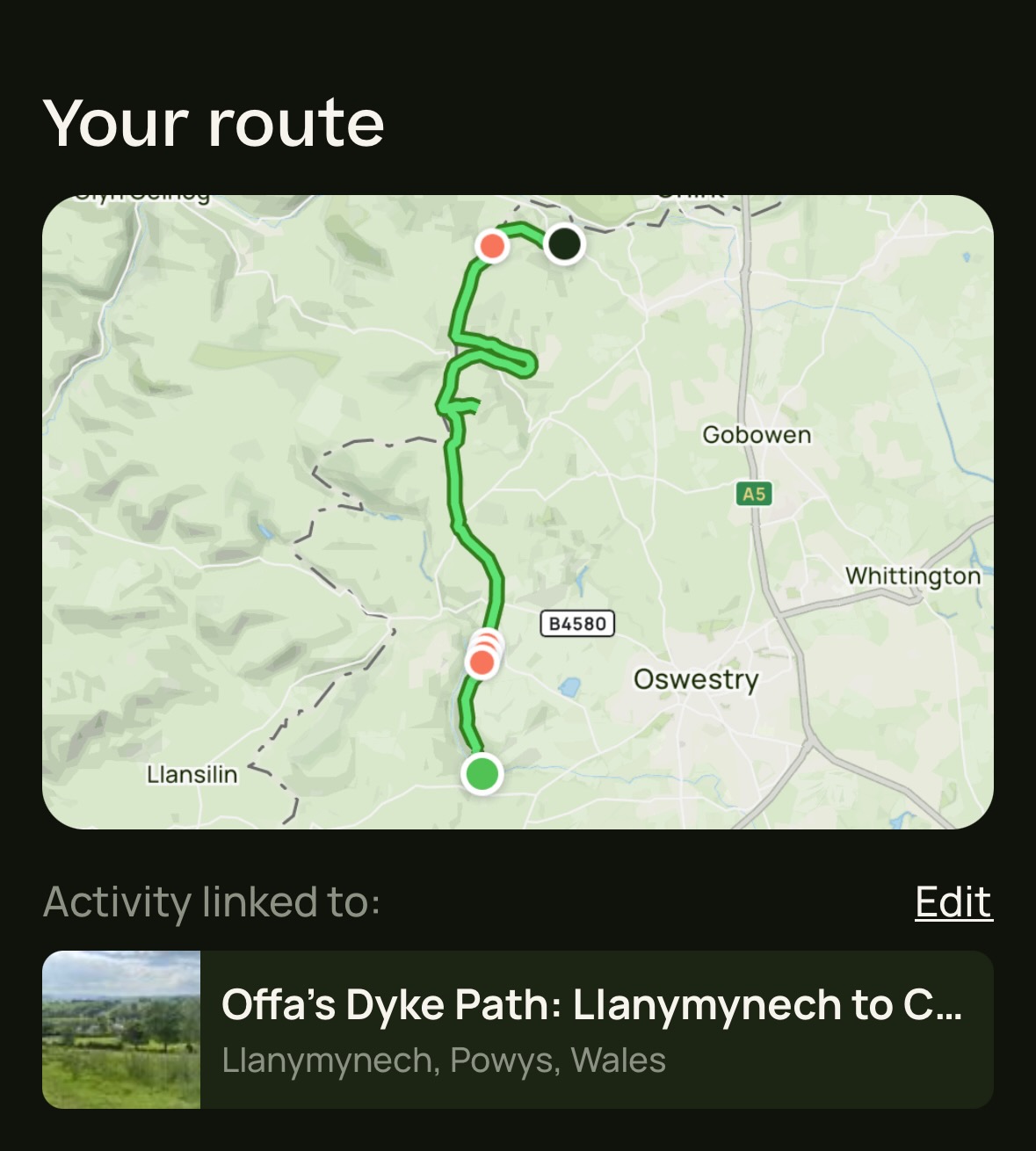
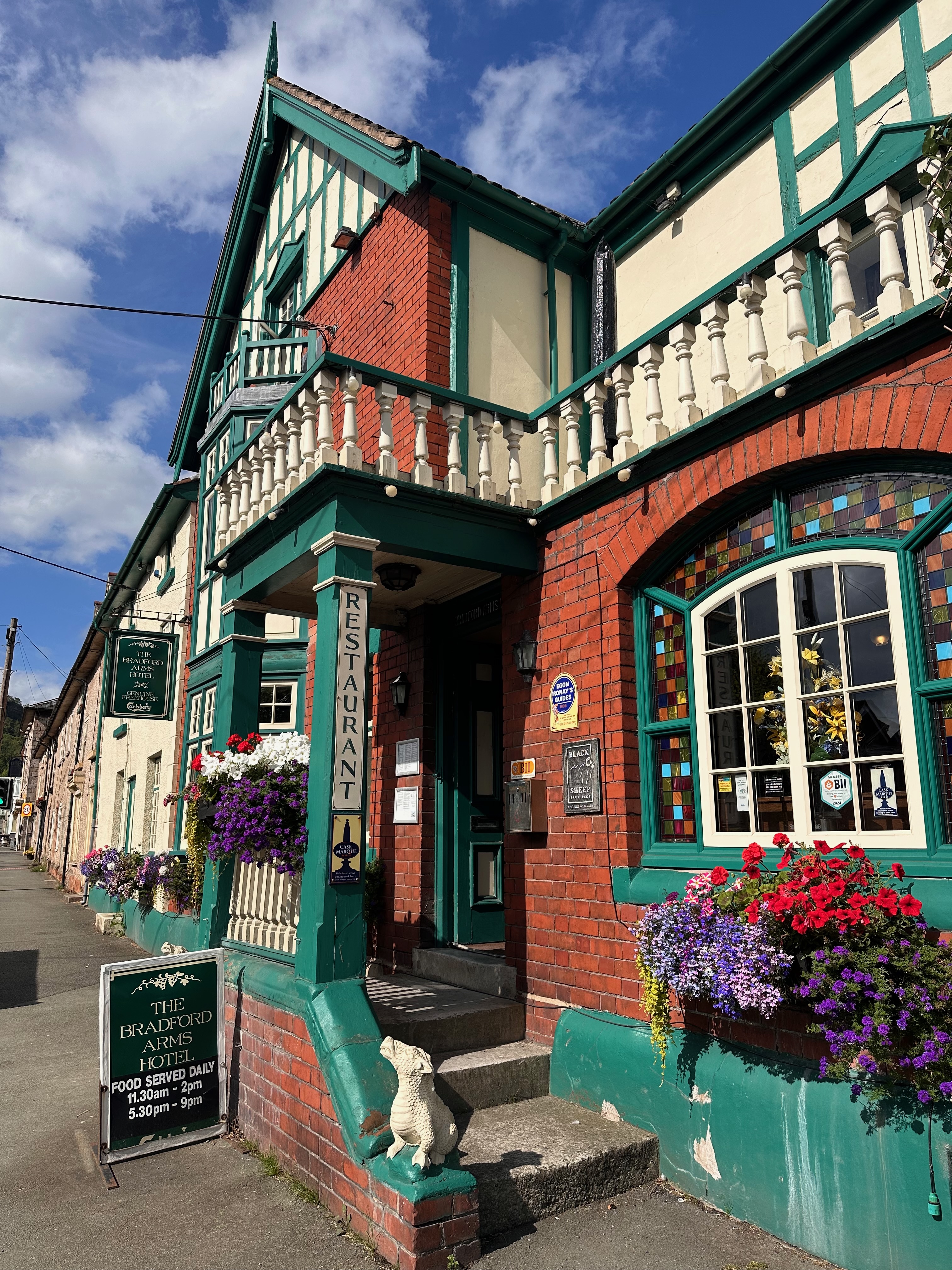
We eventually made our way back to the canal to complete our day’s journey into Llanymynech and the Bradford Arms Hotel where Anne Hendrie was to join us for dinner.
Yes it is an actual place and not a character in a Marvel movie. Nearby Buttington was to be our starting out point on the Offa’s Dyke Path the following day so we returned to the Shrewsbury Station and, after a very good coffee nearby, boarded the train to Welshpool.
Might we say here that the standard of coffee in the UK had improved immensely since our days of living there.
While waiting at the train station in Welshpool for our taxi Lori actually sent me into the old train station where an outdoor shop now existed. Why she then acted shocked when I came out with a cheap excellent hiking fleece?
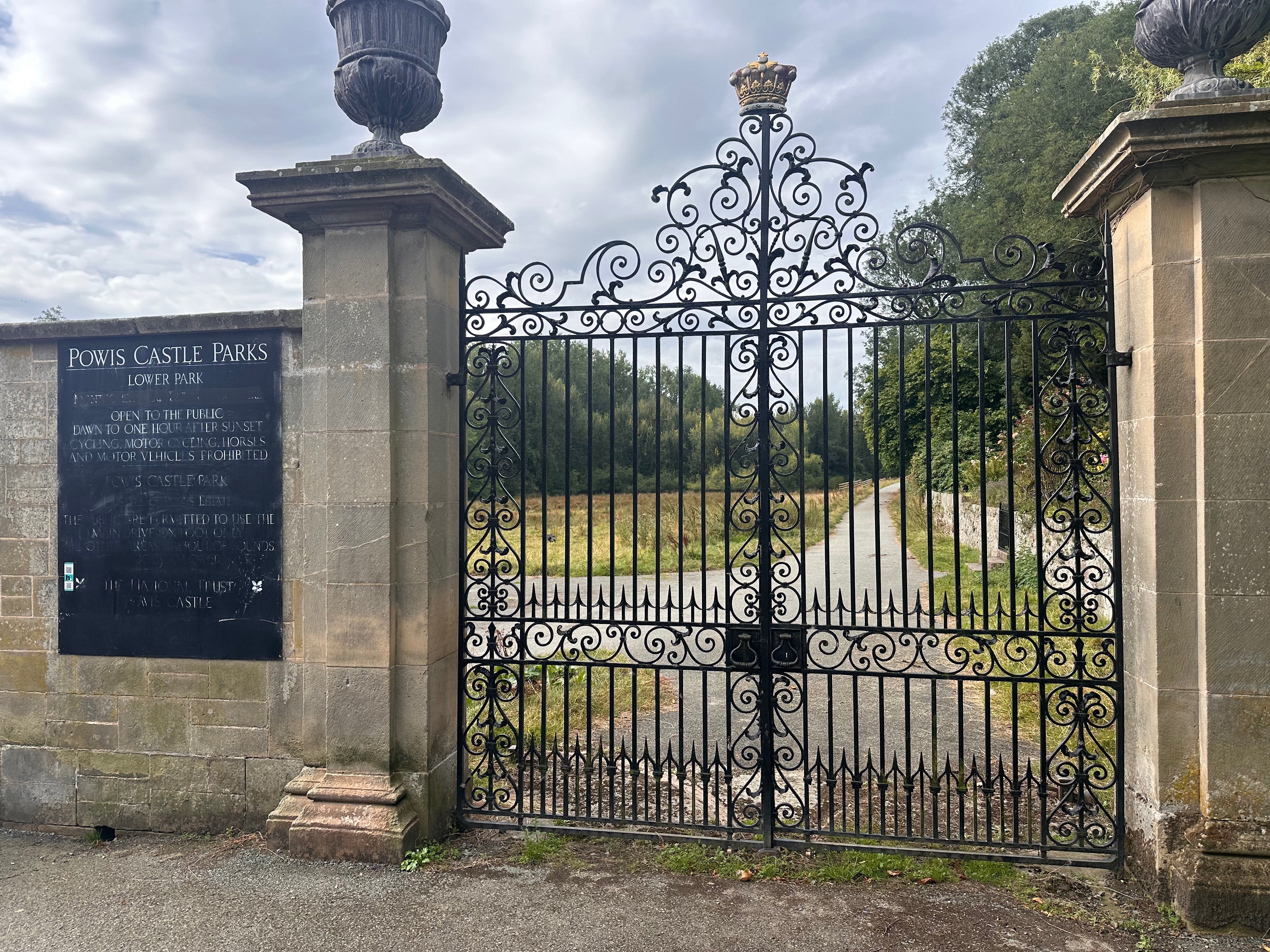
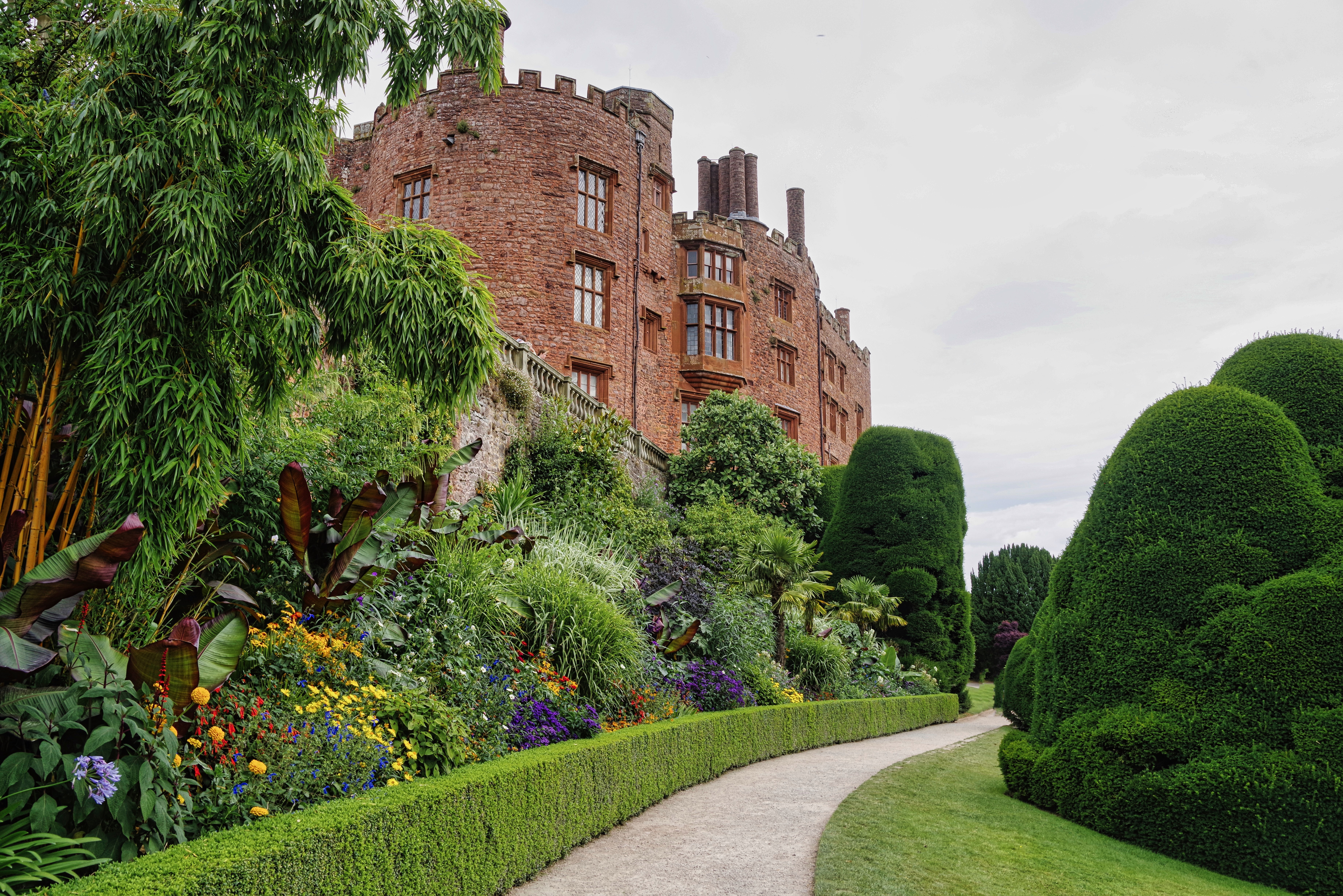
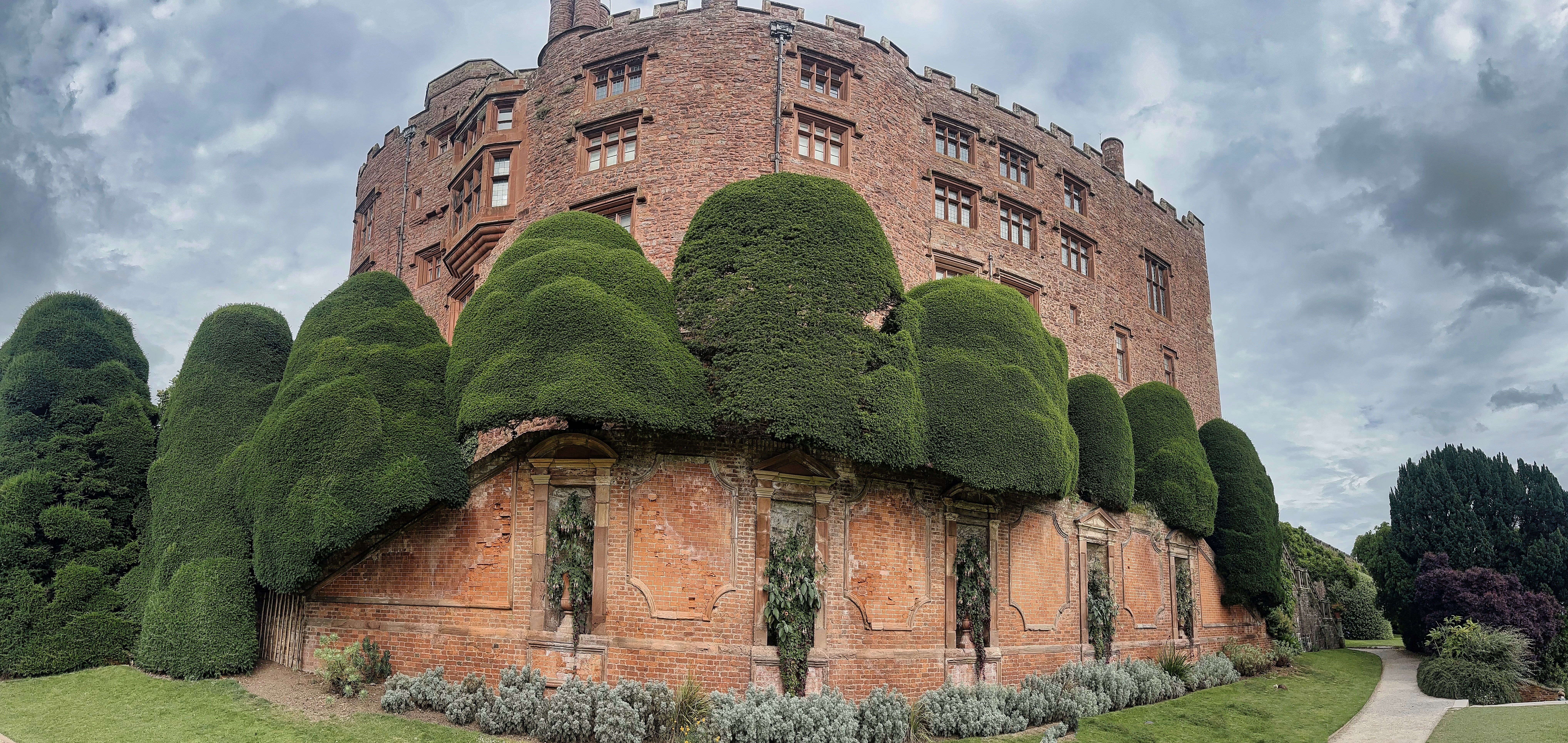
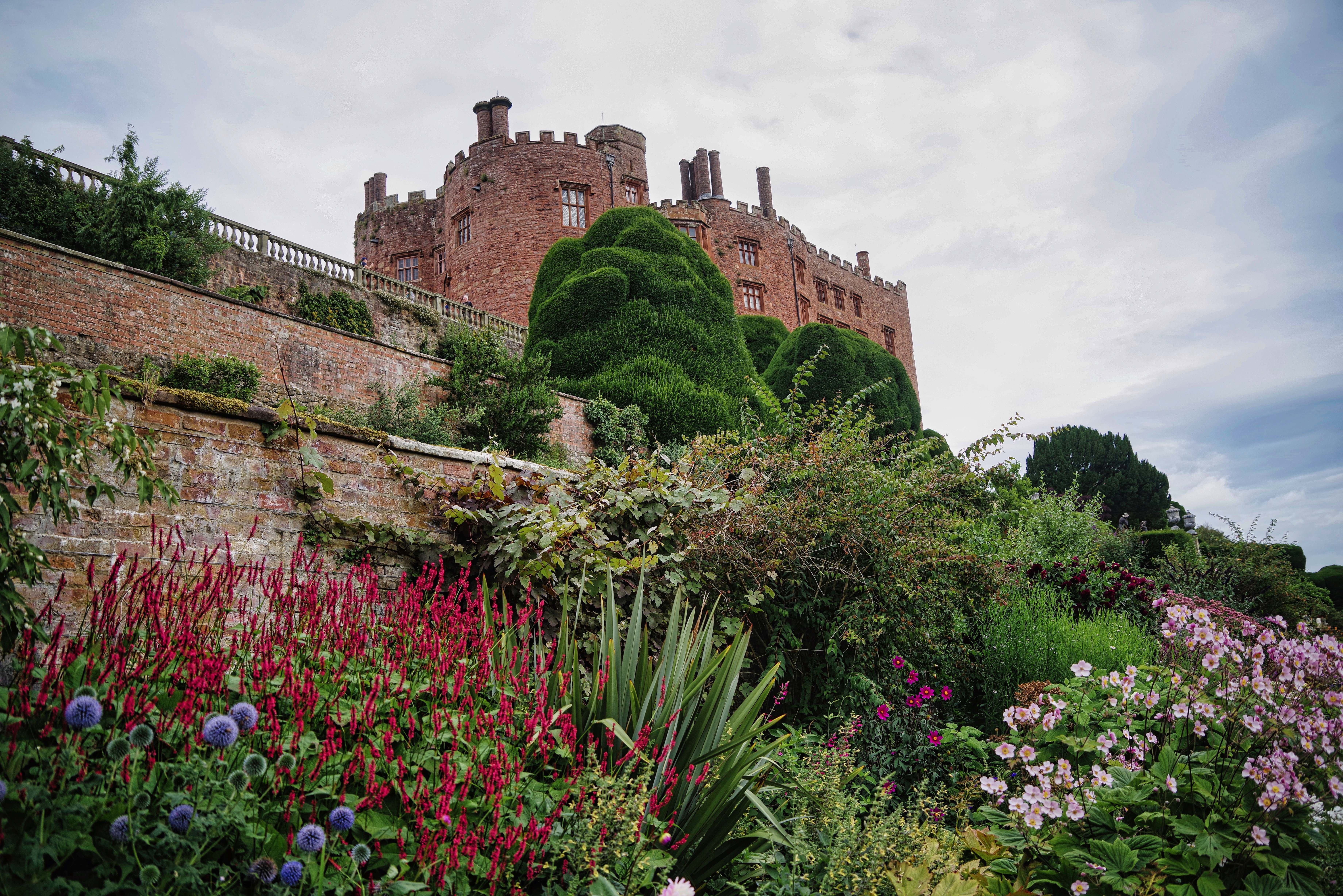
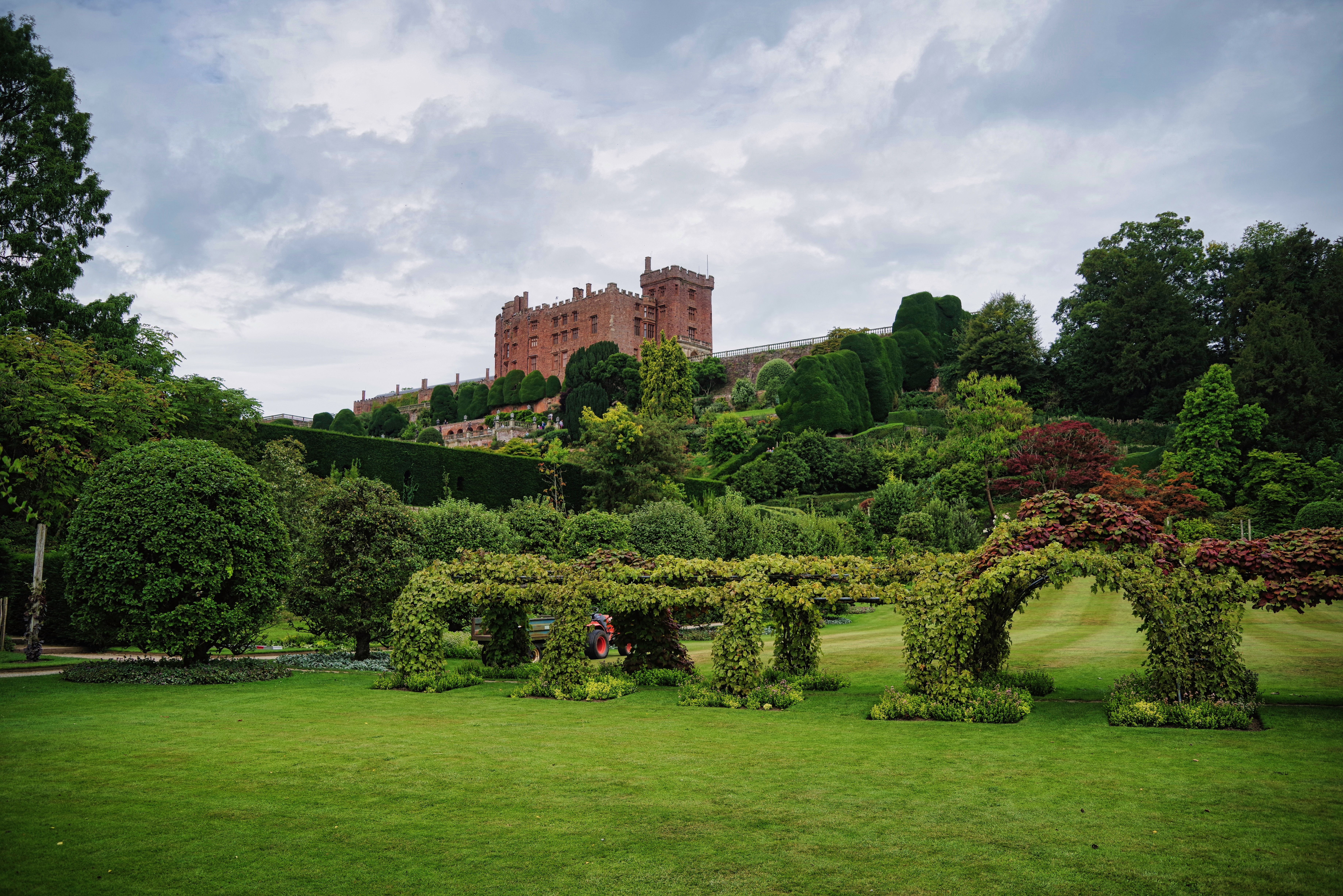
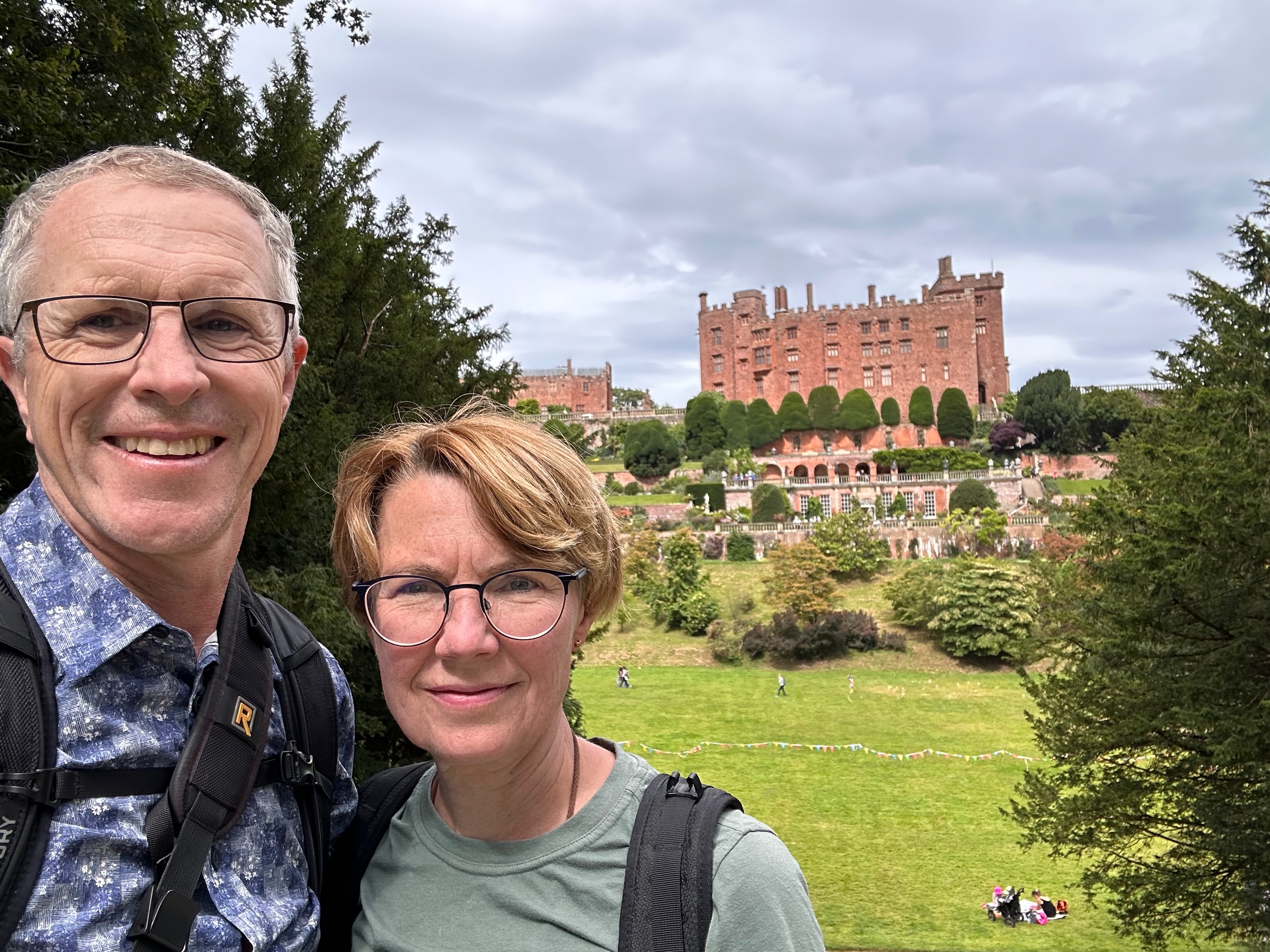
Our cabbie took us to our accommodation so we could drop our bags and then kindly dropped us back at the city gate of Powys Castle. We had visited Powys several times in our time in the UK, the most memorable being for a performance of Handel’s Water Music on the terraces as we sat on the grand lawn. But we had never visited by the city entrance, which meant we got to walk up via the spacious castle grounds.
The castle originally built in the 13th century by a welsh prince, owes its grandeur (unfortunately) to Clive’s and the British East India Company’s spoils from India, some of which were on display at the castle. It is now in the care of the National Trust.
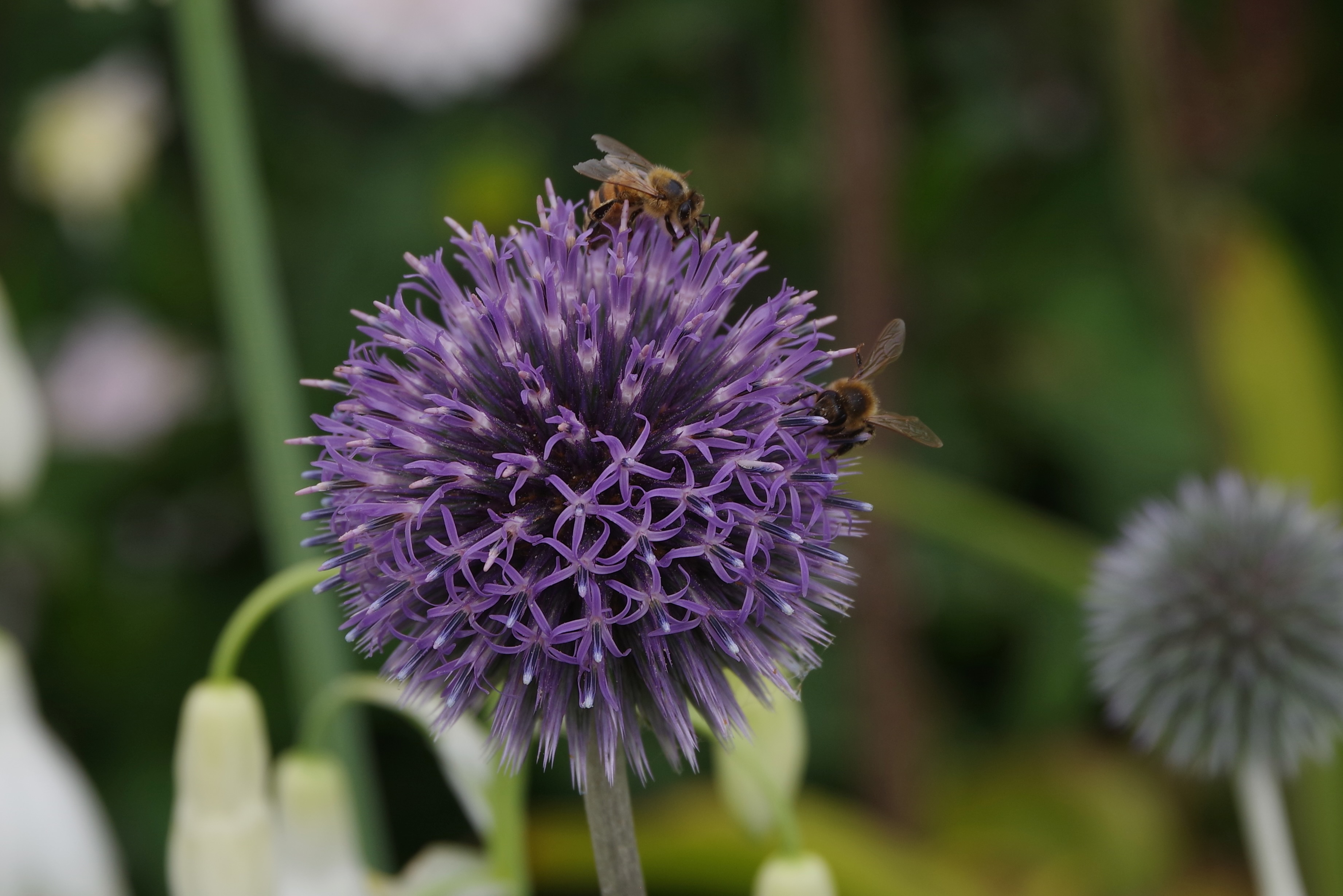
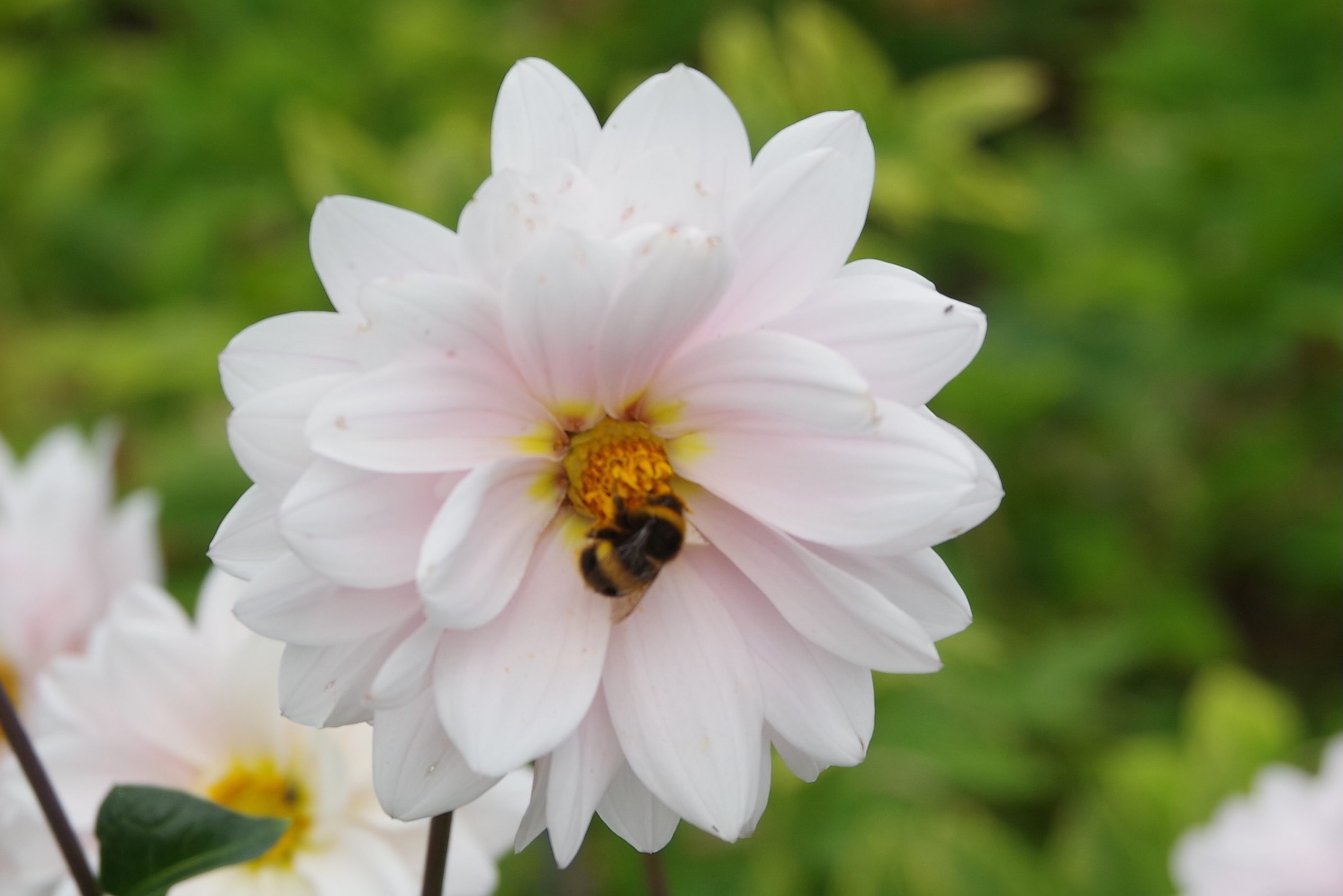
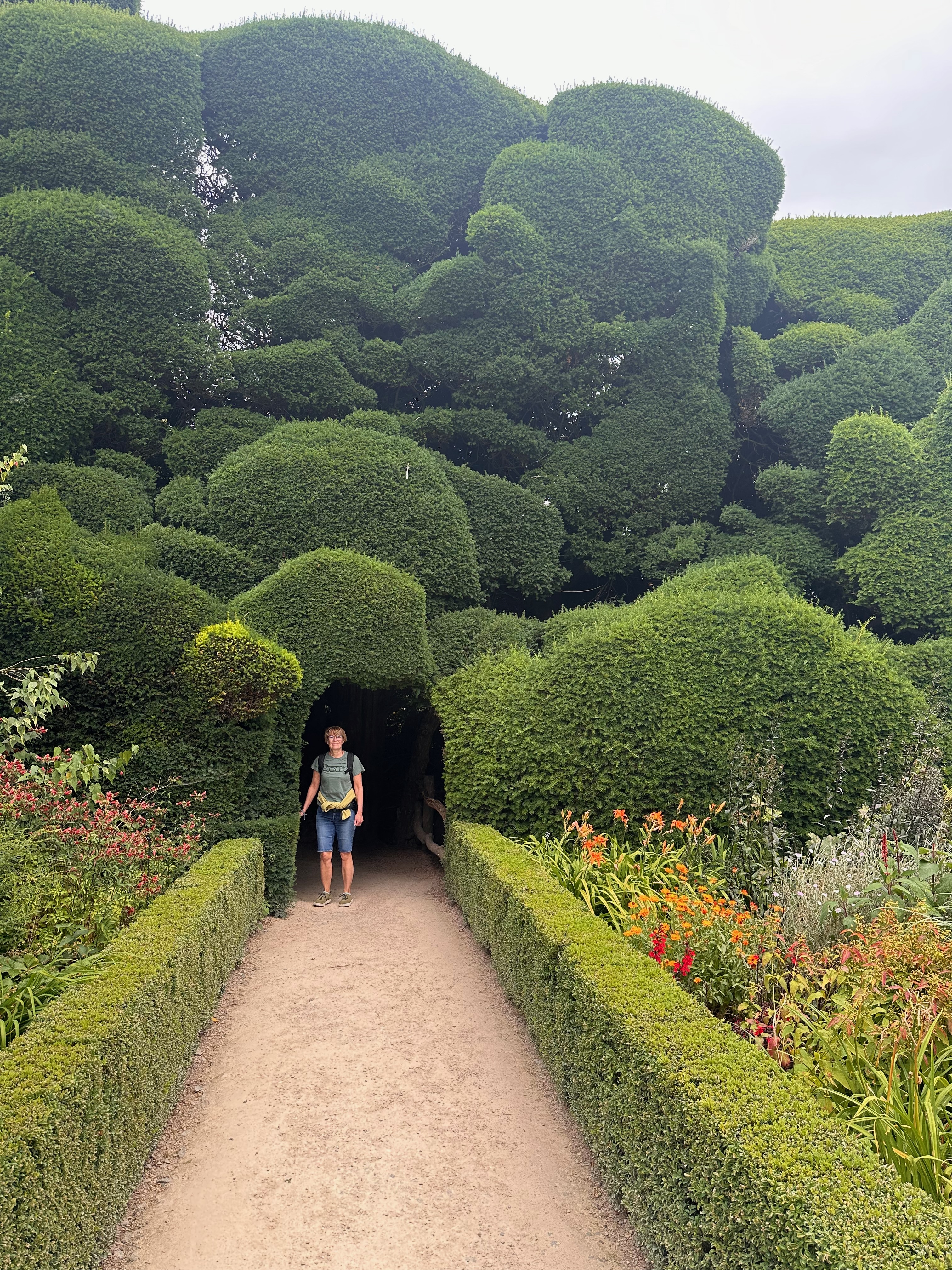
The gardens, as before, were glorious.
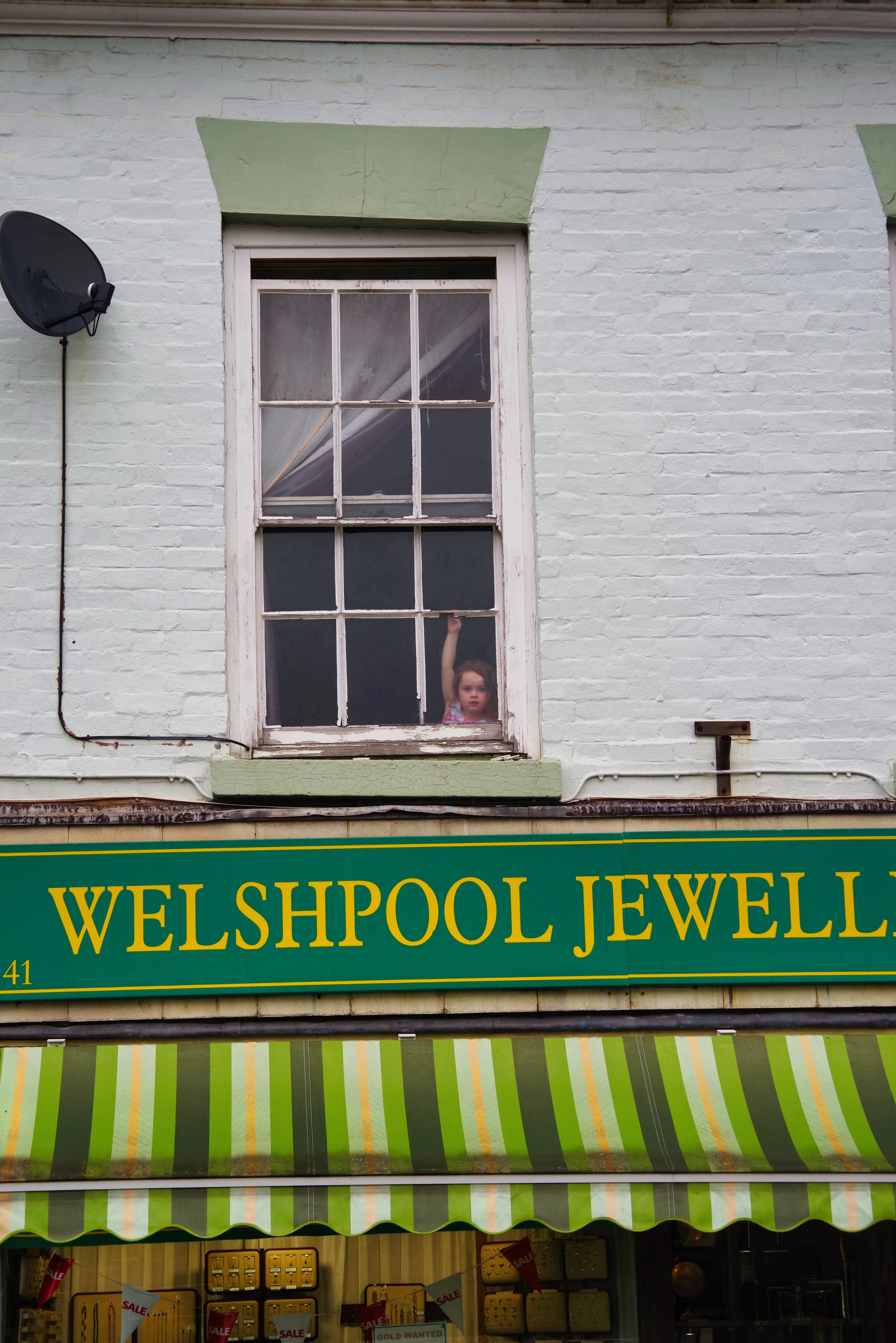
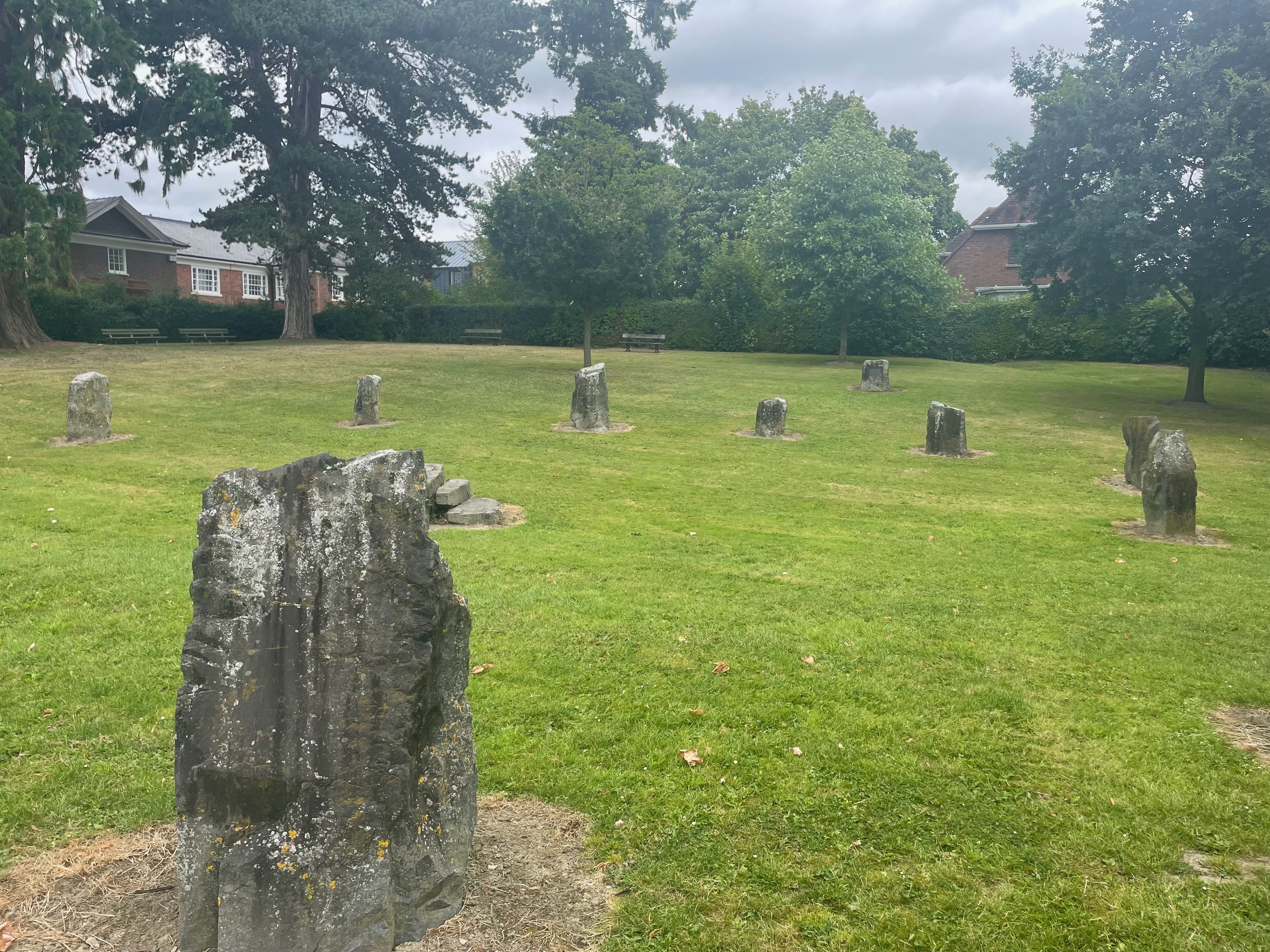
We then made a visit into Welshpool itself. Something we had not actually ever done before. We had chatted with our cabbie earlier that it was somewhat odd that Welshpool doesn’t attract as many visitors as the far more popular Llangollen (which we would visit later) as it has many of the same features (and more): a canal, various old buildings and pubs, a railway and even some standing stones. When we mentioned to the cabbie that we didn’t recall seeing the standing stones when we were here many years ago he commented “That’s because I remember when the council put them up”.
What it didn’t have was any souvenirs with “Welshpool” on them. Though we did find some made in Wales leather shoes for grandson Joey.































 Mackey Musings