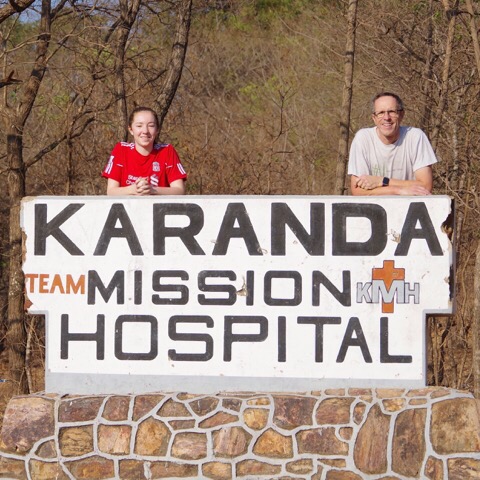
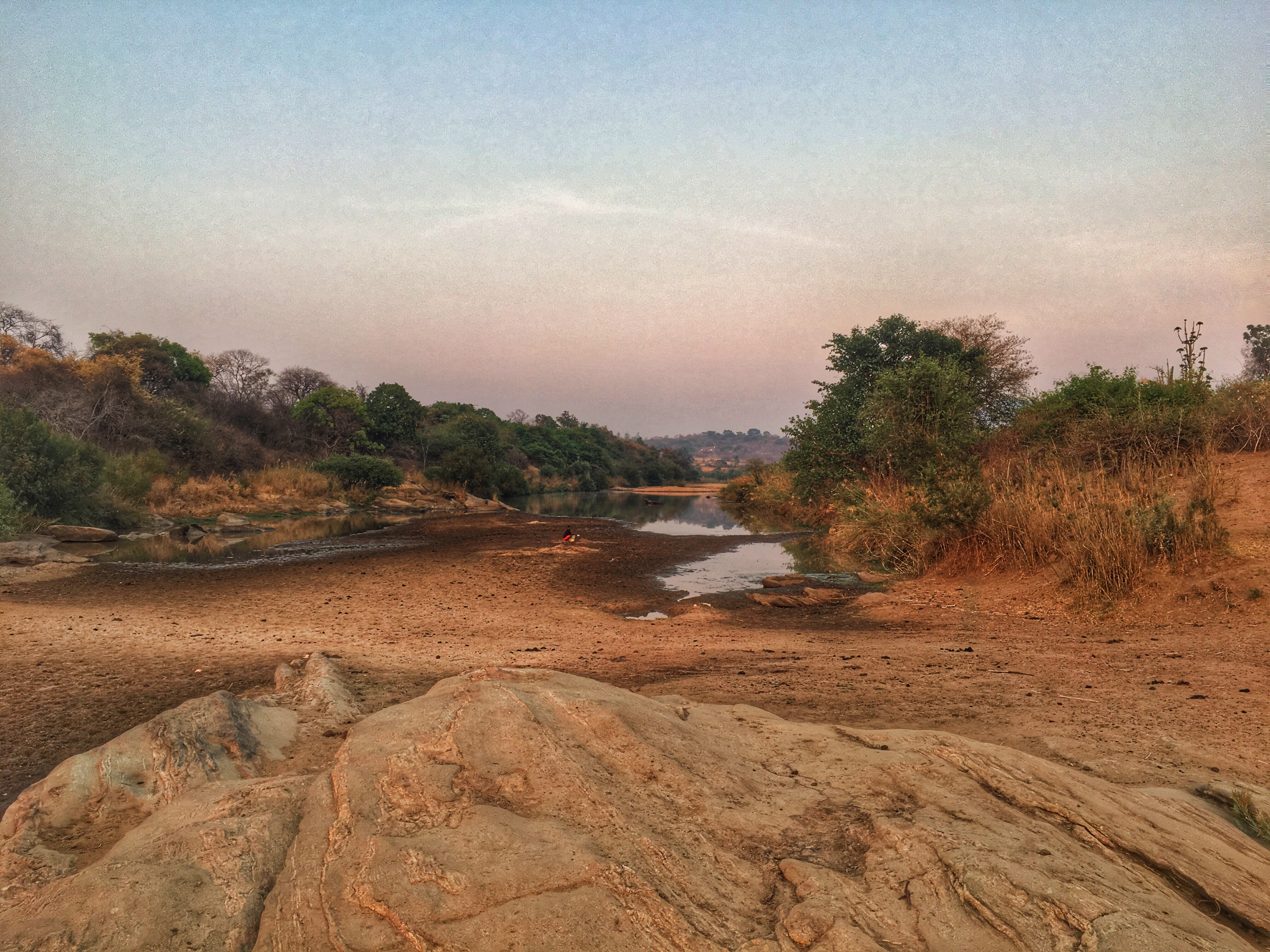
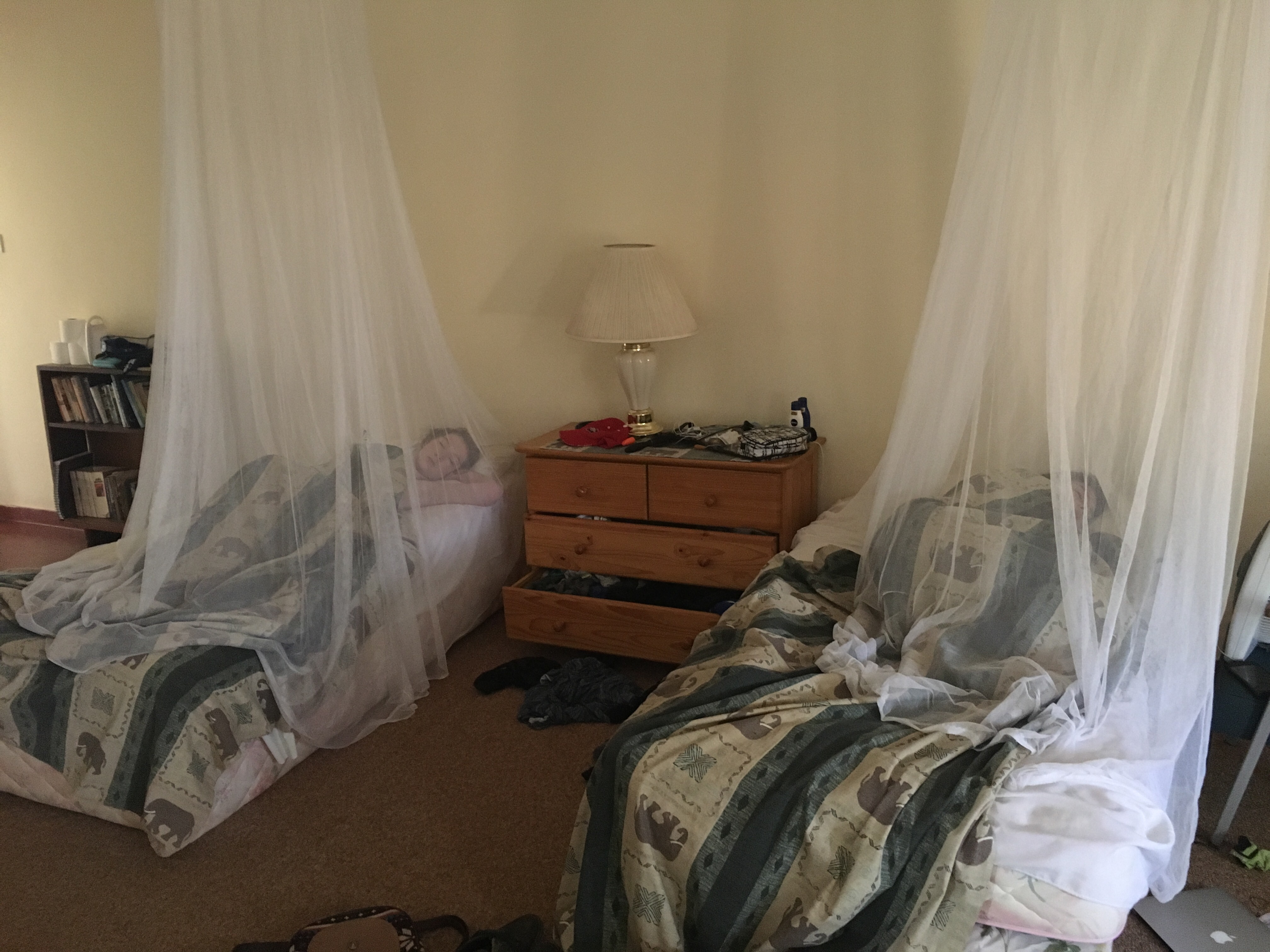
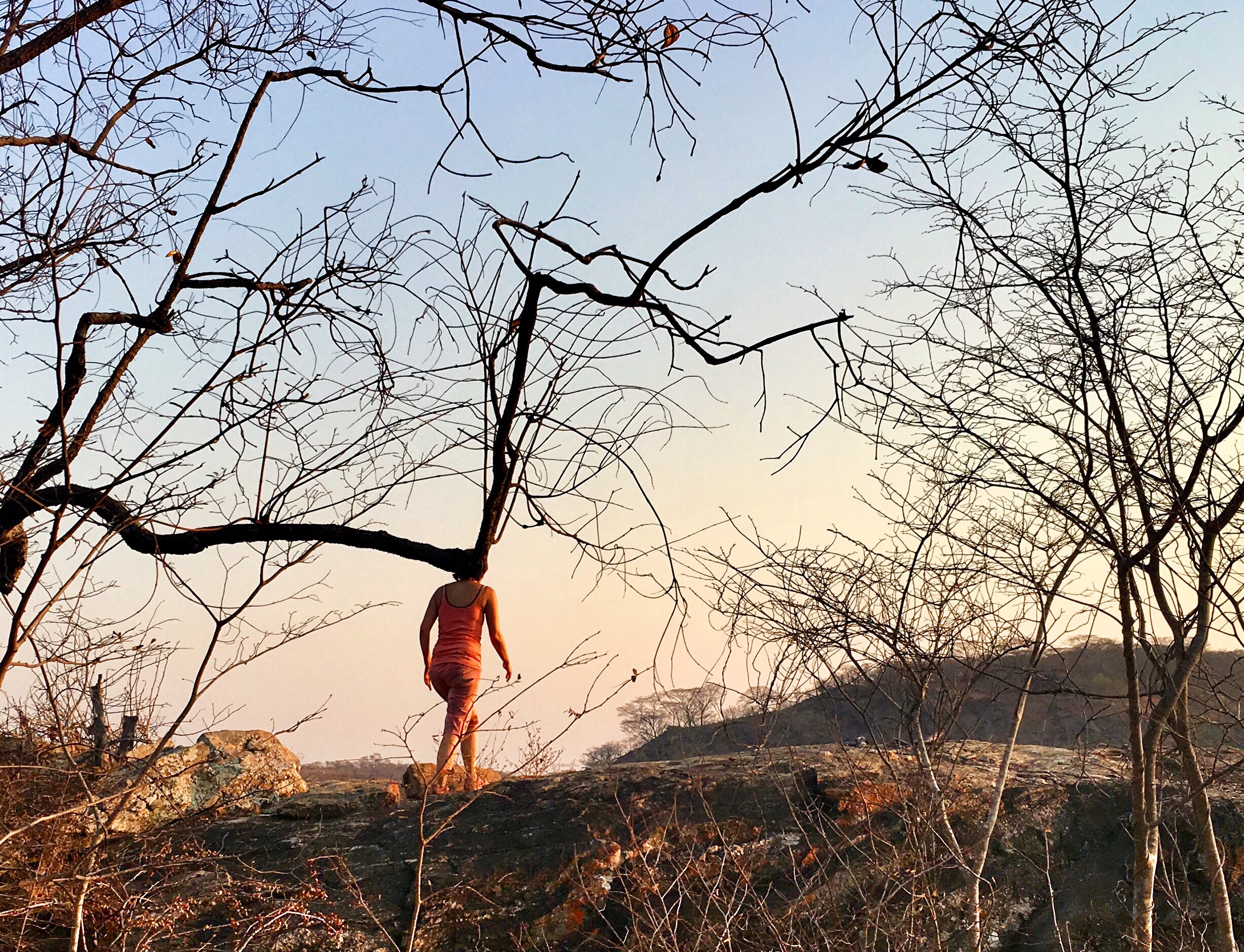
 The weather continues HOT. We are so grateful for the electric fans in the accommodation and for the intermittent, albeit slight relief from our own sweat the fans bring as they rotate past. We have never had our eyelids sweat before! Paul, Thea, and I have gone for a couple more morning walks with the surgeon. We also sit in the courtyard of the accommodation in the morning having breakfast and after work before it gets dark at 6:30 and the mosquitos come out. Otherwise we try to avoid being outside except to transition from the accommodation to the hospital. Even that short journey is draining. We cannot fathom how the locals go about their day-to-day business and even work outside in the current heat. We at least have the privilege of electric fans, clean drinking water (ceramic filters provided in the house) and showers every couple of days, although with the current drought the water is turned off at about 4 pm every evening and on again at 6 am. There are also intermittent power outages.
Paul has spent some time in the OR this week as the two nurse anesthetists were away at a seminar. It was nice for him to be back doing some relatively familiar clinical work though, like everything here, some adaptation was required. The “anesthesia drug fridge” is a cooler box with some ice packs in it. 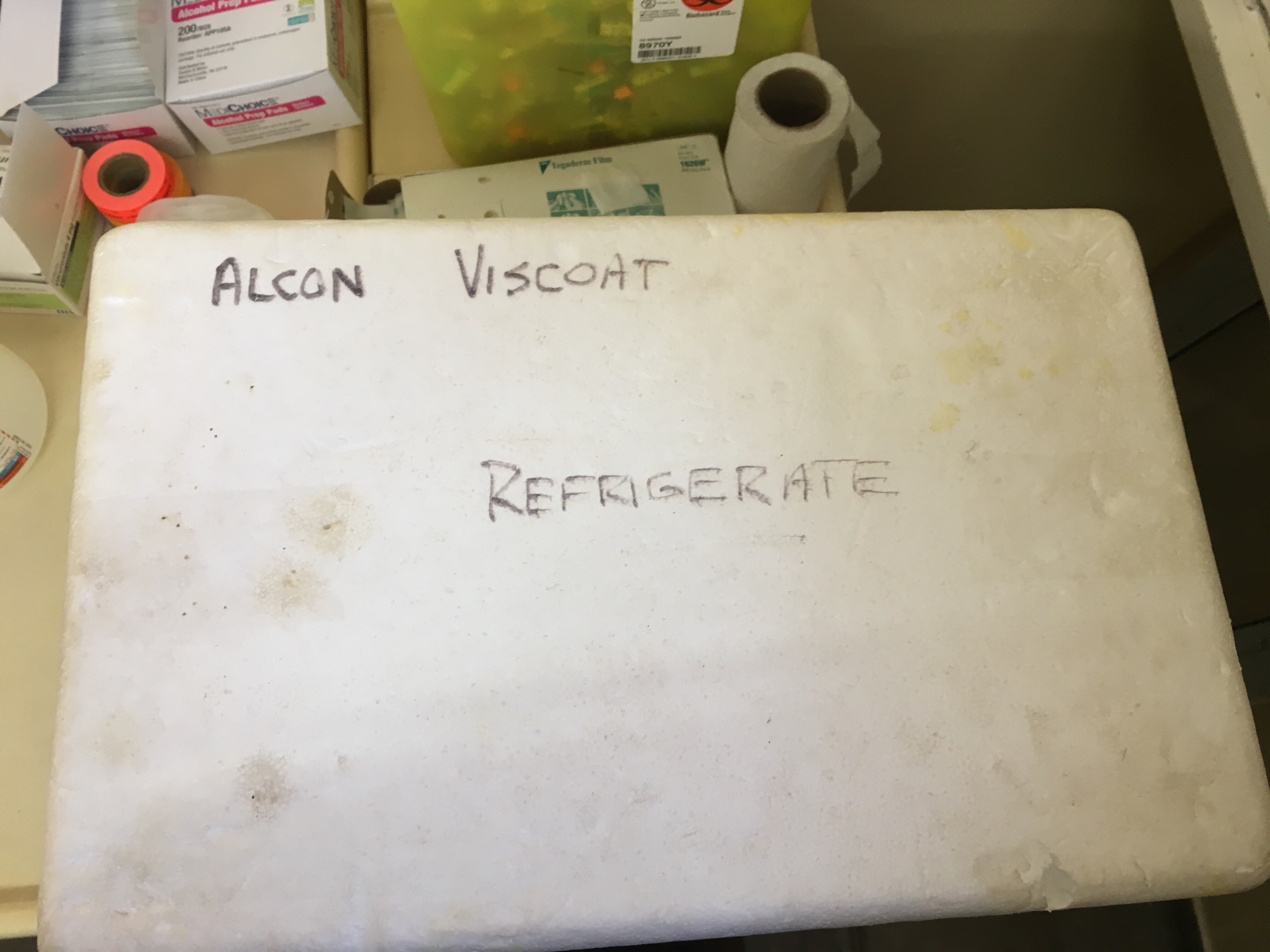 They regularly have to switch out monitors and medical devices as they seem to function according to their own rhythms. He has tried to organize things a little, troubleshoot the machines (even simple things like stopping ‘US State Department’ printing out on the ECG and getting the date and time correct) and writing down the steps needed to do so. Something that hasn’t been in his job description before is being available to plug and unplug the diathermy/cautery machine. The switch (haphazardly) doesn’t work so the only way to make it work then not work is to intermittently plug and unplug the wire. The air-conditioner in the OR is an imposter so the environment is not a lot cooler in there. It is a challenge to get gloves on and off because your hands are so sweaty. And doing the sterile pre op scrub when the water is turned off requires adaptation as well. The power outages add that little extra bit of spice.
He and I continue to try and to fine-tune the use of MOIS. One of the challenges has been to understand the flow of patients in the outpatient department, which is the grab all for everything that presents to the hospital. Even with both of us taking turns to sit in there and track what is going on it is difficult to comprehend this multi-headed hydra-like mass of humanity. Each morning, the patients who have congregated in the area overnight attend a service at the nearby church as this is where they get their number in the queue. They then queue at the registration window to get their “appointment”. Then they queue at the payment window. Somewhere in this time they queue at a desk to get their details written down for the “government book”. Next they queue at the nursing station to get their vital signs taken then queue at another desk for the nurse to take their history. The nurse then determines if they need to get in the queue to see the doctor or maybe directed to the queue outside operating room or the one outside the OBGYN room. If it is determined the patient needs lab or a prescription, then it’s back to the payment window to pay for these services then to the queue outside the lab or pharmacy. This whole process can often take 2-3 days given the numbers of patients passing through but also because the patient may not have the money immediately available. Also somewhere in there each patient is meant to queue at the desk inside the OPD to get their diagnosis and treatment recorded once completed. Somehow the very patient patients make their way through all these queues to receive the limited care available.
Tracking all this is quite a challenge. At each of these steps there used to be a ledger book where the patient’s details were recorded. Then at the end of the month someone would have to manually go through each of these books and tabulate everything. You can picture rooms were getting filled with these ledger books. Thus the idea behind the computers was to try and decrease the amount of repetitive information that was being recorded, to speed up this flow and to make the end of month reporting easier (and save on ledger books!). With such a Brownian flow of patients this has proved a challenge and, each day, there are still patients who are treated but don’t get recorded and others who appear in the department but seemed to have missed one of the various points along the way. We have had some success and managed to get “off book” in some departments like the Operating Room, Lab and Pharmacy (where yes every individual test and every drug was being manually recorded in multiple ledger books)
The girls have been helping out here and there with computer entry, pill counting and occasional visits to the on-site school to show the children things like cat’s cradle and origami. 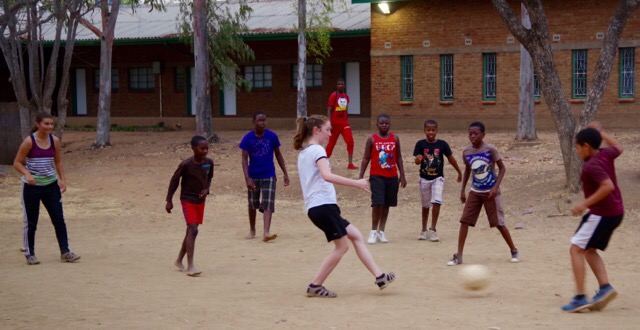 Their own schooling has been a challenge as the internet is erratic and inconsistent. The hospital has a data cap that usually runs out before the end of the month and so the internet then degrades even further. Thus it is not even likely we will get this update out before November ticks over.
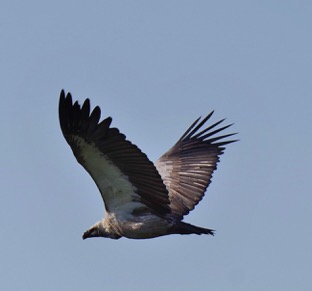
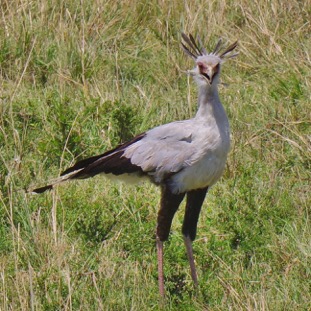
We have never been birdophiles before but the birds in Africa have been fascinating. We have been introduced to so many: the magnificent fish eagle 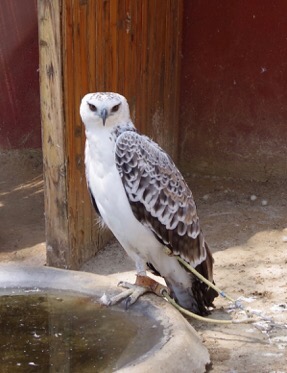 (national bird of both Zimbabwe and Zambia), the bizarre secretary bird,
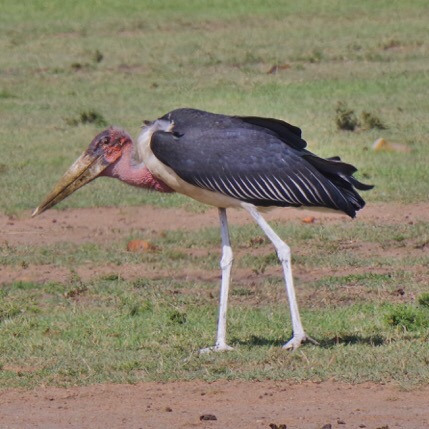
 the ugly maribu stork.
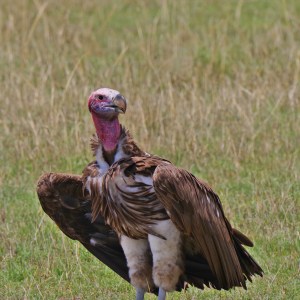
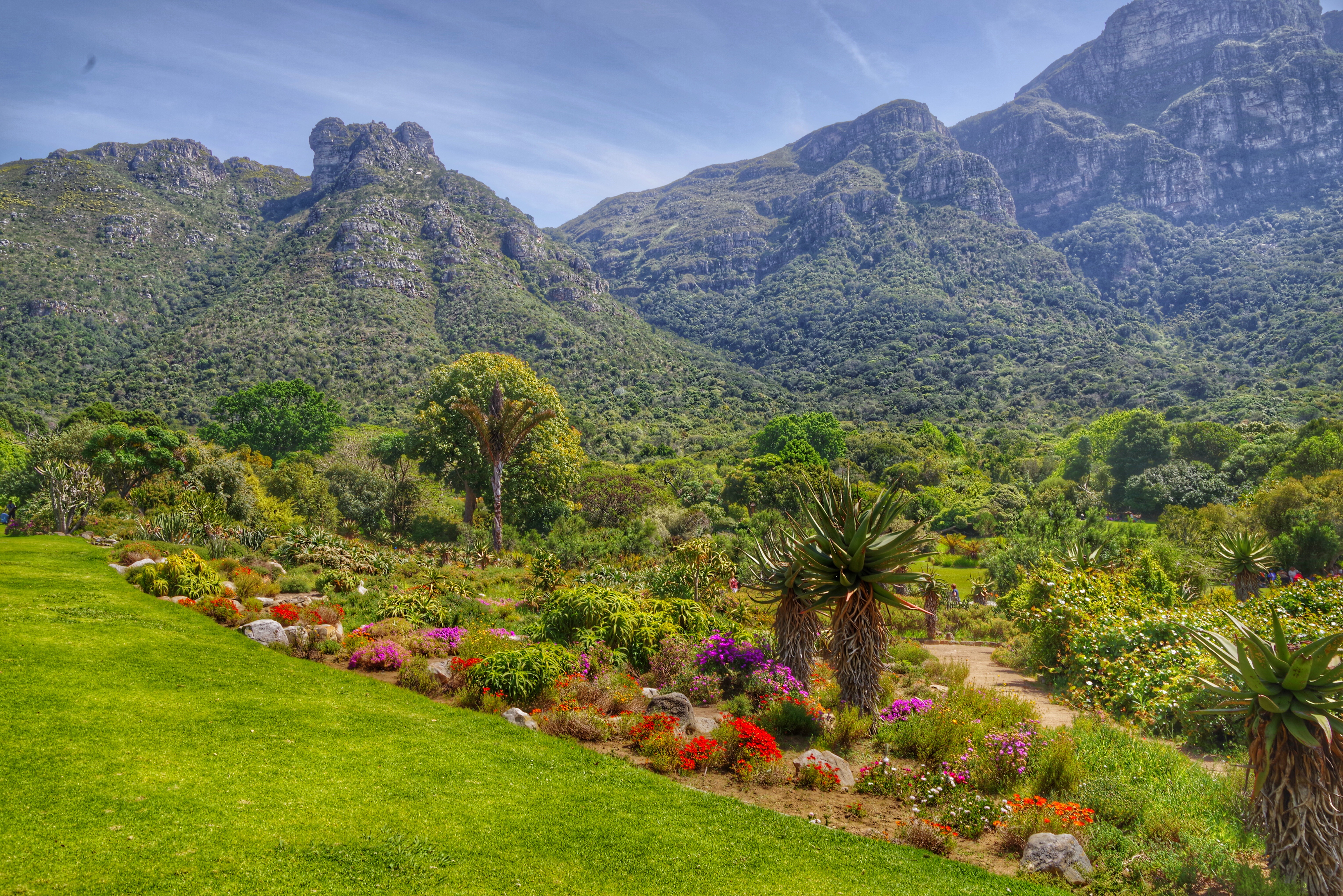
  The vultures are just cool. Here at Karanda very large herons roost in the trees in the mornings and evenings. They are so ungainly- they remind me of the storks in Dumbo – and make a deep squawking noise like a bow being dragged across a giant double bass. We do appreciate the opportunity to see and experience what we have on this trip; many of the locals never have the chance to go on a game drive or even to a botanical garden to experience the diverse fauna and flora of their own countries.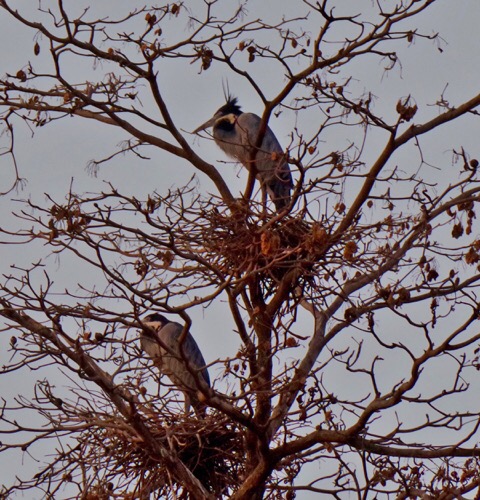
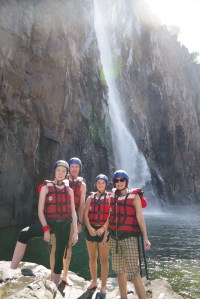 That afternoon we wandered along the top of the falls in 38-degree heat. In the evening we had a sunset cruise on the Zambezi River followed by a short concert from Mick Thomas and Wally. It was very strange travelling around with the musicians. I discovered Mick Thomas and I have similar taste in fiction. There were 13 other people on the tour – a British couple (concidentally a friend of theirs married a woman from my home town a couple of years ago and they attended the wedding at Castle Mountain) and the rest are Aussies, all in our age demographic. Thea and Rachelle were the only kids so became mascots in a way and were quite comfortable sitting with other people by the end of the tour. Everyone was very easy to get along with to the point that Rachelle was putting Snapchat filters on Mick’s face to transform him into a drag queen and a deer (and showing him). The highlight of the concert that evening for me was the excellent version of Four Strong Winds – almost made me cry as we are so far from home.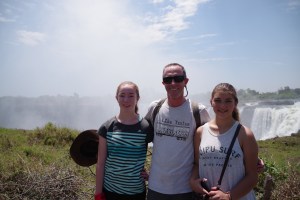
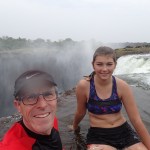
 The concert that evening took place around the campfire. Mick played our favourite song ‘If You Were a Cloud’, but forgot some of the words! (cue Stephen and Paul).
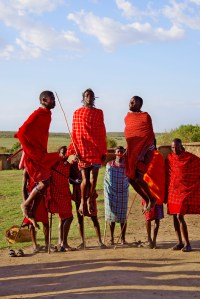 It was upsetting to learn female circumcision is still the traditional practice. One of the Australians on the music tour is a lawyer and ex-politician and is involved in combatting female genital mutilation in Somalialand. Rather sobering social studies lesson for Rachelle and Thea that day (other schoolwork is not getting done at present because of inconsistent internet).
 The final concert was short as some people had an early morning. For the second time on our adventure, we have felt uneasy about our accommodation. When we tried to use the Visa card to pay for our extras, the transaction would not go through. When we called Visa in Canada to find out why, the service agent said it was because the merchant was coming through as an off-shore on-line gambling syndicate. We had to have the tour guide pay and reimburse him. I knew it was very unlikely the lodge was owned by a Kenyan and that any profits would be plowed back into the economy but now we are really suspicious that it is even worse than just foreign ownership and that the Russian mafia or other profiteers own the lodge.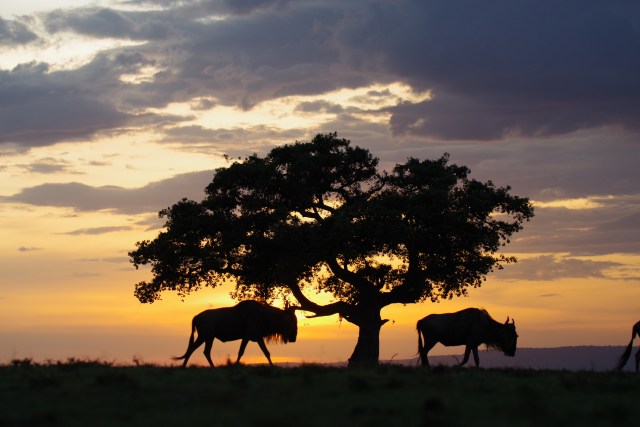
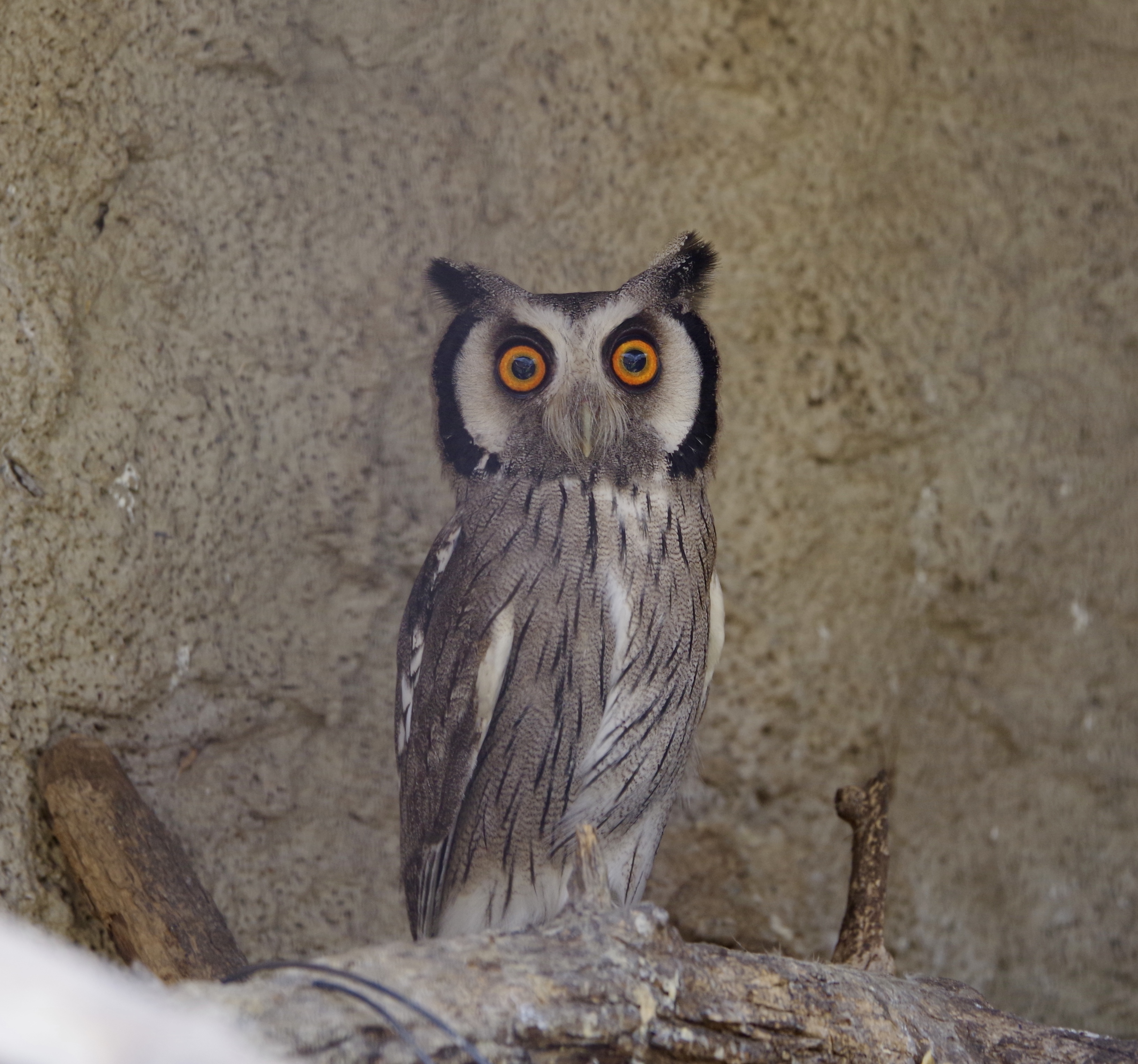 The last few days have me searching for appropriate adjectives. Harare was no less overwhelming the second time we were exposed to it – so many people desperately trying to scrape together some money selling produce and other items beside the main highways and even in the middle of the city streets. Our unflappable driver Tafadzwa (we keep getting tempted to ask him to do something outrageous such as a moon landing to see if he will still respond ‘No Problem’) took us to the local bird park this time and we were awed by the size of some of the birds and the initiative of the owner to continue to care for injured and endangered birds in the face of great financial challenge. That evening our hosts – who publish a quarterly magazine ZimArtist – took us to an exhibition by several local artists. The convivial event felt a planet away from the seething streets of downtown Harare. Paul met David Filer, who is renowned world-wide for his realistic pencil drawings of African wildlife (www.davidfiler.com). We also especially enjoyed the paintings by a woman who had every Zimbabwe bank note printed since 1980 as her background canvases with a local cow or steer painted overtop (‘cash cows’ – a telling statement). En route back home, our hosts drove us past the road that is closed every evening at 6 pm and reopened at 6 am and obsessively guarded by the army because Mugabe’s town house is down it, although he rarely stays there.


 Mackey Musings